
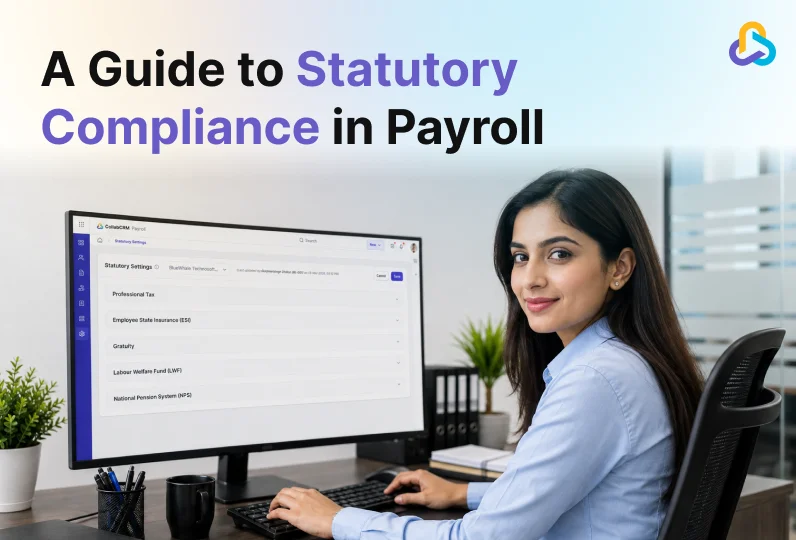
Payroll is not only about calculating salaries and transferring money to employees. It also involves meeting legal obligations related to wages, taxes, social security, employee benefits, records, and government filings.
A reliable payroll management process helps organizations handle these responsibilities accurately, consistently, and on time.
For employers in India, statutory compliance in payroll requires accuracy, timeliness, and regular updates. A missed deduction, incorrect employee classification, delayed deposit, or incomplete record can create financial, legal, and employee-relations issues.
This guide explains what statutory compliance means, what comes under statutory compliance in payroll, the main deductions and laws employers should understand, and how to build a more reliable compliance process.
[Important note: Payroll laws, thresholds, rates, due dates, state rules, and forms can change. This article is educational and should not be treated as legal, tax, or payroll advice.]
TL;DR Key Takeaways
- Statutory compliance means following laws, rules, and regulations that apply to an organization.
- In HR and payroll, it covers wages, salary deductions, tax withholding, social security contributions, employee benefits, working conditions, and required filings.
- Key payroll statutory deductions in India commonly include Tax Deducted at Source, Employees’ Provident Fund contributions, Employees’ State Insurance contributions where applicable, professional tax where applicable, and other legally permitted deductions.
- Employers must calculate deductions correctly, deposit required amounts on time, file returns, issue employee documents, and maintain records.
- State-specific requirements matter. Professional tax, Labor Welfare Fund, Shops and Establishments rules, minimum wages, and leave requirements can vary by state.
- Payroll compliance should be treated as a recurring operating process, not a once-a-year audit task.
- A centralized system such as CollabCRM can support accountability, document management, task tracking, approvals, audit readiness, and cross-functional compliance workflows.
What is Statutory Compliance?
Statutory compliance means following laws, regulations, rules, and legal requirements established by the government or a recognized authority.
The word “statutory” refers to something required by law. “Compliance” means following that requirement. Together, statutory compliance means that a business meets its legal obligations.
For an employer, compliance can apply to many areas, including:
- Employee wages and salary payments
- Income tax withholding
- Social security contributions
- Employee benefits
- Workplace health and safety
- Working hours and leave
- Employee records and registers
- Labor law filings
- Financial reporting
- Data protection and employment documentation
In payroll, statutory compliance focuses on the legal requirements linked to employee compensation. That includes paying employees correctly, deducting and depositing required contributions, filing returns, issuing statutory documents, and retaining records.
What is Statutory Compliance in HR?
Statutory compliance is the process of ensuring that an organization follows all employment-related laws that govern the employer-employee relationship.
HR statutory compliance begins before payroll is processed. It includes proper hiring documentation, employee classification, wage structures, working conditions, benefits, leave, workplace policies, and required records.
Payroll is one of the most visible parts of HR compliance because employees see the direct impact on their payslips. But payroll accuracy depends on information from several functions:
- HR provides employee details, salary structures, attendance, leave, and policy updates
- Payroll calculates gross pay, deductions, net pay, and statutory liabilities
- Finance funds salary payments and statutory deposits
- Managers approve attendance, overtime, incentives, and employee changes
- Legal and compliance teams interpret applicable requirements and regulatory changes
A payroll team cannot stay compliant in isolation. It needs accurate employee data, clear policies, timely approvals, and reliable coordination with HR and finance.
Streamlining HR operations helps reduce disconnected records, delayed approvals, and data errors that can affect payroll compliance.
Why Statutory Compliance in Payroll Matters
Statutory compliance in payroll protects both employees and employers. It helps ensure employees receive the wages, benefits, and statutory protections they are legally entitled to receive. It also helps employers reduce the risk of penalties, interest, disputes, audits, and reputational harm.
The government sets payroll requirements to create a more structured employment environment. These requirements cover matters such as timely wage payment, tax deduction, retirement savings, medical insurance, maternity benefits, bonus eligibility, minimum wages, and other worker protections.
For employees, compliance supports:
- Accurate salary payment
- Authorized and transparent deductions
- Social security benefits
- Retirement savings through provident fund contributions
- Access to insurance benefits when eligible
- Tax documents for filing income tax returns
- Fairer and more consistent wage practices
- Proper documentation of employment and compensation
For employers, compliance supports:
- Lower legal and financial risk
- Better audit readiness
- Clearer payroll records
- Improved employee trust
- Stronger governance
- More predictable payroll operations
- Better coordination between HR, payroll, finance, and leadership
The Employees’ Provident Fund Organization states that, in applicable cases, both the employee and employer shares are 12% contributions to the Provident Fund. This illustrates why payroll compliance requires employers to manage not only salary deductions but also their own statutory contribution obligations.
What Comes Under Statutory Compliance in Payroll?
What comes under statutory compliance in payroll depends on the organization’s location, industry, employee count, wage levels, and the laws that apply to its workforce.
In India, payroll compliance often includes the following areas.
| Compliance area | What employers typically need to manage |
| Salary and wages | Timely payment, minimum wage requirements, overtime where applicable, wage records, and payslips |
| Income tax | Salary TDS calculation, tax deposits, quarterly returns, and employee tax certificates |
| Provident fund | Eligibility, registration, employee and employer contributions, monthly filings, and record reconciliation |
| Employee State Insurance | Eligibility, employee and employer contributions, deposits, and employee registration where applicable |
| Professional tax | State-specific registration, deduction, deposits, and returns where applicable |
| Bonus | Eligibility, calculation, payment, and records under applicable law |
| Gratuity | Eligibility, calculation, payment, and records under applicable law |
| Leave and benefits | Statutory leave, maternity-related benefits, and other legally mandated benefits |
| State labor requirements | Shops and Establishments compliance, Labor Welfare Fund, state minimum wages, and local registrations |
| Records and filings | Registers, payroll reports, challans, returns, acknowledgments, employee records, and audit trails |
Not every requirement applies to every employer in the same way. A company should identify which central, state, local, industry-specific, and workforce-specific rules apply to its operations.
What are the Payroll Statutory Deductions in India?
Payroll statutory deductions are deductions or contributions that employers must calculate, withhold, deposit, or report under applicable law.
The most common payroll statutory deductions in India are listed below. Applicability and calculation can vary based on employee eligibility, establishment type, location, wage components, and legal updates.
Tax Deducted at Source
Tax Deducted at Source, or TDS, is income tax deducted by an employer from an employee’s salary before payment. Employers calculate salary TDS based on the employee’s estimated taxable income, applicable tax regime, declarations, eligible deductions, and other relevant information.
The Income Tax Department notes that salary TDS obligations apply at the time salary is paid. It also states that employers must reset TDS computation from April 1 for the relevant tax year, considering projected income, deductions, and the employee’s tax regime.
Payroll teams generally need to:
- Collect and validate employee PAN details
- Capture tax regime declarations where applicable
- Consider eligible investment and deduction declarations
- Calculate TDS accurately
- Deposit TDS within the prescribed deadline
- File salary TDS returns
- Issue statutory tax certificates to employees
- Maintain calculation and filing records
The Income Tax Department identifies Form 138, previously known as Form 24Q, as a quarterly statement or return for reporting TDS deducted from salary, pension, or interest income.
Employees’ Provident Fund Contributions
Employees’ Provident Fund, or EPF, is a social security and retirement savings program governed by the Employees’ Provident Funds and Miscellaneous Provisions Act, 1952.
For covered establishments and eligible employees, the employer and employee contribute to the provident fund as required by law. The Employees’ Provident Fund Organization states that both the employee and employer shares are 12% in applicable cases.
Payroll teams should verify:
- Whether the establishment is covered
- Which employees are eligible
- The relevant wage components for calculation
- Employee Universal Account Number, or UAN, details
- Monthly deduction and employer contribution amounts
- Filing and payment requirements
- Reconciliation of payroll records with statutory records
The precise structure of employer contributions can include provident fund, pension, insurance, and administrative elements. Employers should verify current instructions through EPFO and professional advisors before configuring payroll rules.
Employees’ State Insurance Contributions
Employees’ State Insurance, or ESI, provides certain medical, sickness, maternity, disability, and dependent benefits for eligible insured employees under the Employees’ State Insurance Act, 1948.
ESI applicability can depend on the establishment, location, employee count, wage level, and other factors. Employers should confirm coverage and eligibility directly with the Employees’ State Insurance Corporation, or ESIC, and their payroll advisors.
Payroll teams generally need to:
- Determine establishment coverage
- Identify eligible employees
- Register employees where required
- Calculate employee and employer contributions
- Deposit contributions on time
- Update employee details when salary, joining, or exit information changes
- Maintain records for inspections, claims, and audits
Professional Tax
Professional tax, or PT, is a state-level tax. It is not uniformly applicable across India, and rules can vary by state.
Where applicable, employers may need to register, calculate and deduct tax based on the relevant state slab, deposit amounts, file returns, and maintain records. Payroll teams should use the employee’s relevant work location and applicable state rules when determining obligations.
Labor Welfare Fund Contributions
Labor Welfare Fund, or LWF, requirements are state-specific. In applicable states, employers and employees may need to contribute at prescribed intervals.
The contribution amount, frequency, coverage, and return requirements can differ by state. Employers should verify the current requirements with the relevant state authority.
Other Authorized Deductions
Employees may have other deductions from salary, such as:
- Employee loan or salary advance recovery
- Insurance premium deductions with authorization
- Voluntary provident fund contributions
- Meal, transport, or benefit-related deductions
- Recoveries for absence or loss where legally permitted
- Court-ordered deductions
Not every deduction is lawful in every situation. Employers should use a documented policy, obtain required consent, and ensure deductions comply with applicable wage laws.
Key Payroll Laws Employers Need to Know
India’s employment and payroll framework includes central laws, state laws, rules, notifications, and sector-specific requirements. The legal landscape also changes over time, including changes connected to labor codes and tax law.
The following areas are commonly relevant to payroll operations.
1. Wage and Payment Requirements
Employers must manage wage payment, salary structures, minimum wages, authorized deductions, overtime where applicable, payslips, and wage records.
Minimum wage requirements can vary by state, scheduled employment, skill category, and other factors. A salary structure that works in one state or role may not be suitable for another.
2. Income Tax Requirements
Employers that pay taxable salaries need to manage TDS under applicable income tax law. This includes tax calculation, deduction, deposit, filing, correction of errors, and employee reporting.
The Income Tax Department states that the new tax regime became the default regime under changes effective from Assessment Year 2024-25 for applicable individual taxpayers, while employees may have options subject to relevant rules.
Because tax rules can change with each budget, payroll teams should review current tax-year instructions before beginning annual payroll configuration.
3. Provident Fund Requirements
Provident fund requirements may apply to establishments based on coverage rules, employee count, employee eligibility, and other statutory conditions.
EPFO materials note the general statutory contribution framework, including the 12% employee and employer contribution requirement for applicable establishments.
4. ESI Requirements
ESI requirements may apply to covered establishments and eligible employees. Employers should confirm current wage limits, geographical coverage, contribution rates, and filing procedures through ESIC.
5. Bonus and Gratuity Requirements
The Payment of Bonus Act and Payment of Gratuity Act create obligations for eligible employers and employees. Applicability, calculation, eligibility, payment timing, and exemption rules require careful review.
Do not assume every employee, wage component, or organization is treated the same way. Review current statutory language and seek professional guidance before processing payments.
6. Maternity and Leave Requirements
Employers must comply with applicable maternity, leave, and employee benefit requirements. These obligations affect payroll because approved leave, benefits, reimbursements, and absence records can change salary calculations.
7. State-Specific Requirements
State-level requirements may include:
- Shops and Establishments registrations and returns
- Professional tax
- Labor Welfare Fund
- State minimum wages
- State leave rules
- Local holidays
- Wage registers and notices
- State-specific labor department filings
For multi-state employers, a single payroll configuration may not be enough. The organization must account for location-specific requirements.

Statutory Compliance in Payroll: Employer Responsibilities
Employers have a responsibility to build a payroll process that is accurate, documented, timely, and adaptable to legal change.
Maintain Accurate Employee Data
Payroll accuracy starts with employee data. Verify details such as:
- Full legal name
- PAN
- Aadhaar where relevant and lawfully required
- Bank details
- Date of joining and exit
- Work location
- Department and employment type
- Salary structure
- UAN and ESI details, where applicable
- Tax declarations and supporting documents
- Leave, attendance, overtime, and incentive records
A small error in employee master data can lead to incorrect deductions, delayed payments, failed filings, and employee complaints.
Design Compliant Salary Structures
Salary components should be designed with applicable wage, social security, tax, and benefit rules in mind. The structure should also be clear enough for employees to understand their offer letter and payslip.
Review salary structures when there is:
- A law or rule change
- A shift in employee location
- A promotion or compensation revision
- A change in benefits
- A new employment category
- A company expansion into a new state
Calculate and Deduct Correct Amounts
Calculate gross pay, eligible reimbursements, overtime, statutory deductions, voluntary deductions, employer contributions, and net pay accurately.
Use a defined review process for exceptions. For example, a payroll administrator might prepare payroll, a payroll manager might validate statutory totals, and finance might approve the payment file and statutory funding.
Deposit and File on Time
Statutory compliance is not complete when a deduction appears on a payslip. Employers must also deposit amounts, submit required returns, preserve acknowledgment records, and resolve mismatches.
Create a compliance calendar that clearly shows:
- Monthly deduction dates
- Deposit deadlines
- Filing dates
- Quarterly return dates
- Annual certificate dates
- Renewal requirements
- Internal review deadlines
- Owner for each action
- Backup owner for each action
Issue Clear Payslips and Statutory Documents
Employees should receive clear payslips showing earnings, deductions, net pay, and other necessary information.
Where required, employers should also issue statutory documents such as tax certificates. The Income Tax Department’s TDS guidance covers employer reporting requirements and salary-tax documentation.
Maintain Records and Audit Trails
Maintain records in a secure, retrievable format. This may include:
- Payroll registers
- Payslips
- Salary revisions
- Attendance and leave data
- Tax declarations
- Deduction calculations
- Contribution calculations
- Payment proofs
- Challans
- Return acknowledgments
- Employee communications
- Audit observations
- Corrective actions
Record-retention periods and formats can vary. Confirm current rules for each applicable law and jurisdiction.
Payroll Compliance Checklist
Use this statutory compliance in payroll checklist as an operational starting point. Adapt it based on your workforce, business model, states of operation, and legal requirements.
Before Payroll Processing
- Verify new joiner details, salary structure, PAN, bank information, and statutory registration details
- Confirm employee exits, final settlement requirements, and last working dates
- Review attendance, leave, overtime, incentives, commissions, and reimbursements
- Check changes in compensation, location, designation, or employment type
- Validate tax declarations and proof submissions during the applicable period
- Confirm current statutory rates, wage ceilings, thresholds, and state-specific rules
- Review new government notifications, circulars, and policy updates
- Check for pending corrections from prior payroll cycles
During Payroll Processing
- Calculate gross earnings correctly
- Apply statutory and authorized deductions accurately
- Calculate employer contributions where applicable
- Review exception reports for unusual variances
- Compare current payroll totals with previous periods
- Validate net pay amounts and bank account details
- Obtain required payroll and payment approvals
- Generate itemized payslips
After Payroll Processing
- Complete salary disbursement
- Reconcile payroll registers with the bank payment file
- Deposit TDS, EPF, ESI, PT, LWF, and other applicable liabilities by the required due dates
- File required returns and preserve acknowledgment receipts
- Reconcile statutory payment records with payroll calculations
- Respond to employee payroll questions promptly
- Store records securely and update the compliance tracker
- Document errors, corrections, and preventive actions
Monthly, Quarterly, and Annual Reviews
| Frequency | Key compliance activity |
| Monthly | Run payroll, reconcile deductions, deposit applicable statutory liabilities, verify records |
| Quarterly | File applicable TDS returns, review compliance status, reconcile key statutory data |
| Annual | Issue required tax documents, review salary structures, update policies, audit payroll controls |
| As needed | Respond to legal updates, employee changes, state expansions, inspections, notices, and audit findings |
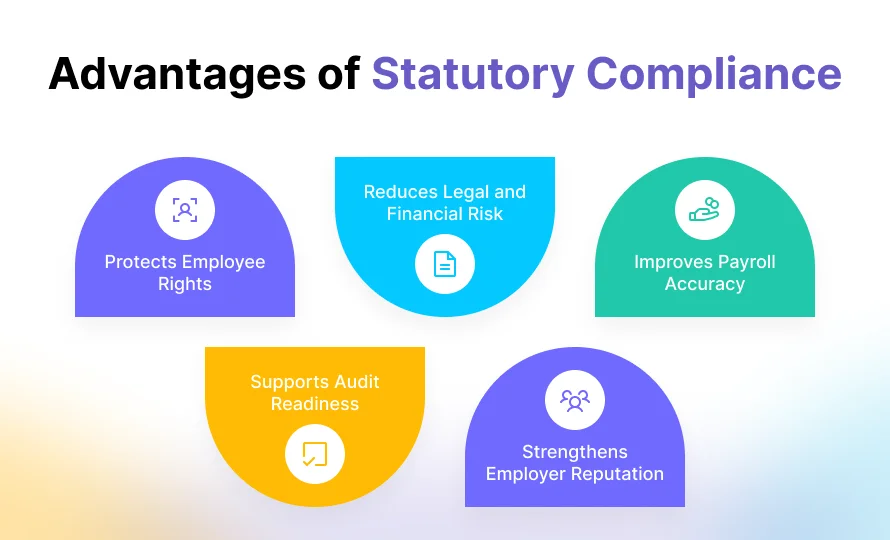
Advantages of Statutory Compliance
The advantages of statutory compliance go beyond avoiding a penalty. A dependable compliance process strengthens employee confidence and improves internal operations.
Protects Employee Rights
Compliance supports timely wages, transparent deductions, minimum wage protections, social security contributions, and access to applicable benefits.
Employees are more likely to trust payroll when they can understand their payslip and see that required contributions are handled correctly.
Reduces Legal and Financial Risk
Late deposits, incorrect deductions, missed returns, and inadequate records can expose employers to interest, penalties, notices, disputes, or litigation.
A consistent compliance process reduces preventable errors and helps organizations respond more effectively if an issue occurs.
Improves Payroll Accuracy
When HR, payroll, finance, and compliance teams use standardized processes, they are less likely to rely on incomplete spreadsheets, email threads, or memory.
Clear workflows also make it easier to identify the source of an error.
Supports Audit Readiness
Audit readiness is not a document collection exercise that should begin only after a notice arrives. Good compliance processes keep records, approvals, payment proofs, and reconciliations organized throughout the year.
Strengthens Employer Reputation
Employees, candidates, customers, investors, and business partners often view compliance as a sign of responsible business operations. Paying people correctly and meeting legal obligations supports long-term credibility.
Risks of Payroll Non-Compliance
Payroll non-compliance can have direct and indirect consequences. The exact consequences depend on the law, the severity of the issue, whether it is repeated, and how quickly the employer corrects it.
Potential risks include:
- Interest on late statutory payments
- Monetary penalties
- Regulatory notices and inspections
- Employee complaints and disputes
- Legal action
- Delayed employee benefits
- Incorrect tax records
- Reputational damage
- Time-consuming corrections
- Payroll disruption
- Management distraction
- Reduced employee trust
Non-compliance is not always intentional. It often results from outdated configurations, incorrect employee data, manual calculations, missed deadlines, unclear ownership, or lack of awareness of a legal change.
That is why prevention, review, and documentation are more effective than last-minute correction.
Common Payroll Compliance Challenges
Payroll compliance becomes difficult when employee data, legal updates, approvals, and statutory deadlines are managed across separate systems. The most common challenges include keeping up with changing laws, handling multi-state rules, avoiding manual calculation errors, maintaining complete employee records, and preserving audit-ready documentation.
Keeping Up with Regulatory Changes
Payroll rules can change through annual budgets, notifications, court decisions, labor law updates, state circulars, or changes to digital filing processes.
How to manage it: Assign ownership for legal monitoring. Subscribe to official government updates, consult qualified advisors, and review payroll settings whenever a relevant change occurs.
Managing Multi-State Payroll
State-specific differences can affect professional tax, minimum wages, Shops and Establishments requirements, LWF, holidays, leave rules, and local registrations.
How to manage it: Maintain a location-wise compliance matrix and review it when hiring employees in a new state or changing an employee’s work location.
Relying on Manual Spreadsheets
Spreadsheets can be useful, but they become risky when multiple people edit formulas, employee data, or due dates without version control.
As payroll complexity grows, organizations need standardized workflows, review checks, and central recordkeeping to reduce the risks of relying on spreadsheets.
How to manage it: Use clear approvals, restricted access, documented formulas, review checks, and centralized records. Consider appropriate payroll technology as the workforce and compliance workload grow.
Poor Employee Master Data
An incorrect PAN, wrong work location, missing UAN, outdated salary structure, or inaccurate attendance entry can produce payroll errors.
How to manage it: Establish a new-joiner checklist, employee-change workflow, periodic data validation process, and clear ownership for corrections.
Weak Documentation
A payroll calculation may be correct, but the organization can still struggle during an audit if it cannot show the underlying evidence, approvals, payment proofs, or filing acknowledgments.
How to manage it: Store documents in a structured, access-controlled system with naming conventions, ownership, retention schedules, and audit trail.
Best Practices for Statutory Compliance in Payroll
The best way to manage statutory compliance in payroll is to treat it as a recurring business process, not a year-end task. Employers should use accurate employee data, clear ownership, timely payroll reviews, documented approvals, regular reconciliations, and secure records to meet their legal obligations consistently.
Create One Source of Truth
Keep employee data, payroll inputs, compliance deadlines, policy documents, returns, challans, and approvals in controlled systems. Avoid relying on disconnected files across individual inboxes and local folders.
Use a Compliance Calendar
A calendar should list every recurring obligation, its due date, required documents, owner, reviewer, and escalation contact.
Set reminders before deadlines, not only on the deadline itself.
Separate Duties Where Possible
The same person should not always create payroll data, approve it, release payments, and reconcile statutory deposits. Separating responsibilities creates stronger internal controls.
For smaller organizations, a second reviewer can still validate key totals, payment details, and filing evidence.
Reconcile Every Payroll Cycle
Reconcile payroll calculations with:
- Attendance and leave records
- HR employee master data
- Bank payment files
- Deduction registers
- Statutory payment receipts
- Filed returns
- General ledger entries
Regular reconciliation helps identify mismatches before they become larger compliance problems.
Train HR, Payroll, and Managers
Managers influence payroll through attendance approvals, overtime approvals, incentive decisions, employee changes, and leave data. They should understand the deadlines and documentation required for payroll inputs.
Training should cover both the process and the reason behind it.
Conduct Periodic Internal Audits
An internal payroll compliance audit can test whether:
- Payroll rules are configured correctly
- Employee records are complete
- Contributions and deductions match records
- Deposits and filings were completed on time
- Required documents are available
- Approval controls were followed
- Prior errors were corrected
Use audit findings to improve the process, not only to identify blame.
Use Technology Carefully
Payroll and HR technology can reduce repetitive work, provide reminders, standardize workflows, and improve reporting.
Organizations evaluating payroll software in India should assess whether a solution can support applicable statutory calculations, employee records, reporting needs, and regular compliance updates.
Use Workflow Technology for Accountability
Use a workflow platform such as CollabCRM to assign compliance tasks, set recurring reminders, manage approvals, store supporting documents, and track completion status.
Automated compliance workflows can help HR, payroll, finance, and leadership maintain visibility into outstanding tasks, owners, deadlines, and follow-up actions.
How CollabCRM Supports Compliance Workflows
CollabCRM is not a substitute for dedicated payroll software, legal counsel, tax expertise, or statutory filing platforms. However, it can help organizations coordinate the people, documents, approvals, and tasks that support a stronger payroll compliance process.
Payroll compliance often breaks down because teams work in silos. HR has employee data. Finance manages payments. Managers hold attendance inputs. Leadership needs visibility. Compliance teams track changes. When information lives across spreadsheets, email, and disconnected tools, deadlines and approvals are easier to miss.
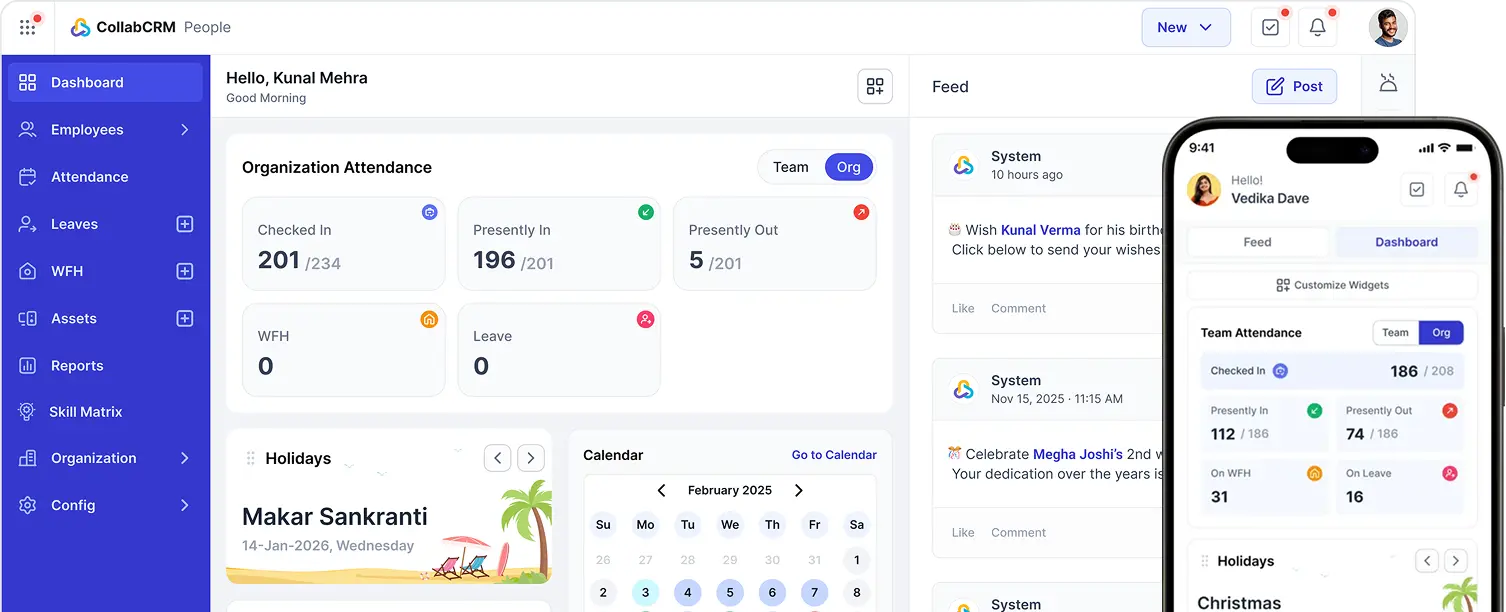
CollabCRM can support your payroll compliance workflow by helping teams:
- Assign compliance tasks to HR, payroll, finance, and managers
- Create recurring monthly, quarterly, and annual compliance checklists
- Set deadline reminders and escalation workflows
- Track payroll approvals and action owners
- Store policy documents, audit evidence, and compliance records in a central workspace
- Create workflows for new hires, compensation changes, transfers, exits, and final settlements
- Monitor task status through dashboards and reports
- Document internal audit findings and corrective actions
- Improve visibility into who is responsible for each compliance activity
CollabCRM can also function as a performance management system for the teams responsible for compliance operations. Leaders can define compliance-related goals, track completion of key tasks, conduct regular check-ins, recognize strong execution, and identify training needs without treating compliance as a last-minute administrative burden.
For example, a payroll manager’s performance goals may include timely payroll closure, zero unresolved statutory reconciliation issues, accurate return filing, and completion of monthly compliance reviews. CollabCRM can help make those responsibilities, updates, and follow-up actions visible in one place.
Final Wrap Up
Statutory compliance in payroll is a continuous responsibility. It requires employers to pay employees correctly, manage lawful deductions, make required contributions, file returns, maintain records, and stay current with changing central and state requirements.
The most reliable payroll compliance process is built on accurate data, clear ownership, timely reviews, documented approvals, regular reconciliations, and secure recordkeeping.
Do not wait for an audit, employee complaint, or regulatory notice to review payroll controls. Build a monthly compliance rhythm, use a practical checklist, and ensure HR, payroll, finance, managers, and leadership know their responsibilities.
When teams use a coordinated system such as CollabCRM to manage the workflow around payroll inputs, approvals, records, deadlines, and accountability, they can make compliance work more visible and manageable.
Frequently Asked Questions
Statutory compliance helps businesses meet the legal requirements that apply to their operations, employees, taxes, and workplace. It helps protect employee rights, maintain accurate records, meet filing and payment obligations, and avoid legal and financial consequences. In India, labor compliance can include requirements related to wages, social security, workplace safety, maternity benefits, gratuity, and employment records, depending on the establishment and applicable law.
Failure to meet statutory requirements can result in penalties, interest, notices, legal proceedings, or other regulatory action, depending on the specific law and nature of the violation. Non-compliance can also create financial and operational risks for a business. For example, employers have specific obligations relating to wage payments, EPF and ESI contributions, records, returns, and other labor requirements.
The exact consequence depends on the applicable legislation, the type of violation, and whether the issue is corrected within the permitted period.
Key statutory compliance requirements in India can broadly include labor and employment compliance, social security contributions, payroll-related requirements, income tax and TDS, GST, corporate filings, and workplace health and safety requirements. The exact obligations depend on factors such as the company’s legal structure, employee strength, location, industry, and applicable state and central laws.
Businesses may also have tax-related obligations. The Income Tax Department provides requirements for company e-filing, income-tax returns, TDS, and other tax-related activities through its e-Filing system.
Common statutory deductions and contributions include salary TDS, employee provident fund contributions, employee state insurance contributions where applicable, professional tax in relevant states, Labor Welfare Fund contributions in relevant states, and other authorized deductions. Applicability depends on legal and employee-specific conditions.
Statutory compliance can include wages, minimum wages, tax deductions, provident fund, ESI, professional tax, bonus, gratuity, maternity benefits, leave, labor welfare contributions, state registrations, employee records, returns, and audits.
It protects employee rights, helps ensure accurate payment and deductions, reduces the risk of penalties and legal disputes, supports audit readiness, and strengthens trust in the organization.
Employers should review key payroll compliance activities every payroll cycle. They should also conduct periodic monthly, quarterly, and annual reviews, plus additional reviews when laws, salary structures, employee locations, or workforce policies change.
Missing a statutory payment deadline can result in interest, penalties, or other regulatory consequences, depending on the payment.
For example, delayed TDS payment can attract interest at 1.5% per month or part of a month for certain defaults. Under the ESI framework, delayed contribution payments attract 12% simple interest per annum for each day of delay. Employers should track statutory deadlines carefully to avoid additional costs and compliance issues.
No. Payroll software can help automate calculations, workflows, reminders, reports, and filings, but it cannot guarantee compliance on its own. Employers must ensure employee data, system configurations, legal rules, and review processes are accurate and current.
CollabCRM can support the workflow around payroll statutory compliance by organizing tasks, deadlines, approvals, documents, audit evidence, and accountability across teams. It does not replace specialized payroll calculation, statutory filing, tax, or legal advisory tools.



 Priority Onboarding