
Managing projects without proper resource visibility often leads to missed deadlines, overloaded teams, poor utilization, and rising operational costs.
As businesses handle multiple projects, distributed teams, and tighter delivery timelines, resource management software has become essential for improving operational efficiency and project delivery.
Modern resource management tools help businesses plan workloads, allocate resources, track utilization, monitor team availability, and improve collaboration from a centralized platform.
Many solutions now also include AI-powered forecasting, workflow automation, timesheet tracking, and financial visibility features to help organizations make faster and better decisions.
However, not every resource management tool is built for the same business needs. Some platforms focus on workforce planning, while others prioritize project management, agile delivery, or enterprise operations.
In this blog, we will explore 10 of the best resource management tools and software in 2026 to help you choose the right solution for your business needs.
Key Takeaway
- Resource management tools help businesses improve workload visibility, resource allocation, utilization tracking, and project delivery.
- Different platforms focus on different operational needs, including workforce planning, project management, collaboration, billing, and analytics.
- AI-powered automation and forecasting are becoming important features in modern resource management software.
- Businesses should choose a tool based on team size, workflows, scalability, and operational requirements.
- Integrated platforms can help reduce operational silos and improve visibility across projects, people, and finances.
- Better resource planning helps businesses reduce employee burnout, improve productivity, and deliver projects more consistently.
What is Resource Management Software and Why you Need Them?
Resource management software helps businesses plan, allocate, and manage their people, time, budgets, and workloads more efficiently. It gives managers clear visibility into team availability, project timelines, resource utilization, and capacity planning from a single platform.
Companies such as IT businesses use resource management software to manage developer workloads, allocate technical resources efficiently, and ensure projects are delivered on time and within budget.
As businesses manage multiple projects, distributed teams, and tighter delivery timelines, resource management software helps improve operational efficiency and project execution. Without proper resource planning, organizations often struggle with workload imbalance, missed deadlines, inefficient utilization, and limited visibility across teams.
Businesses use resource management software to achieve:
- Better resource utilization
- Improved project delivery
- Reduced employee burnout
- More accurate budget planning
- Better cross-team visibility
- Faster decision-making
- Balanced workload distribution
- Improved team collaboration
- Higher operational efficiency
- Better forecasting and capacity planning
In 2026, resource management software has become essential for businesses looking to improve productivity, optimize resources, and deliver projects more consistently.
10 Best Resource Management Tools & Software in 2026
There are several resources management tools that you can you use manage your business assets, plan budget and workload efficiently.
We have shortlisted ten best resource management software’s that you can use in 2026 as per your business needs and budget.
1. CollabCRM
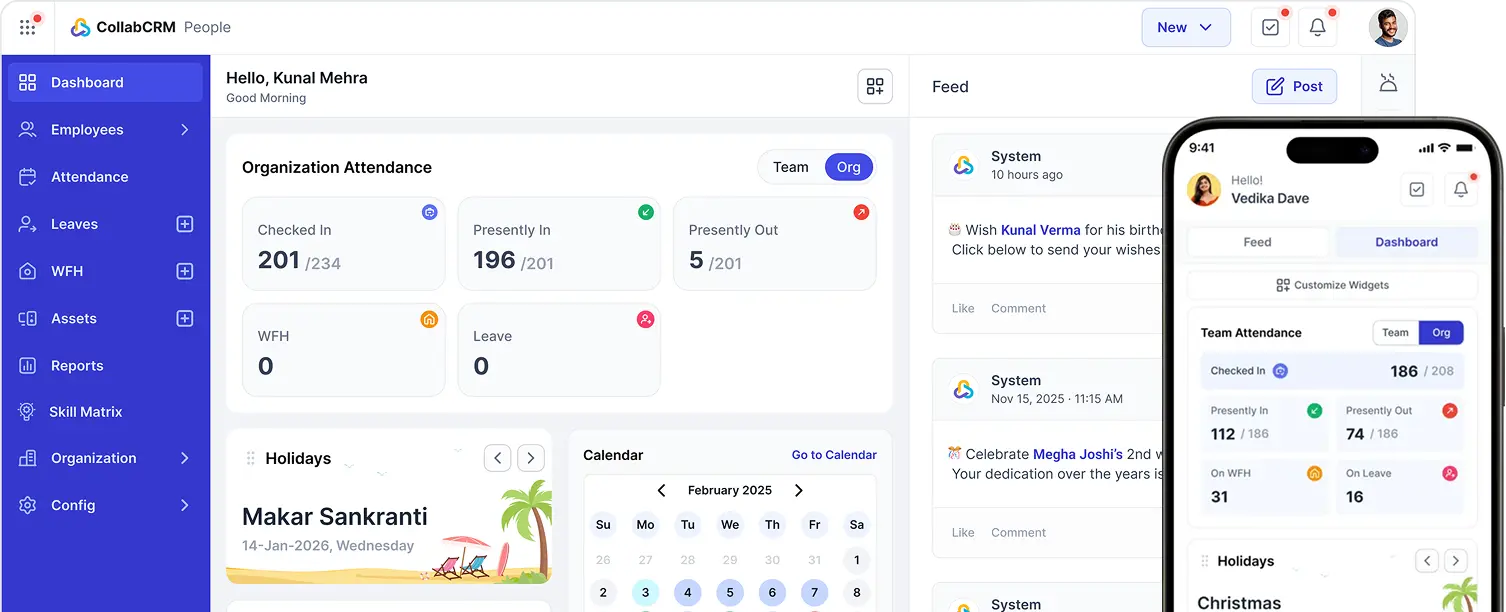
CollabCRM is an integrated resource management and business operations platform built for IT companies, software development firms, consulting businesses, and project-driven organizations.
The platform combines resource planning, project management, skills tracking, timesheets, recruitment, and billing into one connected workflow. It helps businesses improve visibility into team availability, workloads, project timelines, and delivery capacity.
Key Features of CollabCRM:
- Skills-Based Resource Planning
CollabCRM allows businesses to map employee skills, expertise levels, and project requirements in one system. Managers can allocate resources based on skill fit, helping reduce mismatches and improve project delivery quality. - Staff Availability and Occupancy Tracking
The platform provides visibility into employee availability, occupancy levels, and workload distribution. This helps managers identify overloaded or underutilized resources before project delivery is impacted. - Integrated Project Staffing
Teams can assign resources to projects with details like project roles, billing models, start dates, and estimated release timelines. This improves resource planning and operational visibility across multiple projects. - Advanced Timesheet and Utilization Tracking
CollabCRM includes timesheets, work logs, sprint logs, and billed vs spent hour tracking. Businesses can monitor productivity, billable utilization, and project progress more accurately. - Connected Recruitment and Resource Planning
The recruitment module connects hiring workflows with future project staffing needs and skill gaps. This helps businesses plan hiring proactively based on upcoming delivery and resource requirements.

2. Teamwork
Teamwork.com is a resource planning and project management software designed for agencies, client service businesses, consulting firms, and project-based teams.
The platform helps businesses manage team workloads, project timelines, resource allocation, and collaboration from a centralized workspace. It is especially useful for organizations handling multiple client projects and distributed teams.
It combines project planning, time tracking, budgeting, and resource scheduling to improve operational visibility and delivery efficiency. Its user-friendly interface and flexible planning tools make it suitable for both growing teams and larger organizations.
Key Features of Teamwork:
- Resource Scheduling and Workload Management
Teamwork.com allows managers to assign work based on team availability and capacity. Workload views help identify overloaded or underutilized employees before project timelines are affected. - Project Planning and Timeline Visibility
The platform includes project timelines, task dependencies, milestones, and workload forecasting tools. This helps teams manage deadlines and improve project delivery planning. - Integrated Time Tracking
Teams can track billable and non-billable hours directly within projects. This improves utilization visibility, client billing accuracy, and overall productivity tracking. - Team Collaboration Tools
Teamwork.com includes messaging, task comments, file sharing, and project communication features. This helps teams collaborate more efficiently across projects and departments. - Reporting and Resource Insights
The platform provides reporting dashboards for utilization, project progress, profitability, and team performance. Managers can use these insights to improve planning and operational decision-making.
3. Monday.com
Monday.com is a flexible work management and CRM platform that helps businesses manage projects, resources, sales pipelines, and team collaboration from a centralized workspace. The platform is widely used by teams to improve operational visibility and workflow management.
For resource management, monday.com provides workload tracking, capacity planning, resource allocation, and project visibility features that help businesses optimize team productivity and balance workloads more effectively.
The platform also supports enterprise-level planning with advanced reporting, automation, and cross-functional collaboration capabilities.
Key Features of Monday.com:
- Workload and Capacity Management
monday.com allows managers to monitor team workloads and allocate resources based on availability and capacity. Visual workload views can help you identify overbooked or underutilized employees before project timelines are affected. - Customizable Resource Planning Dashboards
The platform provides customizable dashboards for tracking project progress, resource allocation, timelines, and operational performance. Teams can configure workflows based on their business requirements and project structures. - Automation and Workflow Management
monday.com includes automation features for task assignments, notifications, status updates, approvals, and recurring workflows. This helps reduce manual work and improves operational efficiency across teams. - Cross-Team Collaboration and Communication
Teams can collaborate through shared boards, file sharing, comments, and real-time project updates. This improves visibility and coordination between departments, remote teams, and stakeholders. - Reporting and Enterprise Resource Visibility
The platform offers reporting and analytics tools for utilization tracking, project performance, workload forecasting, and operational insights. Enterprise teams can use these reports to improve planning and decision-making across departments and projects.
4. Float
Float is a resource management and capacity management platform designed for agencies, consulting firms, software teams, and project-based businesses.
The platform focuses on helping teams manage resource scheduling, workload planning, project allocation, and team availability through a simple and visual interface. Float is especially popular among businesses that need better visibility into team capacity and project timelines across multiple departments or client accounts.
It allows managers to view who is working on what, identify workload gaps, and adjust schedules in real time.
Key Features of Float:
- Visual Resource Scheduling
Float provides a drag-and-drop scheduling interface that makes it easy to allocate resources across projects and teams. Managers can quickly adjust workloads, assignments, and project timelines from a centralized dashboard. - Capacity Planning and Availability Tracking
The platform helps businesses monitor employee availability, workload capacity, leave schedules, and utilization levels. This helps prevent employee overload and improves overall resource planning accuracy. - Project Forecasting and Planning
Float allows teams to forecast future resource needs and project capacity based on current schedules and upcoming workloads. Businesses can plan staffing requirements and project timelines more effectively. - Integrated Time Tracking
Teams can log hours directly within the platform to track billable and non-billable work. This improves utilization visibility, project tracking, and operational reporting. - Third-Party Integrations and Reporting
Float integrates with tools like Jira, Asana, Slack, and Teamwork.com to improve workflow connectivity. The platform also provides reporting dashboards for resource utilization, project planning, and team performance insights.
5. Smartsheet
Smartsheet is a work management and resource planning platform designed for businesses that manage complex projects, workflows, and cross-functional teams. The platform combines project management, collaboration, automation, and resource management into a spreadsheet-style interface that is easy for teams to use and customize.
It is widely used by enterprises, IT teams, marketing departments, and operations teams to improve project visibility and resource coordination. The platform helps businesses manage workloads, track project progress, allocate resources, and improve collaboration across departments.
Key Features of Smartsheet:
- Resource and Workload Management
Smartsheet allows managers to track team availability, workloads, and project assignments from a centralized dashboard. This helps businesses balance workloads and avoid resource conflicts. - Project Planning and Scheduling
The platform includes Gantt charts, timelines, task dependencies, and milestone tracking. Teams can manage project schedules more efficiently and improve delivery planning. - Workflow Automation
Smartsheet provides automation for approvals, notifications, status updates, and recurring tasks. This reduces manual work and improves workflow efficiency across teams. - Real-Time Collaboration
Teams can share files, leave comments, and collaborate on projects in real time. This improves communication and project visibility across departments and remote teams. - Reporting and Performance Insights
Smartsheet offers dashboards and analytics tools for tracking project progress, resource utilization, and operational performance. Managers can use these insights for better planning and decision-making.
6. ClickUp
ClickUp is the world’s first Converged AI Workspace, bringing together all work apps, data, and workflows into one platform. The platform eliminates work sprawl (fragmentation of work tasks across multiple disconnected tools, platforms, and systems that cannot communicate) by providing a single place for teams, managers, and AI agents to collaborate and manage work together.
The platform combines project management, resource planning, collaboration, automation, and AI-powered workflows into one centralized system. It supports resource management with its workload tracking, capacity planning, task allocation, and productivity monitoring features.
Key Features of ClickUp:
- Workload and Resource Management
ClickUp allows managers to view team workloads, monitor capacity, and allocate tasks based on availability. This helps teams balance workloads and avoid resource overload. - AI-Powered Workspace and Automation
The platform includes AI-driven assistance, workflow automation, task summaries, and smart recommendations. This helps reduce manual work and improve operational efficiency. - Project Planning and Task Management
ClickUp supports task management, sprint planning, Kanban boards, Gantt charts, timelines, and project tracking. Teams can manage projects more efficiently from a single workspace. - Collaboration and Communication Tools
Teams can collaborate through comments, chat, shared documents, whiteboards, and real-time updates. This improves coordination across remote and cross-functional teams. - Reporting and Productivity Insights
ClickUp provides dashboards and reporting tools for tracking productivity, project progress, team performance, and resource utilization. Managers can use these insights for better planning and decision-making.
7. Hive
Hive helps teams manage projects, workloads, collaboration, and operational workflows from one centralized workspace. It combines project tracking, communication, automation, and resource management into a flexible and easy-to-use system.
The platform helps businesses plan workloads, allocate resources, monitor team capacity, and track project progress in real time. Hive also includes collaboration and messaging features, reducing the need to switch between multiple work tools.
Key Features of Hive:
- Resource Planning and Workload Management
Hive allows managers to assign tasks based on team availability and capacity. Workload views help businesses identify overloaded or underutilized employees more easily. - Project Tracking and Task Management
The platform supports Kanban boards, Gantt charts, project timelines, and task tracking. Teams can manage deadlines, dependencies, and project progress from one project dashboard. - Built-In Collaboration Tools
Hive includes chat, messaging, file sharing, and task comments within the platform. This improves communication and coordination across teams and departments. - Workflow Automation
Businesses can automate repetitive tasks, approvals, notifications, and workflow updates. This helps improve operational efficiency and reduce manual work. - Analytics and Reporting
Hive provides reporting dashboards for project performance, workload visibility, productivity tracking, and resource management insights. Managers can use these reports for better planning and decision-making.
8. Workday
Workday is an enterprise workforce and human capital management platform widely used to improve workforce visibility, employee management, and operational decision-making.
For resource management, Workday helps organizations manage workforce availability, staffing, skills, performance, and capacity planning more effectively.
The platform also uses AI and machine learning to improve workforce forecasting, talent planning, and business insights. Its cloud-based system makes it easier for organizations to manage distributed teams and complex workforce operations across multiple locations.
Key Features of Workday:
- Workforce Planning and Resource Visibility
Workday helps businesses track employee availability, workforce capacity, staffing needs, and organizational structure from a centralized dashboard. This improves planning and resource allocation. - Skills and Talent Management
The platform allows businesses to manage employee skills, performance, career development, and talent profiles. This helps organizations align workforce capabilities with business needs. - AI-Powered Analytics and Forecasting
Workday uses AI and machine learning to provide workforce insights, predictive analytics, and staffing forecasts. Businesses can make faster and more informed operational decisions. - Human Capital Management Integration
The platform combines HR, payroll, workforce management, attendance, and employee lifecycle management into one connected system. This improves operational efficiency across departments. - Reporting and Business Insights
Workday provides real-time dashboards and analytics for workforce performance, productivity, staffing trends, and operational planning. Managers can use these insights for strategic decision-making.
9. Jira
Jira is widely used by software development teams, IT departments, DevOps teams, and agile organizations to manage projects, track tasks, and coordinate team workflows.
The platform helps teams manage project planning, sprint execution, workload tracking, issue management, and resource coordination from a centralized workspace.
It also supports resource management through capacity planning, workload visibility, sprint management, and reporting tools. With integration capabilities and customizable workflows, Jira can help your teams improve operational efficiency and have better visibility across complex projects.
Key Features of Jira:
- Agile Project and Sprint Management
Jira support Scrum boards, Kanban boards, sprint planning, backlog management, and issue tracking. Teams can manage development workflows and project delivery more efficiently. - Resource and Workload Visibility
The platform provides workload and capacity tracking features that help managers monitor team availability and allocate work more effectively across projects and sprints. - Customizable Workflows and Automation
Jira allow businesses to create custom workflows, automations, approvals, and task rules based on operational requirements. This improves process consistency and reduces manual work. - Issue Tracking and Collaboration
Teams can track bugs, incidents, development tasks, and support requests in real time. Shared dashboards and collaboration tools improve coordination across departments and remote teams. - Reporting and Performance Insights
Jira provide dashboards and analytics for sprint performance, workload tracking, issue resolution, and project progress. Managers can use these insights to improve planning and delivery efficiency.
10. Zoho Projects
Zoho Projects is a cloud-based project management and collaboration platform designed to help businesses manage projects, tasks, resources, and team communication from one centralized system.
The platform helps teams manage project schedules, allocate resources, monitor workloads, and track project progress in real time. It also integrates with other Zoho applications and third-party business tools, making it easier for organizations to connect project management with CRM, finance, and collaboration workflows.
Key Features of Zoho Projects:
- Task and Project Management
Zoho Projects allows teams to create tasks, manage milestones, track dependencies, and monitor project timelines. This helps businesses improve project planning and delivery. - Resource and Workload Management
The platform provides workload tracking and resource allocation features that help managers distribute work more efficiently across teams and projects. - Time Tracking and Timesheets
Teams can log work hours, manage timesheets, and track billable and non-billable time directly within the platform. This improves utilization tracking and project visibility. - Workflow Automation
Zoho Projects includes automation tools for task updates, approvals, notifications, and recurring workflows. This helps reduce manual work and improve operational efficiency. - Reporting and Collaboration Tools
The platform offers dashboards, reporting tools, file sharing, and team collaboration features that help improve communication, project tracking, and operational decision-making.
5 Best Resource Management Software: Comparison Table
The table below gives a simple comparison of these five resource management tools, so you can quickly see which one fits your IT company’s needs.
| Feature | CollabCRM | Zoho Projects | Workday | Jira | Hive |
| Best For | IT companies, consulting firms, software development teams | Small businesses, agencies, IT teams | Enterprises and global organizations | Software development and agile IT teams | Agencies, operations teams, growing businesses |
| Focus | Connected operational resource management | Project and task management | Workforce and human capital management | Agile project and sprint management | Collaborative work and project management |
| Resource Allocation | Advanced project staffing with roles and timelines | Basic workload allocation | Workforce planning and staffing visibility | Sprint and workload allocation | Team workload and task allocation |
| Skill-Based Planning | Strong employee skill matrix and project skill mapping | Limited | Advanced talent and skill management | Limited native support | Limited |
| Workload Visibility | Real-time occupancy and availability tracking | Workload dashboards | Workforce capacity visibility | Sprint and workload tracking | Real-time workload monitoring |
| Timesheet Tracking | Advanced timesheets and billed vs spent hour tracking | Built-in timesheets | Workforce and attendance tracking | Available through integrations | Built-in time tracking |
| Workflow Automation | Recruitment, staffing, and operational workflows | Task and notification automation | Enterprise workflow automation | Advanced workflow automation | Workflow and task automation |
| AI Capabilities | Limited AI focus | Basic AI and automation support | AI-driven analytics and forecasting | Atlassian Intelligence support | AI assistance and workflow suggestions |
| Billing & Utilization Tracking | Strong billing, utilization, and revenue visibility | Basic billable hour tracking | Workforce cost analytics | Limited native support | Basic productivity and utilization tracking |
How to Choose the Right Invoice Management Tool for Your IT Company
Not all resource management tools are designed for the way IT companies operate. Every business also has different workflows, team structures, and operational needs.
Before choosing a tool, you should be able to evaluate how well the platform supports resource planning, workload visibility, team collaboration, utilization tracking, and project delivery.
1. Look for Flexible Billing Support
IT companies usually work with hourly billing, fixed-cost projects, retainers, and milestone-based payments. Choose a tool that can support different billing models and automate invoice generation based on project requirements.
2. Check Integration with Project and Time Tracking Tools
Your invoicing system should connect with project management, CRM, and timesheet tools. This helps reduce manual work and improves billing accuracy by automatically capturing billable hours and project expenses.
3. Prioritize Automation Features
Manual invoicing increases the risk of missed invoices and payment delays. Look for features like recurring invoices, automated reminders, approval workflows, and payment tracking to improve operational efficiency.
4. Evaluate Reporting and Financial Visibility
The right tool should provide reports on outstanding payments, revenue, billable utilization, and client-wise profitability. Financial visibility helps IT businesses identify revenue leakage and improve cash flow management.
5. Choose a Scalable and Easy-to-Use Platform
As your business grows, your invoicing needs will also become more complex. Choose a platform that can scale with your projects, clients, and teams while remaining simple for employees and finance teams to use daily.
Conclusion
Resource management has become essential for businesses managing multiple teams, projects, deadlines, and client expectations. The right resource management software helps organizations improve workload visibility, optimize resource utilization, reduce operational inefficiencies, and deliver projects more consistently.
However, not every platform is built for the same business needs. Some tools focus on workforce planning, while others prioritize project delivery, collaboration, or financial visibility.
Before choosing a solution, businesses should evaluate their operational workflows, team structure, scalability needs, and reporting requirements carefully. The best platform is the one that aligns with how your team’s work.
Looking for a connected resource management solution for your IT business? Explore CollabCRM to manage projects, people, utilization, and delivery from one platform.
FAQs
Resource management software helps businesses plan, allocate, and manage people, workloads, schedules, and project resources more efficiently. It improves visibility into team capacity, project timelines, and resource utilization from a centralized platform.
Businesses use resource management tools to improve project delivery, balance workloads, reduce employee burnout, optimize resource utilization, and improve operational visibility across teams and projects.
Important features include workload management, resource allocation, time tracking, capacity planning, workflow automation, reporting, collaboration tools, and integration with project management or business systems.




 Priority Onboarding