

Task management plays a crucial role in successful project development and delivery. Failing in task management leads to many challenges, including hidden productivity loss, constant overwhelm & burnout, poor quality work, missed deadlines, increased risk of project failure, and more.
On the other hand, when done right, task management provides a structured approach to planning, assigning, and tracking work. It helps teams stay aligned, prioritize effectively, and ensure that every task moves forward with clarity and purpose.
However, task management is more than just organizing to-do lists, which provides a structured approach to planning, assigning, and tracking work. This blog explores what task management is, why it matters for teams, the key elements involved, common challenges, and best practices to improve how work gets done.
Key Takeaways
- Task management refers to the process of centralizing and overseeing a task, from planning to building, testing, and keeping track until it gets done.
- Task management matters for teams for several benefits, including improving productivity & efficiency, providing a centralized source of truth, enhancing accountability, fostering clear communication & visibility into project progress.
- The key elements of task management are task creation & description, prioritization, resource allocation, tracking, and updates.
- When not done right, task management brings challenges and consequences, such as hidden productivity loss, missed deadlines, constant overwhelm & burnout, poor quality work, and increased risk of project failure.
- For proper task management, you need to choose software solutions like CollabCRM, Asana, and more.
What Is Task Management?
Task management is the process of centralizing and overseeing a task’s entire lifecycle, from planning to building, testing, and tracking until it gets done. Task management involves prioritizing, assigning, and monitoring work to meet deadlines and reduce stress. Effective task management boosts productivity for individuals and teams, and helps them achieve goals efficiently.
Task management is the process of organizing and overseeing a task’s entire lifecycle, right from planning and prioritization to execution and completion. Task management involves assigning responsibilities, setting deadlines, tracking progress, and making informed decisions to ensure work is completed efficiently.
With structure and clarity, effective task management helps individuals and teams stay productive, reduce stress, and achieve their project development goals effectively, timelessly, and cost-effectively.
Why Task Management Matters for Teams
Task management matters for teams across organizations because of its several benefits. When done properly, task management improves productivity & efficiency, provides a centralized source of truth, enhances accountability, fosters clear communication & visibility into project progress and bottlenecks, ensuring better project development. Here’s how:
1. Improved Productivity and Operational Efficiency
Without structured task management, teams spend a significant portion of their time on coordination, status updates, follow-ups, and clarifications. Proper task management, especially enabled by task management systems, eliminates this friction by enhancing visibility and streamlining workflows.
As a result, teams become able to redirect their time toward high-value work, improving overall output without increasing headcount.
2. Centralized Source of Truth for Better Decision-Making
When tasks, discussions, and files are scattered across emails and chats, decision-making becomes slow and error-prone. A centralized task management system creates a single source of truth, ensuring leaders and team members always work with accurate, up-to-date information.
This improves alignment across departments and enables faster, more confident decision-making.
3. Stronger Collaboration with Contextual Communication
Efficient task management backed by task management tools brings communication into the context of work itself. With task management software, instead of fragmented conversations across platforms, teams can collaborate directly within tasks, ensuring that feedback, updates, and decisions are always linked to the relevant work.
This, in turn, reduces miscommunication and significantly improves execution speed.
4. Enhanced Accountability and Ownership
When done properly, task management enhances accountability and ownership. Using task management systems, teams can easily assign clear responsibilities and deadlines, which makes it easy to track who is accountable for what.
This transparency reduces missed deadlines, improves follow-through, and fosters a culture of ownership and trust throughout the project management.
5. Real-Time Visibility into Progress and Bottlenecks
With appropriate task management in place, leaders gain instant visibility into project status, team workload, and potential risks. Instead of relying on manual updates or meetings, they can proactively identify bottlenecks and reallocate resources wherever needed.
This level of visibility into progress and bottlenecks enables better planning, reduces delays, and minimizes the need for micromanagement.
6. Reduced Burnout and Optimized Work Distribution
Uneven workload distribution is a major cause of burnout and inefficiency, and when project management is done right, it reduces this issue. Task management systems provide clear visibility into who is working on what, allowing managers to balance workloads effectively.
This not only improves team well-being but also ensures sustainable productivity in the long term.
What Are the Key Elements of Task Management?
There are key elements involved in task management. These include task creation & description, prioritization, resource allocation, status tracking and updates, and more.
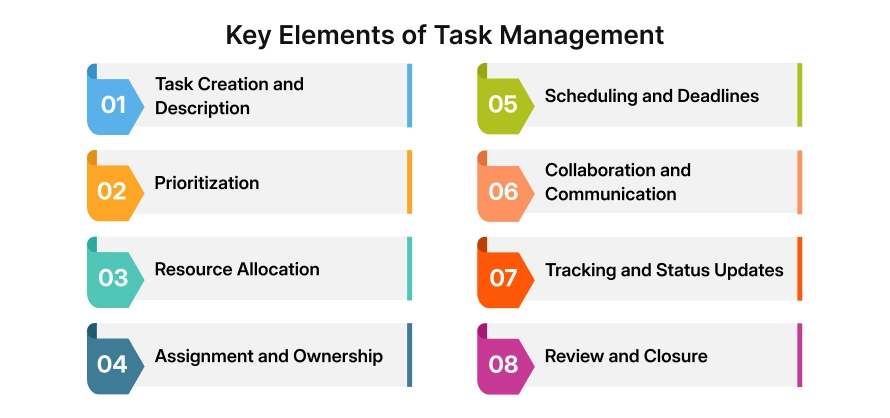
Here are the key elements of task management you need to know before entering challenges and practices to task management:
1. Task Creation and Description
Every task begins with a clear definition. Therefore, task creation and description are the key elements of task management, which include outlining what needs to be done, why it matters, and what the expected outcome is.
This is crucial because a well-described task removes ambiguity and ensures that team members understand the scope of work. It should include actionable details, relevant context, and all the necessary instructions so that execution begins without confusion or repeated clarification.
2. Prioritization
Not all tasks are equally important, making task prioritization a must-have. By prioritizing tasks, teams determine and focus on work that delivers the highest value or requires immediate attention.
It helps organize tasks based on urgency and importance, and avoids wasting time on low-impact activities, while ensuring that critical work is completed first. What’s more, effective prioritization helps teams manage workloads and meet deadlines more consistently.
3. Resource Allocation
Tasks often require specific resources such as tools, budget, time, or personnel, making resource allocation one of the crucial elements of task management. When done properly, resource allocation ensures that everything needed to complete a task is available when required.
On the contrary, when not done right, the improper resource allocation causes even well-planned tasks to face delays or inefficiencies. Allocating resources in advance helps teams execute work smoothly and prevents unnecessary bottlenecks.
4. Assignment and Ownership
Clear ownership is important for accountability and, therefore, one of the crucial elements of task management. Through clear assignment and ownership, teams ensure each task is assigned to a specific individual or team responsible for its completion.
When ownership is well-defined, there is less confusion about who is responsible, which improves follow-through and reduces the chances of tasks being overlooked or delayed.
5. Scheduling and Deadlines
Setting timelines gives structure to tasks and helps teams manage their time effectively. Moreover, this includes defining start dates, deadlines, and any intermediate milestones.
Proper scheduling not only ensures the timely completion of the task but also helps in planning dependencies between tasks, making it easier to coordinate even complex projects.
6. Collaboration and Communication
Tasks often require communication and collaboration from multiple team members, making it one of the crucial elements. Effective communication ensures that everyone involved is aligned and informed with the steps necessary to be taken.
By enabling discussions, feedback, and updates within the context of tasks, teams can reduce misunderstandings and keep work moving forward efficiently.
7. Tracking and Status Updates
Monitoring work progress is essential to ensure that tasks stay on track. Regular updates, when done right, provide visibility into what has been completed, what is in progress, and what may be delayed.
This helps teams identify issues early, adjust plans when necessary, and maintain overall control of their workflow.
8. Review and Closure
Once a task is completed, it’s important to review the outcome. This involves checking whether objectives were met and identifying any lessons learned.
Reviewing completed tasks helps improve future performance, refine processes, and ensure continuous improvement within the team.
Key Consequences of Failing to Conduct Task Management
Task management, when not done right, brings many challenges and consequences, including hidden productivity loss, constant overwhelm & burnout, missed deadlines, poor quality work, increased risk of project failure, and more. Here’s how:
- Hidden Productivity Loss: A significant portion of the workday is wasted trying to recall tasks and priorities instead of executing them efficiently.
- Constant Overwhelm & Burnout: Without a clear system, individuals rely on memory, leading to mental overload, stress, and eventual burnout.
- Missed Deadlines & Poor Quality Work: Lack of tracking, in the absence of task management, results in forgotten deadlines, rushed execution, and lower-quality outcomes.
- Overcommitting and Poor Prioritization: Lack of task management leads to less visibility into workload, making it difficult to distinguish between urgent and important tasks, and leading to overcommitment and inefficiency.
- Increased Risk of Project Failure: Poor coordination and lack of structure caused by improper task management can lead to scope creep, budget overruns, and communication breakdowns.
- Inefficient Decision Making: Decision fatigue sets in when there is no clear system, making it harder to decide what to focus on next.
- Wasted Time Searching for Information: When task management isn’t in place, teams spend more time looking for scattered notes, emails, and updates instead of focusing on meaningful work.
Best Practices for Effective Task Management
Implementing task management successfully requires more than just tools; it depends on clear processes, disciplined execution, and strong team alignment. The following best practices help teams stay organized, productive, and consistent in their workflows.
1. Set Clear Goals and Expectations
Every task should have a clearly defined purpose and outcome. Team members need to understand not just what needs to be done, but also why it matters and what success looks like. Clearly defined expectations reduce ambiguity, prevent rework, and ensure that everyone is aligned from the start.
This is especially important in collaborative environments where multiple people may be involved in the same task.
2. Set Clear Priorities
In any team, there will always be more tasks than time available. Task prioritization helps ensure that the most important and high-impact work gets done first. Using frameworks like the Eisenhower Matrix (a four-quadrant productivity and time-management tool used to prioritize tasks by urgency and importance) allows teams to distinguish between urgent and important tasks.
This method helps teams avoid the trap of constantly reacting to low-value work. Appropriate prioritization leads to better decision-making and more meaningful outcomes.
3. Break Down Large Tasks
Large or complex tasks may feel overwhelming and difficult to track. Therefore, breaking them down into smaller, actionable steps makes them easier to manage and execute.
This approach improves clarity, allows for incremental progress, and makes it easier to identify delays or issues early in the project development. Moreover, it also helps team members stay motivated by providing a clear sense of progress.
4. Assign Clear Ownership
Every task should have a single owner responsible for its completion. Assigning clear ownership is important. While collaboration may involve multiple contributors, clear ownership ensures accountability.
When responsibility is clearly defined, tasks are less likely to be ignored or delayed, which also creates a sense of ownership and commitment, improving overall team performance.
5. Use Time Management Techniques
Encouraging structured approaches to time management significantly improves focus and productivity within teams. Techniques such as time blocking help individuals dedicate uninterrupted time to important tasks, while methods like “Eat the Frog” encourage tackling challenging work early in the day.
Adopting these practices for task management reduces procrastination, improves concentration, and helps teams maintain consistent progress.
6. Reduce Workload with Structured Planning
Overloading team members with too many tasks may lead to burnout and reduced productivity. Therefore, following structured planning methods, such as the 1-3-5 rule, helps set realistic daily goals by limiting the number of tasks assigned.
By focusing on a manageable workload, teams are more likely to maintain quality, avoid stress, and ensure steady progress without overwhelming individuals.
7. Use the Right Tools
The right tools play a crucial role in effective task management. They help teams organize tasks, track progress, collaborate efficiently, and maintain visibility across projects.
Choosing the right task management software that aligns with the team’s workflow ensures smoother adoption and better long-term results, especially as the team grows or handles more complex projects.
8. Maintain Regular Check-Ins
Consistent check-ins, such as daily stand-ups or weekly reviews, help teams stay aligned and address issues early. These meetings provide an opportunity to share updates, clarify priorities, and resolve blockers before they impact progress.
Regular communication ensures that everyone remains on the same page and that work continues to move forward without unnecessary delays.
9. Encourage Open Communication
Encouraging open communication is important to ensure transparency for effective task management. That’s because team members should feel comfortable sharing updates, raising concerns, and asking for help when needed.
Open communication reduces misunderstandings, improves collaboration, and creates a more supportive and efficient work environment.
Most Common Ways to Manage Tasks
The most common ways to manage tasks include to-do lists, kanban boards, timeboxing, not-to-do lists, and more. Here’s all you need to know:
- To-Do-Lists: The easiest, however, most effective way to manage tasks is to make lists every day or week, prioritize the most important tasks, and keep them on track as you finish them.
- Kanban Boards: Teams use kanban boards as columns, for example, “To Do,” “In Progress,” and “Done”. It helps them measure their work and track the status, making it easier to work together.
- Timeblocking/Timeboxing: Setting aside a specific amount of time for each task helps teams stay focused, avoid multitasking, and complete tasks on time.
- Not-To-Do-Lists: Identifying tasks that are less likely to add value and make a conscious effort not to do them to free up time to focus on more important work.
- Agile-Scrum: Breaking work into sprints, checking in quickly, and changing priorities on the fly, intending to get things done timelessly while staying flexible.
Top Tools to Simplify Task Management
There are many; however, CollabCRM, Asana, and Monday.com are the top tools for task management. Here’s how they help teams manage their tasks and improve productivity.
CollabCRM
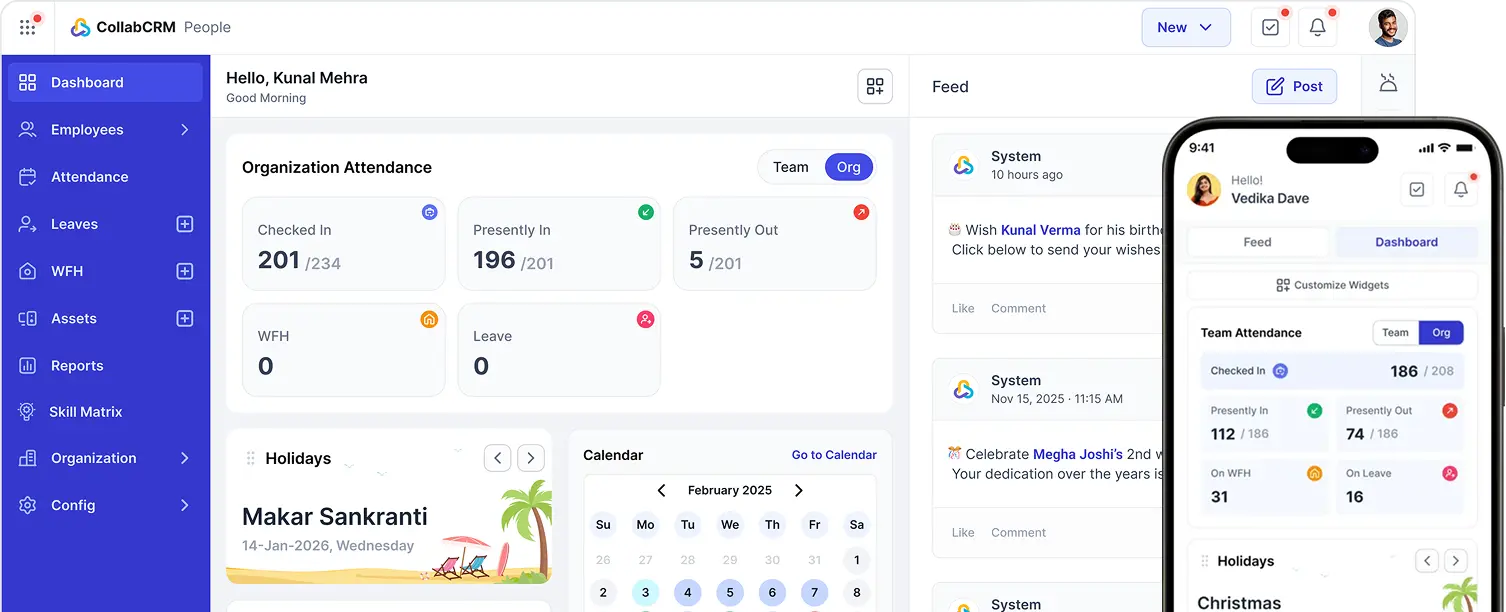
CollabCRM is a work management software built specially for IT teams. It combines features, for example, task tracking, resource planning, attendance, timesheets, and project monitoring, all in one platform. This platform helps managers continuously monitor who’s working on what, how busy they are, and when projects hit bottlenecks.
Key Features of CollabCRM Involve:
- Dynamic Project Dashboard
- Resource Adaptability Metrics
- Interactive Kanban Board
- Detailed Project View
- Hourly Billing Management
Asana
Asana is a task management tool to help teams organize tasks and manage projects, while staying aligned on goals. So, whether you need to track daily to-dos or manage company-wide initiatives, Asana could be the tool to offer you the structure needed to plan, execute, and deliver work effectively.
Core Features of Asana Include:
- Customizable Task Boards
- Project Templates
- Workflow Automation
- Collaboration Tools
- Reporting & Analytics
Monday.com
Monday.com is a work management software to streamline team collaboration, task tracking, and project execution. This tool comes with an intuitive interface and customizable features, making it suitable for teams of different sizes across various domains.
Core Features of Monday.com Include:
- Customizable Dashboards
- Multiple Views
- Automation
- Collaboration Tools

How CollabCRM Simplifies Task Management
Task management is a fundamental part of how successful teams operate. It brings structure to workflows, clarity to responsibilities, and visibility into progress, allowing teams to work more efficiently and collaboratively.
CollabCRM is a complete task management software built especially for IT companies. The software brings a holistic approach to task management, ensuring optimal visibility, clarity, and improvement to the project development process. Here’s how CollabCRM helps you with task management:
- Accelerates Project Delivery: Real-time dashboards enable teams to keep track of progress and meet deadlines.
- Optimizes Resource Allocation: Intelligent insights circumvent overbooking while balancing workloads among teams.
- Enhances Team Collaboration: Integrates tasks, such as HR, CRM, and billing, ensuring seamless cross-team work.
- Tailors User Access: Role-based permissions offer users the tailored tool they need to perform specific task management.
Ultimately, effective task management is not just about completing tasks; it’s about creating a system that enables teams to stay focused, adapt to changing priorities, and consistently deliver meaningful results. So, choose the right tool and make your task effective.
FAQs:
Task management is the process of planning, organizing, prioritizing, tracking tasks, and taking appropriate actions to ensure they are completed efficiently and on time.
Key elements of task management include task creation and clear descriptions, prioritization, assignment and ownership, scheduling and deadlines, progress tracking, communication & collaboration, and review & improvement.
The most common tasks management challenges include missed deadlines, poor prioritization, lack of visibility, overwhelming workload, and inefficient communication.
Some effective task management techniques are using the Eisenhower Matrix for prioritization, time blocking for focused work, breaking tasks into smaller steps, applying the 1-3-5 rule for daily planning, and tackling difficult tasks first (“Eat the Frog”).
Teams can improve task management by setting clear goals, assigning ownership, using task management tools, holding regular check-ins, and encouraging open communication.
The main difference between task management and project management is that task management focuses on handling individual tasks, while project management involves planning, executing, and overseeing entire projects that consist of multiple tasks.
By organizing tasks, setting priorities, and providing clarity, task management reduces uncertainty and helps individuals focus on one thing at a time, lowering stress and burnout.





 Priority Onboarding