

Interview scheduling may seem like a routine task, but it plays a critical role in hiring success. For IT companies competing for skilled talent, delays or poor coordination during scheduling can quickly lead to candidate drop-offs and longer time-to-hire.
As hiring scales, manual scheduling through emails, spreadsheets, and basic calendars becomes harder to manage. Recruiters spend excessive time coordinating availability, while candidates experience slow responses and confusion. What should be a simple step often turns into a bottleneck.
A structured interview scheduling approach helps recruiters move faster, improves candidate experience, enables you to build a scalable HR system, and gives leadership better visibility into hiring progress. This guide explores how to schedule interviews efficiently, the challenges recruiters face, and how modern tools support the growth of IT teams.
TL;DR: Key Insights on Interview Scheduling
- Interview scheduling is a structured process that includes planning interview rounds, coordinating panels, managing communication, and tracking candidate progress.
- Inefficient scheduling creates delays, candidate drop-offs, interviewer fatigue, and recruiter productivity loss, which impacts hiring outcomes in IT companies.
- A scalable scheduling process follows clear steps: shortlist candidates, run structured interview rounds, capture feedback, and move candidates forward without delays.
- CollabCRM integrates interview scheduling with candidate tracking, feedback, offers, and onboarding in one recruitment portal, helping IT teams reduce time-to-hire by up to 40%.
- Keka Hire supports basic interview coordination within an HRMS-led recruitment setup.
- Zoho Recruit suits teams looking for configurable hiring workflows within the Zoho ecosystem.
The Real Cost of Inefficient Interview Scheduling
As IT companies scale, interview scheduling quickly becomes a bottleneck. Managing multiple roles, interview rounds, and stakeholders through emails, spreadsheets, or basic calendars leads to delays, missed follow-ups, and inconsistent communication. Over time, these inefficiencies slow down hiring decisions, frustrate candidates and interviewers, and divert recruiters away from what matters most: hiring the right talent.
How Inefficient Interview Scheduling Affects Hiring
| What Happens | Why It Happens | Impact on Hiring |
| Delayed interview confirmations | Manual email coordination | Longer time-to-hire |
| Repeated follow-ups with candidates | No automation or reminders | Recruiter time wasted |
| Interviewer scheduling conflicts | No centralized calendar view | Poor interviewer experience |
| Candidate no-shows | Missed or late reminders | Lost hiring momentum |
| Last-minute reschedules | Limited visibility into availability | Frustrated candidates |
| Drop-offs mid-process | Slow, inconsistent communication | Reduced offer acceptance |
These challenges aren’t caused by HR & recruitment mistakes. They’re the result of fragmented systems and outdated processes. Treating interview scheduling as a structured workflow, supported by the right tools, helps remove friction and keeps hiring on track.
How to Schedule Interviews Efficiently: A Practical Workflow
Efficient interview scheduling isn’t about doing more; it’s about following a clear, repeatable workflow. When recruiters rely on a structured process supported by a recruitment portal, scheduling becomes faster, more predictable, and easier to manage at scale.
Below is a step-by-step interview scheduling workflow commonly used by modern recruitment teams, which is easily supported by centralized recruitment systems.
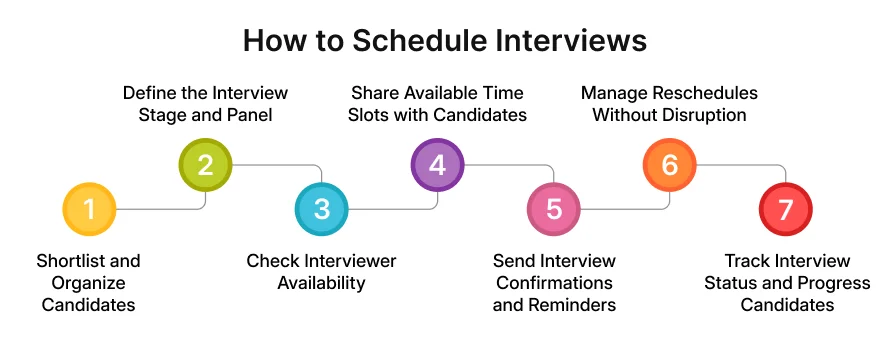
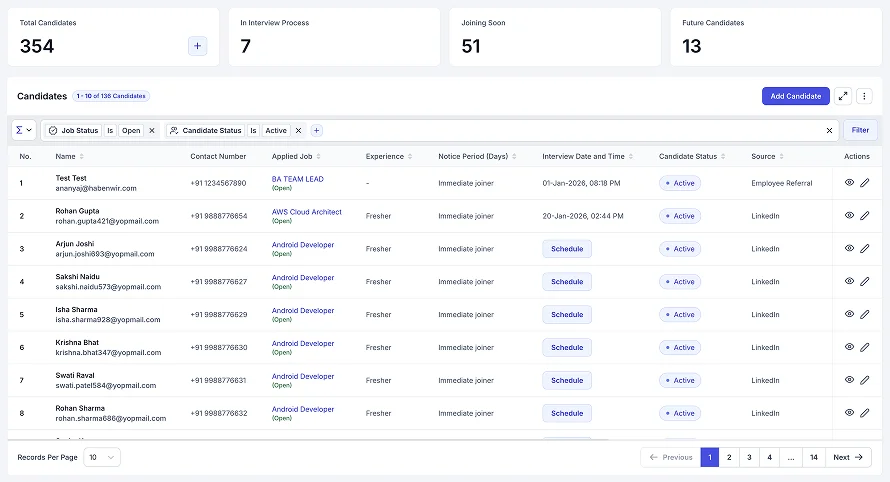
Step 1: Shortlist and Organize Candidates
Once candidates pass the initial screening, they should be moved into a dedicated interview stage. Recruiters need quick access to candidate profiles, role details, and current hiring status, without jumping between multiple Excel sheets or tools.
Step 2: Define the Interview Stage and Panel
Each interview stage, technical, managerial, HR, or final, should be clearly defined. Recruiters assign interviewers and standard durations upfront to avoid confusion during scheduling.
Step 3: Check Interviewer Availability
Before proposing time slots, recruiters should check the interviewer’s availability to avoid clashes. This step is especially important when coordinating multiple interviewers or remote teams across time zones.
Step 4: Share Available Time Slots with Candidates
Rather than negotiating schedules over email, recruiters can share a set of available time slots. Candidates choose a convenient option, helping finalize interviews faster.
Step 5: Send Interview Confirmations and Reminders
Once a slot is selected, confirmations should be sent immediately with all interview details. Automated reminders help reduce no-shows and ensure interviewers and candidates are aligned.
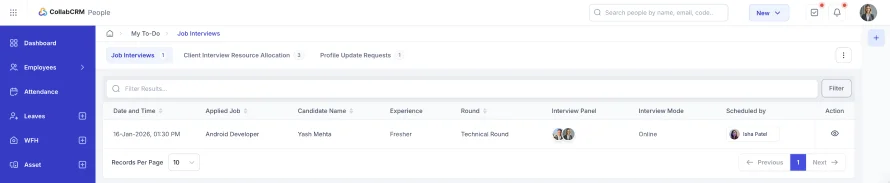
Step 6: Manage Reschedules Without Disruption
Changes are inevitable. A good scheduling process allows interviews to be rescheduled without restarting the entire workflow or losing visibility.
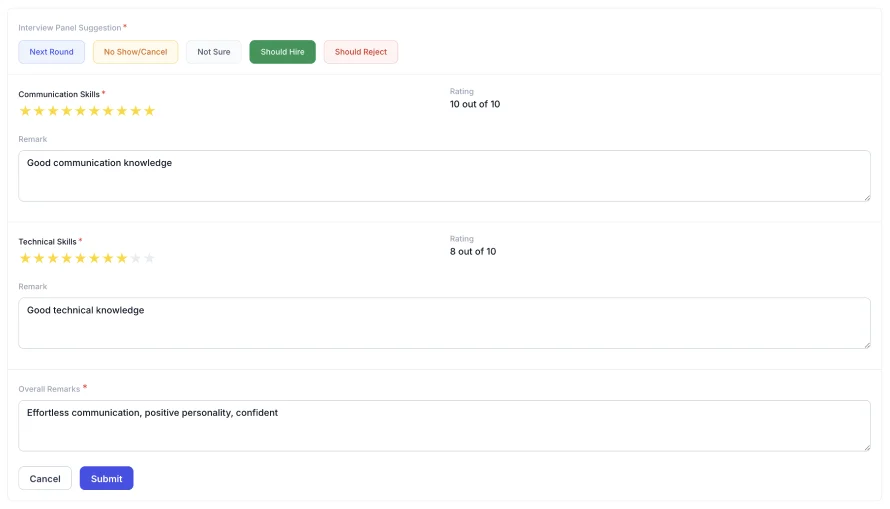
Step 7: Track Interview Status and Progress Candidates
Once interviews are completed, capture interview outcomes and panel feedback within the hiring system. This visibility allows recruitment teams to clearly track candidate progress, understand decision status, and ensure the hiring pipeline continues moving forward without unnecessary delays or follow-ups.
Why this approach works:
It minimizes manual coordination, creates consistency, and improves visibility throughout the hiring process. Recruitment portals that support this workflow help teams schedule interviews efficiently as hiring volumes grow.

Key Features to Look for in an Interview Scheduling Software
Once you have a clear interview scheduling process in place, the next step is choosing software that supports it effectively. The right interview scheduling tool should simplify coordination, reduce manual effort, and scale with your hiring needs, especially in fast-growing IT organizations.
Instead of focusing on individual features in isolation, recruiters and HR leaders should evaluate how well a tool supports the overall interview workflow.
1. Centralized Candidate and Interview Information
A strong scheduling tool should bring candidate profiles, interview stages, and scheduling details into one place. This helps recruiters track interview status easily and avoids switching between multiple systems.
2. Calendar Integration and Availability Visibility
Seamless integration with interviewer calendars is essential. Recruiters should be able to view availability in real time to prevent overlaps and double bookings, especially when coordinating panel interviews or multiple rounds.
3. Candidate-Friendly Scheduling
Modern scheduling software allows candidates to select from available time slots rather than negotiating schedules over email. This speeds up confirmations and improves the candidate experience.
4. Automated Confirmations and Reminders
Interview confirmations and reminders should be sent automatically to candidates and interviewers. This reduces no-shows and ensures everyone has the correct interview details at the right time.
5. Easy Rescheduling
Rescheduling should be simple and transparent. A good tool allows changes without breaking the workflow or creating confusion, keeping all stakeholders informed instantly.
6. Collaboration Across Hiring Teams
Interview scheduling often involves recruiters, hiring managers, and interview panels. Software should support collaboration by keeping updates visible to everyone involved.
7. Basic Reporting and Visibility
Recruiters and HR leaders benefit from visibility into scheduling delays, interview completion rates, and bottlenecks. Even simple reporting helps teams identify where the process needs improvement.
How to use this checklist:
Rather than choosing a tool based on one feature, evaluate how well it supports your interview process end-to-end. The best interview scheduling software removes friction from coordination and fits naturally into your broader recruitment workflow.
Best Practices to Improve Interview Scheduling
- Define interview stages and participants before scheduling
- Standardize interview durations and time slots
- Check the interviewer’s (or panel’s) availability early to avoid conflicts
- Offer predefined time slots to candidates to minimize back-and-forth
- Send clear confirmations with all interview details
- Use reminders to reduce no-shows and last-minute confusion
- Have a simple process for rescheduling when needed
- Track scheduling delays and identify recurring bottlenecks
- Keep all stakeholders informed throughout the process
- Review and refine your scheduling workflow regularly
Popular Interview Scheduling Tools Recruiters Use Today
With hiring volumes increasing, most recruitment teams rely on dedicated tools to streamline interview scheduling. These tools not only automate coordination but also provide visibility, reduce errors, and improve the candidate experience. While there are many options available, here are some widely used tools in the IT recruitment space:
1. CollabCRM Recruitment Portal
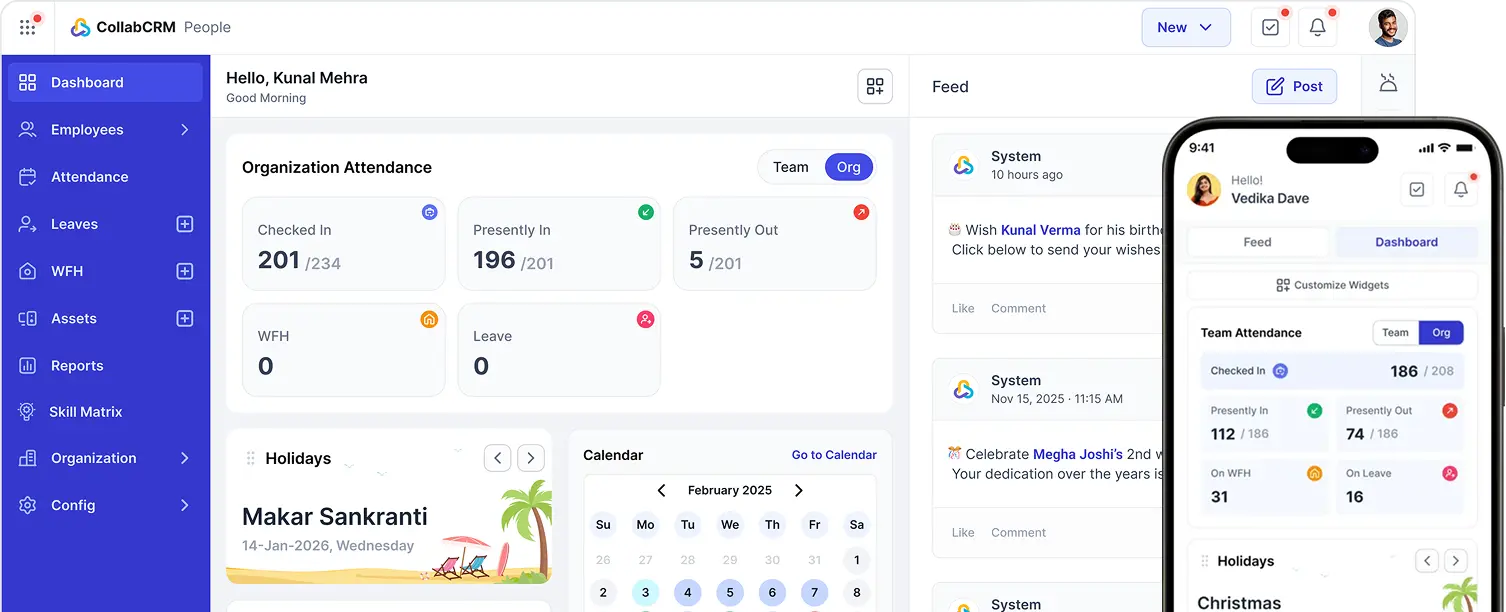
CollabCRM offers an integrated recruitment portal that supports end-to-end hiring workflows, including interview scheduling. Recruiters can manage candidate pipelines, configure interview rounds, check interviewer availability, and send automated confirmations- all from a single, centralized dashboard. This makes it particularly effective for IT companies handling multiple roles and complex, multi-stage hiring processes.
Beyond recruitment, CollabCRM functions as an all-in-one Business Operating System built specifically for IT companies. It brings together recruitment, employee onboarding and exits, sales, delivery, and reporting into one unified platform. This enables teams to manage operations efficiently without relying on disconnected tools.
Key Interview & Hiring Features
- End-to-End Applicant Tracking (ATS)
Centralizes interview scheduling within the broader hiring workflow- connecting job openings, interview rounds, panel coordination, feedback, and offer decisions in one system. This ensures recruiters have real-time visibility into interview status and candidate progress at every stage.
- Smart Interview Scheduling
Supports multiple interview rounds, allows recruiters to assign specific panel members, and defines interview modes (virtual or in-person), making coordination structured and predictable. - Recruitment Funnel Visualization
Provides a clear view of candidate movement across hiring stages, helping teams identify drop-offs and monitor interview progression at a glance. - Recruitment Process Length Tracking
Measures the time candidates spend at each stage of the hiring process, enabling HR teams to spot delays in interview scheduling or decision-making. - Candidate Scorecards and Interview Feedback
Allows interviewers to evaluate candidates using role-specific criteria and add structured feedback, ensuring consistent and objective hiring decisions.
2. Keka Hire
Keka Hire is an ATS that includes interview scheduling as part of its recruitment suite. It allows recruiters to send available time slots to candidates, automate reminders, and maintain a centralized view of interview stages. Its integration with calendars and collaborative workflows makes it easy for hiring teams to coordinate interviews efficiently.
3. Zoho Recruit
Zoho Recruit combines ATS capabilities with interview scheduling features. Recruiters can define interview panels, manage slots across multiple interviewers, and allow candidates to self-select suitable times. Automated notifications and reschedule management help reduce coordination overhead and improve the overall hiring experience.
Why Integrated Recruitment Portals Work Better for IT Hiring
In IT companies, hiring is closely linked to sales delivery timelines, client expectations, and development team capacity. This makes interview scheduling more than an administrative task; it’s an operational function.
With an integrated recruitment portal, here’s what changes:
- Recruiters manage interviews, candidates, and communication from a single dashboard
- Interviewers gain clear visibility into schedules and expectations
- Hiring managers track progress without chasing updates
- Candidates experience smoother coordination and faster responses
- Teams maintain consistency even as hiring volumes grow
The result is a recruitment process that supports business growth instead of slowing it down.
Conclusion
In today’s IT hiring landscape, interview scheduling is no longer a back-office task. It directly impacts candidate experience, hiring speed, and business outcomes. Delays, misalignment, or poor coordination don’t just frustrate recruiters; they cost companies top talent.
When interviews are scheduled efficiently, recruiters move faster, hiring managers stay aligned, and candidates remain engaged. Clear workflows, timely communication, and structured feedback lead to better decisions and shorter time-to-hire. For IT companies juggling multiple roles, panels, and delivery deadlines, this efficiency becomes a real competitive edge.
Why CollabCRM Is the Best Recruitment Software for IT Companies
CollabCRM’s recruitment module centralizes interview scheduling within a structured hiring workflow. Recruiters manage interview rounds, panels, feedback, and candidate movement from one dashboard, without manual follow-ups or tool switching.
By removing coordination delays and improving visibility at every stage, CollabCRM helps IT companies reduce hiring time by up to 40% and scale recruitment with consistency and speed.
FAQs
Interview scheduling is the process of coordinating interview rounds between candidates, interviewers, and hiring managers, including setting dates, assigning panels, choosing interview modes, and managing communication.
IT hiring often involves multiple technical rounds, cross-functional panels, and tight delivery timelines. Coordinating availability and feedback across teams makes manual scheduling difficult to scale.
Poor scheduling leads to delayed hiring decisions, candidate drop-offs, interviewer fatigue, and longer time-to-hire, often resulting in the loss of top technical talent.
Yes. Modern recruitment systems allow recruiters to automate interview coordination by configuring interview rounds, assigning panel members, and sending confirmations and reminders automatically.
Key features include multi-round interview setup, interviewer availability tracking, candidate status visibility, structured feedback, calendar integrations, and reporting on hiring timelines.
While calendar tools manage availability, an ATS connects scheduling with candidate pipelines, feedback, offers, and analytics, giving recruiters end-to-end visibility instead of isolated bookings.
Yes. Most recruitment portals allow recruiters to define interview modes, whether virtual, in-person, or hybrid, based on role requirements and interviewer availability.
Clear communication, faster confirmations, and fewer reschedules create a smoother experience for candidates and reflect positively on the company’s hiring brand.
Integrated recruitment portals are designed to scale. Standardized workflows, automation, and real-time dashboards help teams manage multiple roles and candidates simultaneously.
Yes. In modern IT hiring, scheduling works best when connected to sourcing, evaluation, offer management, and onboarding, ensuring hiring teams operate from a single, reliable system.




 Priority Onboarding