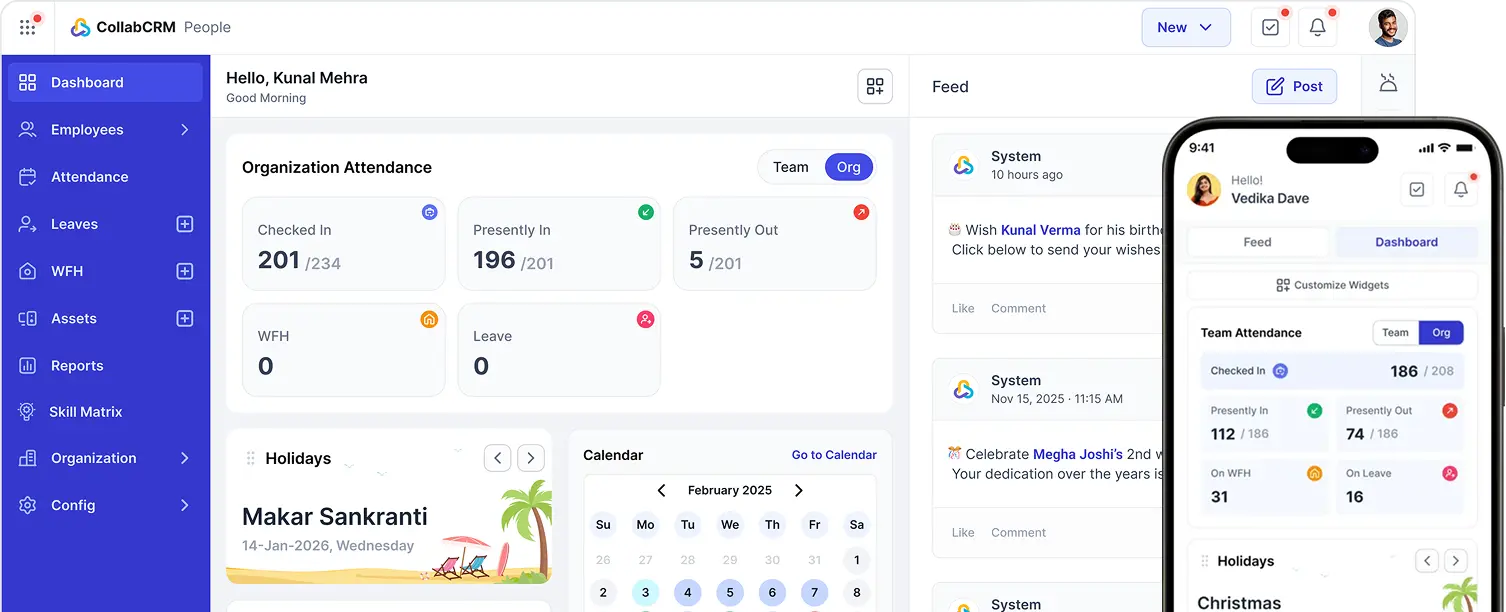

Most fast-growing startups struggle with operational lag as their teams grow. The reason lies in dependencies, delays, communication gaps, and unequal & unprioritized work.
The common challenge that startups face is to achieve successive milestones with the limited resources that they have. They cannot rely on ad hoc methods and scattered processes.
They specifically need a robust project management software for startups. The right tool enables you to prioritize, structure, distribute, and analyze work such that it delivers effortlessly.
Now, there are several project management software available in the market, each one providing features to manage your team’s work and keep you on schedule. But you must find the one that helps you scale from the start.
In this blog, we explain what to look for in a project management tool for your startup and share our top five software picks that can help you overcome common challenges and achieve your business goals.
TL;DR
- Startups struggle with delays, dependencies, and scattered tools that slow execution.
- The right project management tool helps prioritize work, improve collaboration, and maintain delivery speed.
- Key factors to look for: ease of onboarding, centralized work, flexibility, collaboration, and scalability.
- CollabCRM stands out by combining project management, CRM, and operations in one platform.
- Asana is suitable for structured task planning and cross-team coordination.
- Trello works well for simple, visual task tracking using Kanban boards.
- Basecamp focuses on centralized communication and basic work management.
- Jira is ideal for Agile, sprint-based software development teams.
- Startups benefit most from tools that reduce context switching and prevent operational and revenue leaks.
- Choosing a startup-ready tool early helps teams scale faster without adding complexity.
What Startups Should Look for in a Project Management Tool
Startups should choose a project management tool that supports fast adoption, keeps all work and communication in one place, adapts to evolving workflows, and scales without adding operational complexity. These fundamentals help teams stay efficient while growing with limited resources.
Check for the following things:
- Ease of onboarding for small teams
- Ability to centralize work, communication, and context
- Flexibility to adapt to evolving workflows
- Collaboration across founders, managers, and teams
- Scalability without operational complexity.
As per a report by McKinsey, effective project management increases productivity by 25%. So, for your startup scaling, we have picked the top project management software for startups, along with their features.
Top 5 Project Management Tools for Startups
Here is the list of top 5 project management tools best suited for startups:
1. CollabCRM
CollabCRM’s project management module helps startups plan resources, collaborate across teams, track time, and execute projects efficiently. In addition to project management, CollabCRM includes People Management system, Resource Management system, Sales CRM system, Billing, Recruitment, and Reporting software, making it a true all-in-one solution for IT companies.
A common challenge for IT startups is juggling multiple tools for tasks, communication, file sharing, and client information. This fragmentation leads to constant context switching, missed details, and slower execution. CollabCRM is built to eliminate this problem by bringing everything into one unified system.
Most project management tools are designed for large enterprises, which makes them complex, slow to onboard, and difficult for startups to maintain. CollabCRM takes a simpler approach, offering only what startups need to get started, with the flexibility to scale as teams and operations grow.
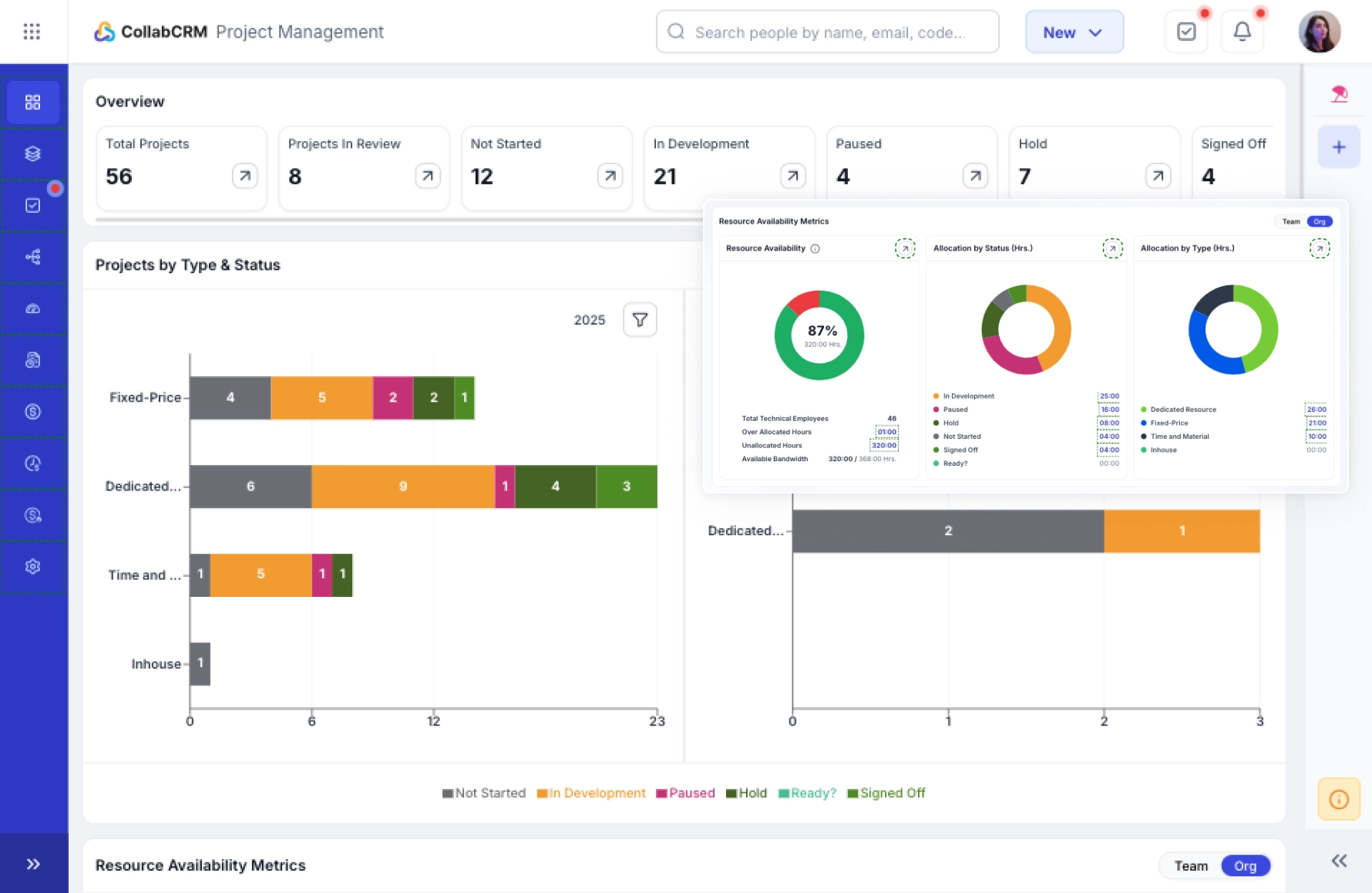
CollabCRM provides a 360-degree view of your projects, covering work in progress, upcoming pipelines, delivery status, resource allocation, and key project insights. It also allows you to configure workflows to match your startup’s structure and operating style.
Key Project Management Features of CollabCRM:
- Real-time Project Visibility & Status: Provides a real-time view of project progress, delivery status, and potential bottlenecks, helping teams stay informed and proactive.
- Business Workflow Integration: Integrates project management with CRM, billing, people management, administration management system and operational workflows to keep all business activities connected.
- Task Management: Enables teams to create, assign, prioritize, and track tasks, ensuring work is organized and executed as planned.
- Resource Allocation: Helps managers assign resources based on availability and workload to maintain balanced utilization and timely delivery.
- Collaboration Across Teams: Supports seamless collaboration between founders, managers, and teams through shared visibility and communication within projects.

2. Asana
Asana is a widely used project management platform designed to help teams plan, organize, and track work from start to finish. Its flexible system supports multiple views (list, board, timeline), making it suitable for structured planning, cross-team collaboration, and scaling workflows as startups grow. Asana is especially useful for teams that need clarity around priorities, deadlines, and project progress without excessive complexity.
Key Features of Asana:
- Task Dependencies & Milestones: Link related tasks, define sequences, and mark key milestones to keep projects on schedule.
- Workload Management: Provides visibility into team capacity and assignments to help balance work and avoid overload.
- Dashboards & Reporting: Built-in dashboards and progress reports help monitor project health and team performance.
- Integrations: Connects with tools like Slack, calendar apps, GitHub, and more to unify work across systems.
3. Trello
Trello is a visual project management tool built around easy-to-use boards, lists, and cards. Its simple and easy Kanban-style design makes it ideal for startups that want a clear and flexible way to organize tasks and workflows without complexity. Trello works well for teams that prefer a visual overview of their work, fast onboarding, and simple task tracking.
Key Features of Trello:
- Kanban Boards: Visual boards with lists and cards that help teams organize work and track progress at a glance.
- Card-Level Task Details: Add descriptions, checklists, due dates, attachments, and labels directly to task cards.
- Integrations: Extend Trello with power-ups (add-ons) for calendars, reporting, time tracking, and other tools teams already use.
- Drag-and-Drop Simplicity: Intuitive drag-and-drop interface that’s easy to learn and use, even for non-technical teams.
4. Basecamp
Basecamp is a project management and team communication platform designed to reduce chaos and keep everyone aligned in one place. It brings together messaging, to-dos, schedules, files, and check-ins in a single workspace, making it a strong choice for startups that struggle with scattered communication and disconnected tools. Basecamp prioritizes simplicity and clarity over complexity, helping teams stay coordinated without overwhelming features.
Key Features of Basecamp:
- Message Boards: Central discussion spaces where teams can post updates, share ideas, and keep conversations organized by topic.
- To-Do Lists: Structured task lists where teams can assign work, set due dates, and check off completed items.
- Real-Time Chat: Built-in group chat (Campfire) for quick team conversations and immediate coordination.
- Schedules & Milestones: Shared calendars to track due dates, milestones, and important deadlines in one place.
- Docs & Files: A central repository for storing project documents, attachments, and reference materials.
- Automatic Check-Ins: Recurring prompts that ask team members for status updates, helping keep everyone aligned without meetings.
5. Jira
Jira is a powerful project and issue-tracking platform developed for software development teams, especially those using Agile methodologies like Scrum and Kanban. It helps teams plan, track, and release work with precision, offering detailed workflows and metrics that support iterative development and high-performance delivery. While Jira’s strength lies in technical project environments, it can also support cross-functional teams that require structured planning and reporting.
Key Features of Jira:
- Agile Boards: Flexible boards that support both Scrum sprints and Kanban workflows, giving teams visual control over ongoing work.
- Issue & Bug Tracking: Detailed tracking of tasks, bugs, and user stories with customizable fields and workflows tailored to development processes.
- Sprint Planning & Backlog Management: Tools for planning work in iterative cycles, prioritizing backlogs, and organizing releases.
- Custom Workflows: Create workflows that mirror how your team actually works, including flexible steps, transitions, and rules.
- Reports & Dashboards: Built-in reports such as burndown charts, velocity charts, and status dashboards that provide deep insights into project health.
- Integrations: Seamless connections with code repositories (e.g., GitHub), CI/CD pipelines, test tools, and communication platforms.
Project Management Tools Comparison for Startups
Here’s a clear breakdown of which essential project management features are available across leading project management tools for startups.
| Sr. No | Feature | Asana | Trello | Basecamp | Jira | CollabCRM |
| 1 | Kanban Board | Limited | ✅ | ❌ | ✅ | ✅ |
| 2 | Smart To-Do | ✅ | ❌ | ❌ | ❌ | ✅ |
| 3 | Resource Availability | ✅ | ❌ | ❌ | Partially Available | ✅ |
| 4 | Occupancy Report | Limited | ❌ | ❌ | Limited | ✅ |
| 5 | Project Health Tracking | ❌ | ❌ | Very Limited | ✅ | ✅ |
| 6 | Project-Based Reports (Hourly, Fixed-cost, Hirebase) | Partially Available | ❌ | ❌ | Partially Available | ✅ |
Closing Thoughts on Startup Project Management Tools
For IT services and SaaS startups, project management directly impacts delivery, customer satisfaction, and revenue. As your teams scale, managing work through scattered tools or informal processes quickly slows execution. You need clear visibility into projects, resources, and delivery status to make fast, informed decisions.
The right project management tool should help your teams move faster, stay aligned, and reduce operational friction. It should support day-to-day execution while scaling smoothly as your projects, clients, and teams grow. Choosing a tool that fits your workflows and business model from the start helps ensure consistent delivery and long-term growth.
Why CollabCRM for Startup Project Management?
CollabCRM is built for startups that need project management, CRM, and operational workflows in a single platform. It solves two major pain points for IT and SaaS startups:
1. Collaboration Chaos
2. SaaS Sinkhole, caused by fragmented tools and uncontrolled spending.
With CollabCRM, you get startup-specific operational features designed to streamline execution and protect revenue:
- Tracks client interactions, projects, and billing in one place to prevent “Revenue Leaks”.
- Provides “Clear Project Visibility” into ongoing tasks, project progress, and resource allocation.
- Monitors software subscriptions, project costs, and operational spend to prevent “Budget Overruns”.
- Smart “To Do list” & notifications ensure team members never miss critical actions, boosting productivity.
- Logs every change to projects and invoices with date and time, keeping startups “Audit-Ready”.
- Let’s founders manage “Multiple Business-Units” under a single login for centralized control.
By combining project execution, client management, and operational oversight, CollabCRM helps startups work faster, scale smarter, and stay in control of their growth from day one.
FAQs
Startups need project management tools to organize work, improve collaboration, track progress, and deliver projects on time with limited resources.
Startups should look for easy onboarding, centralized tasks and communication, flexible workflows, team collaboration, and scalability without added complexity.
Yes. Even small teams benefit from better task clarity, accountability, and visibility, which helps avoid delays and miscommunication early on.
Tools that combine project tracking, collaboration, and operational visibility, such as CollabCRM, are best suited for IT startups.
Yes. By linking tasks, projects, clients, and billing, project management tools, like CollabCRM, help startups avoid missed follow-ups, scope creep, and billing gaps.
Using one integrated platform reduces context switching, lowers SaaS costs, and improves execution speed compared to managing multiple disconnected tools.
Yes. Tools like Jira, Asana, and Trello support Agile, Scrum, and Kanban workflows, depending on team needs.
A startup should invest as soon as work involves multiple people, clients, or projects to avoid operational chaos and scaling issues later.