

IT companies often deliver excellent technical work, but their sales pipeline can still feel unpredictable.
Deals sit in the same stage for weeks, forecasts miss the mark, and no one is quite sure why some leads convert while others go quiet. This is usually not a sales talent problem. It is a process problem.
A predictable sales pipeline for IT companies comes from clear stages, a consistent lead qualification process, and real data instead of guesswork. This guide walks through practical steps any IT or software company can use, from responding to leads faster to bringing sales and delivery teams onto the same platform.
Along the way, we will also look at how the right sales management software can support each step.
Key Takeaways:
- A predictable sales pipeline for IT companies comes from clear process, not more leads or more tools.
- Define entry and exit criteria for every pipeline stage so the whole team qualifies deals the same way.
- Respond to leads quickly and assign ownership immediately to protect deal quality.
- Build technical evaluation into the pipeline as its own stage, not a side process.
- Use qualification time, win rate, and deal size data to forecast instead of guessing.
- Keep sales and delivery teams on the same platform to avoid blind spots and missed handoffs.
- Use CRM in sales management to keep the entire pipeline organized and easy to track.
What is Sales Pipeline?
A sales pipeline is a clear picture of where each prospect stands in your buying process, from the first contact through a closed deal. It maps every stage, such as prospecting, qualification, proposal, negotiation, and close, and defines what needs to happen before a deal moves from one stage to the next.
A pipeline is different from a sales funnel. A funnel shows overall volume at each stage, while a pipeline tracks individual deals and how they move forward over time. This distinction matters for sales pipeline management for IT services, since IT deals often involve several stakeholders and move at different speeds.
In 2026, a predictable sales pipeline for IT companies needs to work across multiple channels at once. Research from Graph8 shows that 80% of B2B sales interactions now happen digitally, which means a pipeline needs to track email, phone calls, website activity, and social engagement as part of the same buyer journey.
Modern sales management software brings these channels into one workflow, so sales teams are not switching between disconnected tools to see the full picture of a deal.
Why Sales Pipelines Break Down at IT Companies
Sales pipelines at IT companies often look organized on paper but fall apart in practice. One reason is the length and complexity of the sales cycle.
A single deal may involve a business stakeholder, a technical evaluator, and a budget owner, and each person asks different questions before saying yes. This means a deal can sit in the same stage for weeks while different people review it internally.
Another common problem is the lack of a shared definition for each pipeline stage. One sales rep may mark a lead as qualified after a single call, while another waits for a signed requirement document. When the whole team does not agree on what each stage means, forecasting becomes guesswork rather than a reliable process.
A third issue is the gap between sales and delivery teams. For example, a sales rep may promise a client that a senior developer will be available next month, without checking with the delivery team first. This creates confusion later and slows the deal down.
How IT Companies Can Make Their Sales Pipeline More Predictable: 6 Simple Tips
Building a predictable pipeline does not require complex systems. Here is how to build a sales pipeline that stays reliable, using six simple, practical tips any IT company can apply right away.
1. Start With Clearly Defined Pipeline Stages
The first step when building a predictable pipeline is to define every stage clearly. Make sure that each stage has clearly defined entry and exit point so that the entire team knows exactly when a deal moves forward.
For example, a lead can move from new to qualified only after the budget is confirmed and the client’s technical requirement is understood. Without this kind of rule, representatives end up marking deals as qualified based on personal judgment, and this makes the entire pipeline unreliable.
It also helps to keep the pipeline simple. Most IT companies do well with five to seven stages, such as lead capture, qualification, proposal, negotiation, and closed. Adding too many stages creates extra work for the team without adding real clarity to the process.
Finally, the pipeline should be visible to everyone involved, not just the sales team. When a shared dashboard shows every deal and its current stage, sales leaders, account managers, and even delivery teams can plan their time better. For example, a delivery manager can see that a large deal is close to signing and start preparing the right team in advance.
2. Respond to Leads Faster to Protect Pipeline Quality
Speed matters a lot in IT sales, since a slow first response often means the client has already reached out to another company.
According to Salesforce’s 2026 State of Sales report, 57% of sales professionals say their sales cycle is getting longer. A longer sales cycle gives competitors more time to reach the same prospect first, which makes a fast initial response even more important for protecting pipeline quality.
Automating lead capture helps solve this problem. When a lead comes in through a website form or API integration, it should reach the sales team right away instead of waiting in an inbox. For example, a lead submitted late at night should still be visible to the sales team first thing the next morning, without anyone needing to check multiple tools.
Assigning ownership immediately is just as important. Every lead should have one clear owner from the moment it enters the pipeline, so nothing gets missed or duplicated. This is a basic part of any solid guide to sales management, since unclear ownership is one of the most common reasons leads go cold before a conversation even starts.
3. Build Technical Evaluation into the Sales Process
Before signing a contract, many clients want to meet the actual developers or consultants who will work on their project, not just the sales team. This makes the interview stage a real part of the deal, not an extra step after sales.
To keep this stage from slowing down a predictable sales pipeline for IT companies, it should be treated like any other pipeline stage. This means scheduling interviews on time, assigning the right team members based on skill match, and recording feedback from both the client and the internal panel in one place.
For example, if a client wants to meet two backend developers before approving a project, that interview should be tracked with a clear outcome, not left in a separate email thread. A good CRM in sales management means this feedback sits directly with the deal record, so it clearly shows whether the deal is ready to move forward or needs another round.
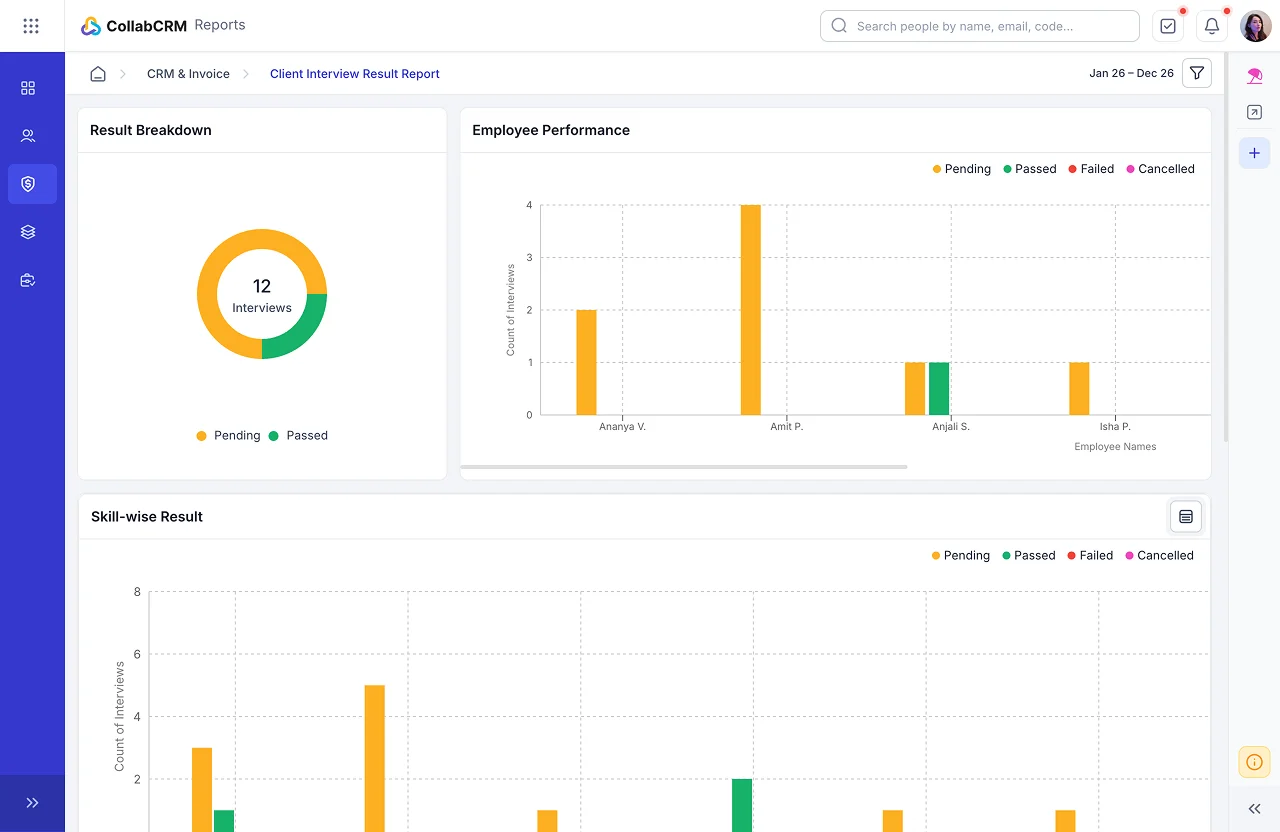
CollabCRM – Client Interview Result Report
CollabCRM’s Client Interview Result Report gives a clear view of interview outcomes tied to each deal, including status, feedback, and required skills. It helps managers identify top-performing developers, spot skill gaps, and make faster staffing decisions.
By keeping this data connected to the pipeline, sales teams can update clients quickly and move qualified deals forward with confidence.
4. Use Sales Data to Forecast Accurately
A sales pipeline can be made predictable for IT businesses if it has access to real data. Tracking qualification time and win rate by stage shows exactly where deals tend to stall.
This makes it easier to fix the actual bottleneck instead of guessing what is slowing things down.
In addition, comparing average deal size and client type adds another layer of clarity. A new client deal usually takes longer to close than a deal with an existing client, so treating them the same way can lead to unrealistic targets.
Looking at deal conversion rate separately for each group gives a more accurate picture of what the team can achieve.
Finally, monthly targets for leads, deals, and collections turn the pipeline into something the team actively manages, not just a report leadership checks once a month. For example, if a company sets a target of ten qualified leads and three closed deals per month, the best reporting tools can track progress in real time and flag gaps before the month ends.
5. Bring Sales and Delivery Teams onto the Same Platform
When lead data, proposals, and delivery timelines live in separate tools, it becomes very hard to see the full picture of a deal. A sales representative may know a proposal was sent but have no idea if the delivery team has the right people available to start the project.
This gap often leads to missed deadlines and inaccurate forecasts, since no one has a complete view of what is happening.
A centralized sales management platform solves this problem by bringing everything into one place. When contacts, deals, follow-ups, and invoicing sit together, it becomes much easier to see exactly where a deal or a client relationship stands at any point in time.
For example, if a sales team closes a deal, the delivery team should be able to see that update immediately, along with the client’s requirements and any notes from earlier calls.
A shared centralized dashboard on your project management software will help you make this handoff smooth, so nothing gets lost between the sales and delivery stages, and both teams stay accountable for their part of the process.
6. Use Sales Management Software
Sales management software brings leads, deals, follow-ups, proposals, and reporting into one place, so nothing depends on someone remembering to update a document.
CRM in sales management also removes a lot of manual work. Instead of a someone manually tracking which leads need a follow-up call, the system can generate reminders automatically. Instead of a manager asking each team member for a status update, a shared dashboard already shows where every deal stands.
For IT companies specifically, this matters even more, since deals often involve technical evaluations, multiple stakeholders, and a handoff to a delivery team. Software that connects all of this keeps information in one workspace instead of spreading across email threads and spreadsheets.
Using the right software can help you fix a broken sales process on its own, but it does make every other step in this guide, from faster follow-ups to accurate forecasting, much easier to maintain.
How CollabCRM Supports These Practice
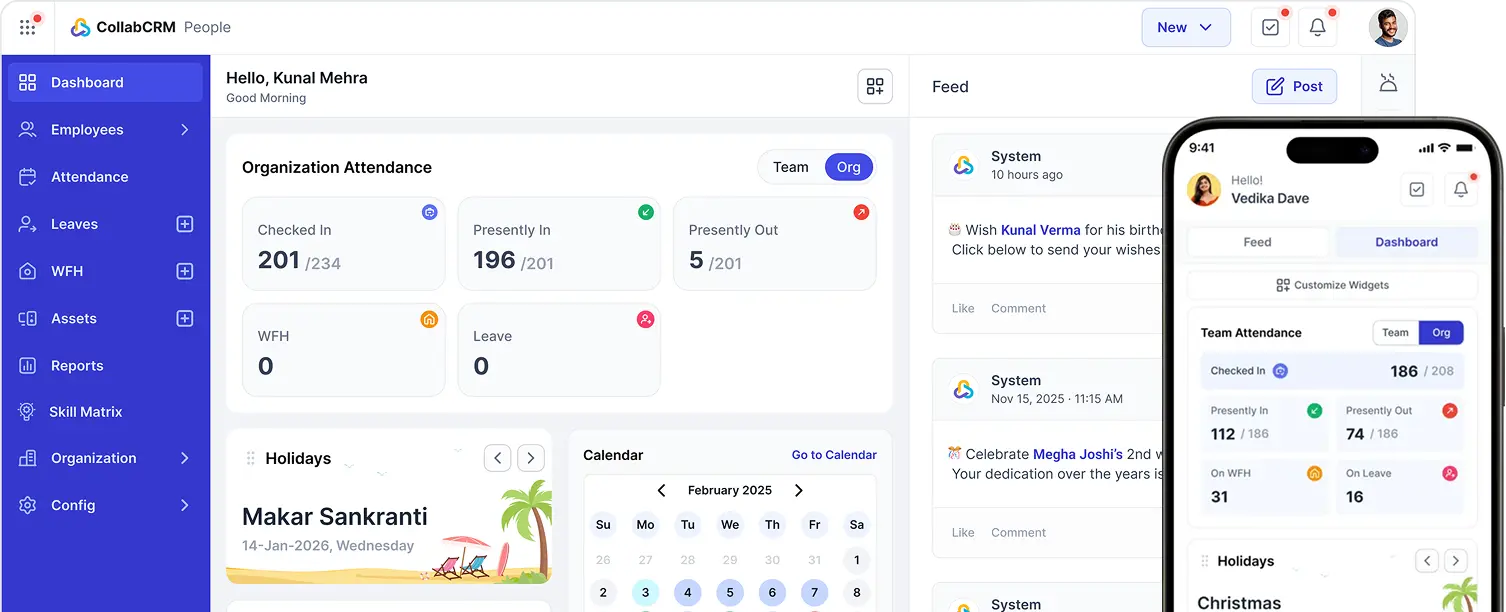
Instead of managing leads, proposals, and delivery details across separate tools, CollabCRM brings the entire sales pipeline into one connected workflow.
Leads are captured automatically through website integration and assigned to sales representatives right away, so nothing waits in an inbox.
As lead management software, CollabCRM moves leads through clear, customizable stages, so every deal follows the same qualification process instead of relying on individual judgment.
Once a lead is qualified, it converts into a deal with a single click, carrying customer details and estimations forward automatically. Proposals can be generated, sent for signature, and tracked in real time, so sales teams always know where a deal stands.
For IT and software companies, client interviews are built directly into the pipeline. Developers can be assigned, resumes shared, and feedback recorded in one place, connecting the technical evaluation step to the deal itself rather than a separate email thread.
Follow-ups are scheduled with reminders, and a live dashboard shows leads, deals, and team performance briefly, supporting the kind of forecasting covered earlier in this guide.
Finally, once a deal closes, it can move directly into project delivery and invoicing without switching systems. This keeps sales, delivery, and finance connected from the first inquiry to final payment.
FAQ:
A predictable sales pipeline for IT companies means knowing what revenue is coming, when it is likely to close, and why, based on clear stage definitions and real data rather than guesswork.
Most IT companies use five to seven stages: lead capture, qualification, technical evaluation, proposal, negotiation, and closed. Using CRM in sales management helps keep every deal moving through the same structured process.
Automating lead capture through lead management software and assigning ownership immediately helps sales teams respond faster, which protects deal conversion rate and keeps prospects from going cold.
Sales pipeline health is measured by tracking qualification time, win rate by stage, average deal size, and deal conversion rate. Using the best reporting tools like CollabCRM to monitor these numbers together shows where deals stall and whether the pipeline can support realistic monthly targets.




 Priority Onboarding