
IT projects rarely go exactly as planned. A feature request changes. A client asks for adjustments midway. Priorities shift as the product evolves. In many traditional project management methodologies, these changes can slow everything down.
That is one of the main reasons Agile Project Management has become widely adopted in the IT industry. Instead of following a rigid, long-term plan, Agile allows teams to work in smaller cycles, adapt quickly, and continuously improve the product as the project progresses.
For project managers and technology leaders, Agile offers a practical way to manage complex software projects. It helps teams stay flexible, collaborate more effectively, and deliver value faster while keeping everyone aligned on project goals.
TL;DR
- Agile Project Management focuses on flexibility and iterative delivery.
- Projects are divided into short cycles called sprints to deliver incremental progress.
- Continuous feedback helps teams refine the product throughout development.
- Scrum, Kanban, and other frameworks structure Agile workflows.
- Agile improves collaboration between developers, managers, and stakeholders.
- Frequent reviews increase transparency and help teams address issues early.
- Work platforms like CollabCRM help teams organize tasks and track sprint progress.
What is Agile Project Management?
Agile Project Management is an approach that focuses on delivering work in small, iterative cycles while continuously adapting to change. Instead of planning the entire project in detail at the beginning, Agile teams break the work into smaller tasks and complete them in short development cycles.
Each cycle typically results in a working version or improvement of the product. This allows teams to gather feedback early and make adjustments before moving forward.
Agile also emphasizes collaboration. Developers, project managers, and stakeholders work closely throughout the project. Regular communication helps ensure that the team stays aligned with project goals and business priorities.
Another key aspect of Agile is transparency. Progress is reviewed frequently, and teams can quickly identify issues or roadblocks. This makes it easier to adjust plans without disrupting the entire project.
Agile vs Traditional Methodology
The Agile approach differs from traditional project management methods, such as the Waterfall model, which follows a fixed, sequential process from operational planning through delivery.
In Waterfall, requirements are defined upfront, and changes later in the project can be difficult to accommodate. Agile addresses this limitation by allowing teams to review progress frequently and adjust priorities as needed.
This flexibility makes Agile particularly valuable for modern IT projects, where requirements often evolve, and customer expectations change throughout the development process. By enabling continuous feedback, faster delivery, and better collaboration, Agile helps teams manage complexity while keeping projects aligned with business goals.
Agile has become the dominant approach for managing modern technology projects. In fact, 87% of organizations now use Agile methodologies, reflecting the growing need for flexible and iterative project management in software development.
The Key Principles of Agile Project Management
Agile Project Management is guided by the Agile Manifesto and its 12 core principles. Together, they define how Agile teams collaborate, deliver value, and adapt to change in modern IT projects.
The 4 Values of the Agile Manifesto
The Agile Manifesto highlights four key values that guide Agile teams.
1. Individuals and interactions over processes and tools: strong communication and collaboration between team members are more important than rigid processes.
2. Working software over comprehensive documentation: delivering functional software is the primary goal, rather than spending excessive time documenting every detail.
3. Customer collaboration over contract negotiation: continuous collaboration with customers helps ensure the product meets real needs.
4. Responding to change over following a plan: agile teams remain flexible and adapt quickly when project requirements evolve.
The 12 Principles of Agile Methodology
1. Customer satisfaction through early delivery
Deliver valuable software early and continuously.
2. Welcome changing requirements
Adapt to changes even in later stages of development.
3. Frequent delivery of working software
Release functional product updates regularly.
4. Close collaboration between business and development teams
Stakeholders and developers work together throughout the project.
5. Build projects around motivated individuals
Provide the right environment and trust teams to deliver results.
6. Face-to-face communication is most effective
Direct communication improves clarity and decision-making.
7. Working software is the main measure of progress
Real product outcomes matter more than reports or documentation.
8. Sustainable development pace
Teams should maintain a consistent and manageable work rhythm.
9. Continuous attention to technical excellence
High-quality code and good design improve long-term agility.
10. Simplicity is essential
Focus on doing only the work that adds real value.
11. Self-organizing teams produce the best results
Teams perform better when they manage their own work and decisions.
12. Regular reflection and improvement
Teams periodically review their work and adjust processes to improve performance.
How Agile Project Management Works in Practice [Steps]
Agile Project Management follows a structured but flexible workflow. Instead of managing a project through one long timeline, work is divided into short cycles called sprints. Each sprint typically lasts one to four weeks and focuses on completing a defined set of tasks.
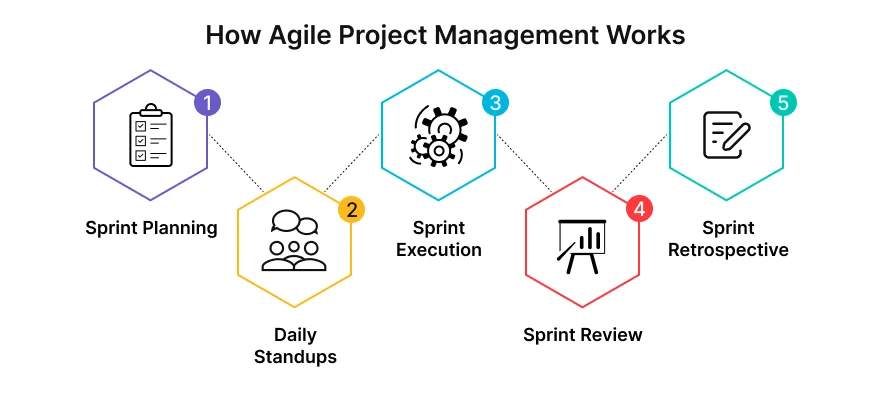
During every sprint, the team plans the work, executes development tasks, reviews progress, and reflects on improvements. This cycle repeats until the project or product goals are achieved.
This approach helps teams maintain continuous progress while allowing room for feedback and adjustments.
1. Sprint Planning
Sprint planning marks the beginning of each sprint. During this meeting, the team reviews the product backlog and selects the tasks that will be completed in the upcoming sprint.
Project managers, product owners, and development teams work together to define how to prioritize tasks and clarify requirements. The team also estimates the effort required for each task and commits to a realistic amount of work.
By the end of the sprint planning session, the team has a clear sprint goal and a defined list of tasks to focus on.
2. Daily Standups
Daily standups are short meetings that typically last around 10 to 15 minutes. These meetings help the team stay aligned and address issues quickly.
Each team member briefly answers three key questions:
- What did I complete yesterday?
- What will I work on today?
- Are there any blockers affecting my progress?
These quick updates improve transparency and ensure the team can identify and resolve problems early.
3. Sprint Execution
During sprint execution, the development team works on the tasks planned for the sprint. Team members collaborate closely, track progress, and adjust how to manage workload as needed.
Agile encourages frequent communication and problem-solving during this stage. Tasks move across workflow stages such as to-do, in progress, and completed, allowing everyone to track progress in real time.
The goal of sprint execution is to complete the planned tasks and produce a functional increment of the product.
4. Sprint Review
At the end of the sprint, the team conducts a sprint review. During this meeting, the completed work is demonstrated to stakeholders or product owners.
The purpose of goal management is to evaluate whether the sprint objectives were achieved and gather feedback on the delivered features.
This feedback helps guide future development and ensures the product continues to align with business goals and user expectations.
5. Sprint Retrospective
The sprint retrospective focuses on continuous improvement. The team reflects on the sprint and discusses what worked well, what challenges occurred, and what could be improved.
Common discussion points include workflow efficiency, communication, task estimation, and collaboration.
Based on these insights, the team identifies practical improvements to apply in the next sprint. Over time, these small adjustments help teams become more efficient and productive.
Popular Agile Frameworks Used in IT Projects
Agile is not a single methodology. It is a broader approach that includes several frameworks that help teams implement Agile principles in their daily workflows. Each framework provides a structured way to plan work, manage tasks, and deliver software in iterative cycles.
IT organizations often choose a framework based on their team size, project complexity, and development goals. Some frameworks focus on structured sprint cycles, while others emphasize continuous workflow management.
Here are some of the most commonly used Agile frameworks in IT projects.
1. Scrum
Scrum is one of the most widely used Agile frameworks in software development. It organizes work into short cycles called sprints, which usually last between two and four weeks.
A Scrum team typically includes three key roles: the product owner, the Scrum master, and the development team. Work is prioritized in a product backlog, and tasks are selected during sprint planning.
Regular meetings such as daily standups, sprint reviews, and retrospectives help teams stay aligned and continuously improve their processes.
2. Kanban
Kanban focuses on visualizing work and managing workflow efficiency. Tasks are represented on a board and move through different stages, such as to-do, in progress, and completed.
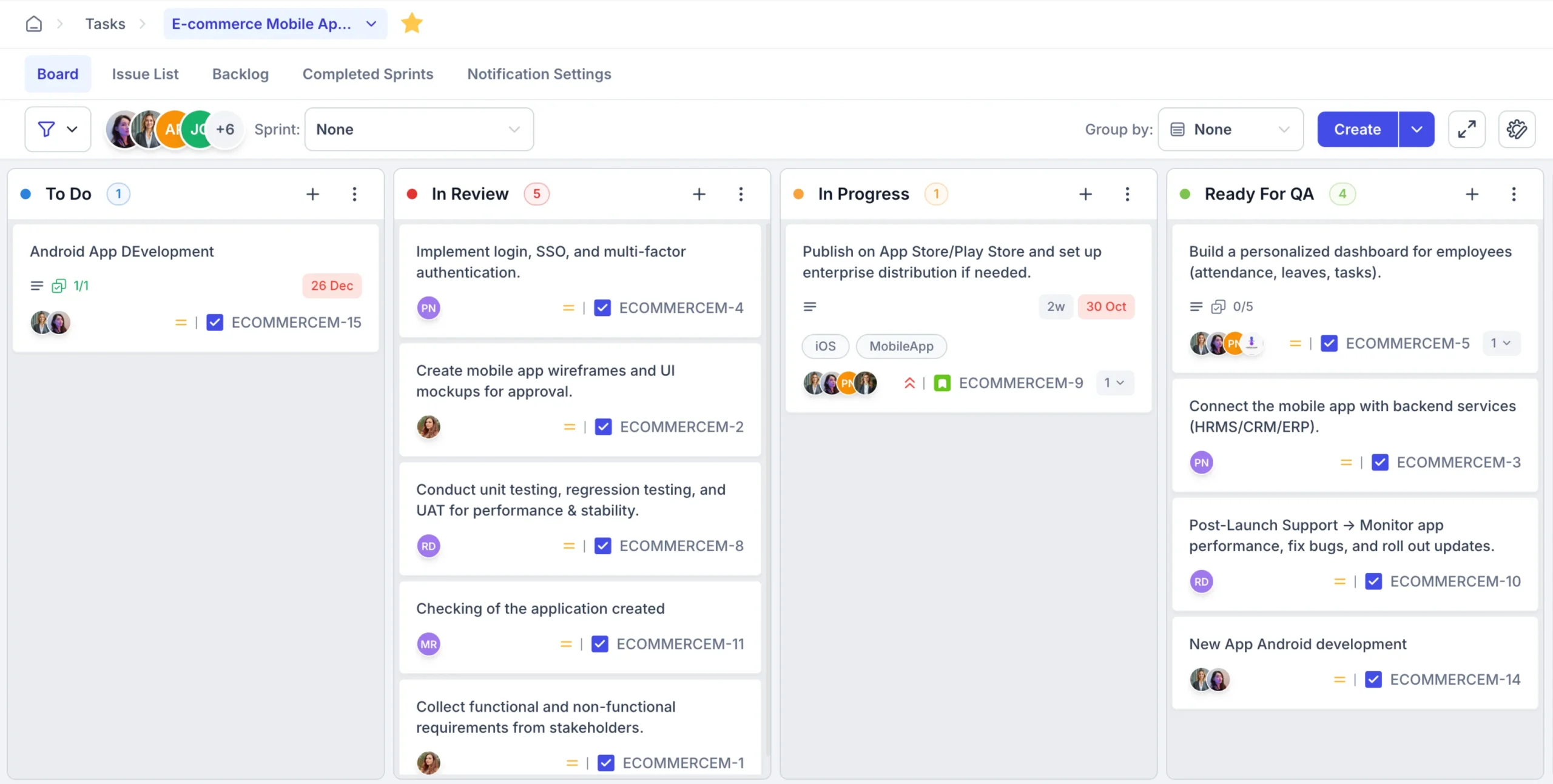
This framework helps teams monitor work in real time and identify bottlenecks quickly. Unlike Scrum, Kanban does not rely on fixed sprint cycles. Instead, work flows continuously through the system.
Kanban is commonly used by development teams that handle ongoing tasks, support requests, or continuous delivery environments.
3. Lean Software Development
Lean software development is based on the principles of Lean manufacturing. It focuses on eliminating waste, improving efficiency, and delivering value to customers as quickly as possible.
Lean encourages teams to minimize unnecessary processes, reduce delays, and optimize workflows. The goal is to ensure that every activity in the development process contributes directly to product value.
4. Extreme Programming (XP)
Extreme Programming, often called XP, focuses on improving software quality and development practices. It emphasizes strong collaboration, frequent releases, and high technical standards.
Practices such as pair programming, continuous integration, and automated testing are central to this framework. XP is often used by teams that want to improve code quality while maintaining fast development cycles.
5. Choosing the Right Framework
Many IT organizations combine elements from multiple frameworks depending on their needs. For example, teams may follow Scrum for sprint planning while using Kanban boards to track tasks.
The key goal of any Agile framework is to help teams deliver value faster while maintaining flexibility, transparency, and continuous improvement throughout the project lifecycle.
Benefits of Agile Project Management for IT Organizations
Agile Project Management offers several advantages for IT organizations that manage complex and evolving projects. By focusing on iterative delivery, continuous feedback, and cross-team collaboration, Agile helps technology teams operate with greater speed and flexibility.
1. Faster Release Cycles
One of the most important benefits is faster delivery of value. Since Agile projects are divided into short development cycles, teams can release functional product updates more frequently instead of waiting until the end of a long development phase.
2. Greater Flexibility and Adaptability
Agile also improves adaptability to changing requirements. In software development, project priorities often shift as new insights emerge or customer needs evolve. Agile allows teams to adjust their plans quickly without disrupting the entire project.
3. Improved Project Visibility
Another key benefit is better project visibility. Regular meetings, sprint reviews, and progress tracking provide stakeholders with continuous insight into the project’s status. This transparency helps leaders make informed decisions and address potential issues early.
4. Stronger Team Collaboration
Agile also promotes stronger collaboration across teams. Developers, designers, product managers, and stakeholders work closely throughout the project timeline and lifecycle. This collaborative environment helps reduce misunderstandings and improve alignment with business goals.
5. Continuous Process Improvement
Finally, Agile supports continuous improvement. Through regular retrospectives and performance reviews, teams can identify process improvements and refine their workflows over time. This helps organizations build more efficient development practices while maintaining high product quality.
When Should IT Companies Adopt Agile Project Management?
Agile is particularly effective for projects where requirements are likely to evolve or where rapid innovation is required. IT companies building software products, digital platforms, or SaaS solutions often benefit the most from Agile practices.
Organizations may consider adopting Agile when they need faster product releases, improved collaboration between teams, and greater flexibility in managing changing project requirements.
Common Challenges in Agile Adoption
While Agile offers significant advantages, adopting it is not always straightforward. Many IT organizations face challenges when transitioning from traditional project management approaches to Agile practices.
- Resistance to change: Teams that are used to structured, long-term planning may initially find it difficult to adapt to Agile’s iterative and flexible approach.
- Lack of Agile training: Without a proper understanding of Agile frameworks and practices, teams may struggle to implement Agile effectively. This can lead to inconsistent processes and reduced efficiency.
- Unclear roles and responsibilities: This can create confusion during Agile adoption. Agile frameworks often introduce new roles such as product owners and Scrum masters, and teams may need time to adjust to these changes.
- Poor communication and collaboration: It can slow down Agile implementation. Agile relies heavily on frequent interactions between team members and stakeholders, and without strong communication practices, teams may face alignment issues.
- Scaling across larger teams or multiple projects: As organizations grow, maintaining consistent Agile practices across departments requires clear processes, coordination, and the right tools to support collaboration and visibility.
Role of Work Platforms like CollabCRM in Supporting Agile
Agile frameworks define how teams plan and deliver work, but the right tools are essential to support these processes in practice. As IT teams handle multiple projects and distributed workflows, work management software such as CollabCRM help centralize information, improve visibility, and keep teams aligned.
CollabCRM and its workflows help IT teams manage Agile workflows more effectively by bringing projects, people, and progress tracking into a single system.
Key ways CollabCRM supports the Agile approach:
1. Centralized Sprint and Task Management
Teams can organize backlogs, assign sprint tasks, and track progress across different workflow stages.
2. Improved Project Visibility
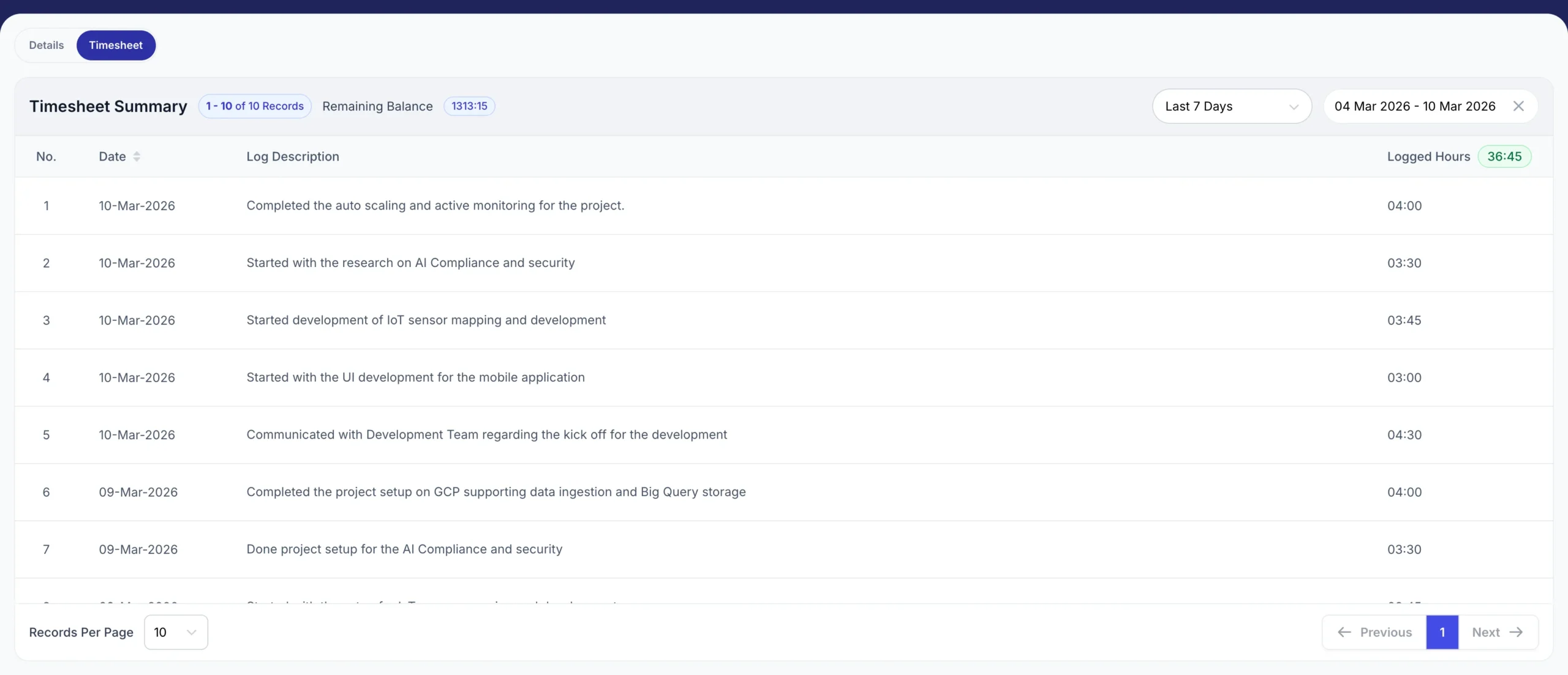
Real-time dashboards and task tracking help project managers and stakeholders monitor progress throughout each sprint. Clients can view the timesheets of the resources working on their projects.
3. Better Cross-Team Collaboration
Developers, managers, and clients can access the same workspace, share updates, and stay aligned on project priorities.
4. Streamlined Communication
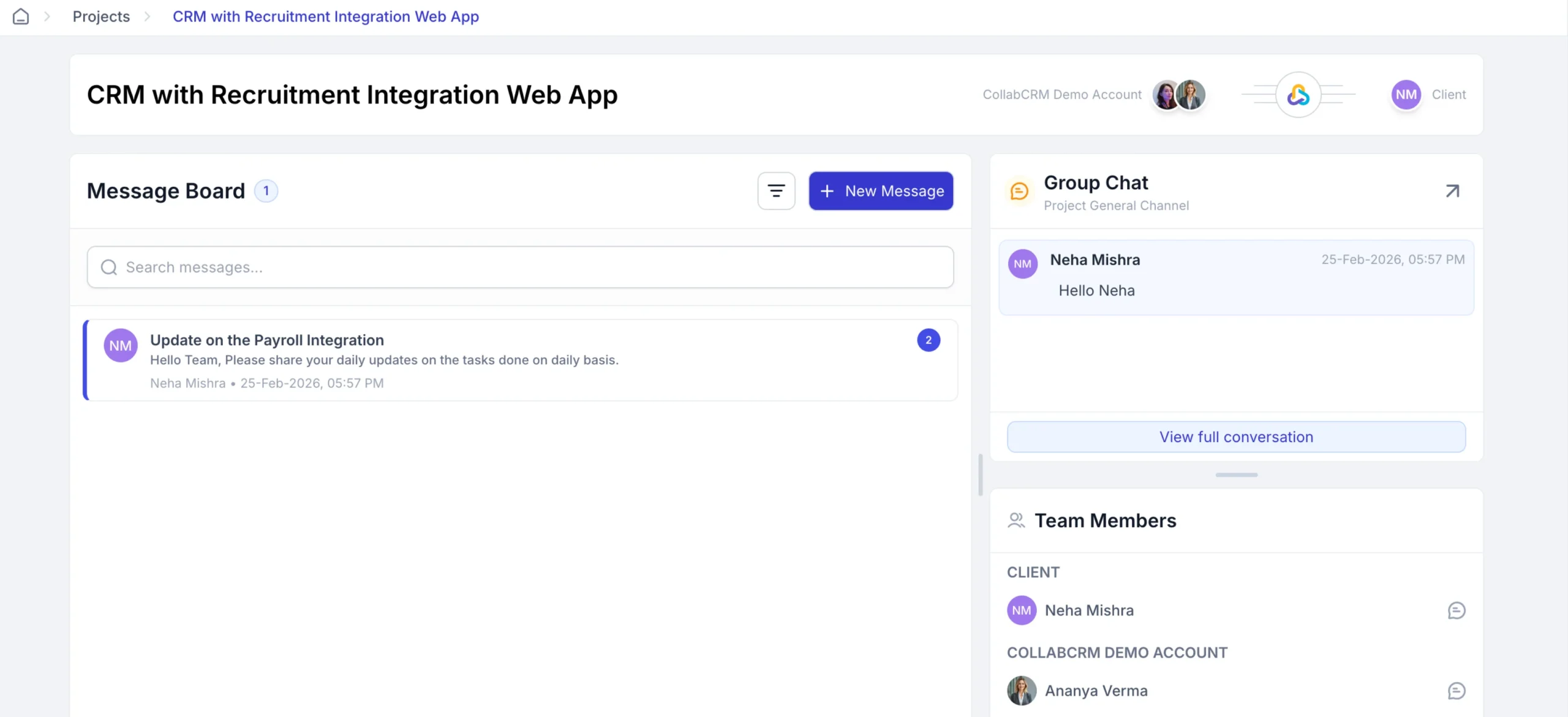
Project-related discussions (within the development team and with clients) and project progress updates remain connected to the relevant tasks, reducing reliance on scattered emails or messages.
5. Workflow and Process Organization
Teams can structure their project workflows and maintain consistency across multiple projects and teams.
By supporting structured workflows, centralized collaboration, and real-time visibility, platforms like CollabCRM make it easier for IT organizations to implement Agile practices and manage projects more efficiently.
Final Thoughts: Agile as a Strategic Approach
Agile Project Management has become a widely adopted approach for managing modern IT projects. Its focus on iterative development, continuous feedback, and collaboration helps teams respond quickly to changing requirements.
For IT organizations, Agile is more than a development method. It enables faster delivery, better visibility into project progress, and stronger alignment with business goals. When supported by the right processes, tools, and workflow management software, Agile helps teams manage complex projects more efficiently in a fast evolving technology environment.
FAQs
Agile is ideal for projects where requirements may change during development. IT companies building software products or digital platforms use Agile because it allows frequent updates and continuous feedback.
Smaller teams may adopt Agile within a few months. Larger organizations often take 6 to 12 months to fully implement Agile practices and align teams.
Yes. Agile can be scaled across multiple teams using structured frameworks and clear coordination between teams and stakeholders.
Tasks are managed in a product backlog and prioritized by the product owner based on business value, customer needs, and project goals.
Progress is measured through completed sprint tasks, working software, sprint velocity, and regular sprint reviews with stakeholders.
No. Agile focuses on maintaining essential documentation while prioritizing working software and faster delivery.
Key skills include communication, collaboration, facilitation, and the ability to manage changing priorities.
Project Management platforms like CollabCRM help teams manage backlogs, track sprint tasks, monitor progress, and centralize communication in one system.






 Priority Onboarding