

Collaboration allows us to know more than we are capable of knowing. – Paul Solarz
Business productivity depends on how well teams collaborate. As organizations grow, work spreads across teams, tools, and locations. Without the right collaboration tools, communication slows, information gets lost, and execution suffers.
Collaboration tools improve productivity by reducing friction. They bring visibility, speed up coordination, and help teams work from a shared source of truth. Decisions happen faster, ownership becomes clear, and less time is wasted.
Choosing collaboration tools is a leadership decision. It impacts efficiency, cost, and scalability. Decision makers must evaluate how well a tool aligns with business goals, supports real workflows, and delivers measurable value.
This guide explains how collaboration tools improve productivity, who should be involved in choosing them, and what decision makers should evaluate to make the right choice.
Key Takeaways
- Collaboration tools improve productivity by reducing silos, improving visibility, and speeding up work.
- Choosing the right collaboration tool is a business decision tied to revenue, efficiency, and growth.
- The best tools align with business goals, are easy to adopt, and fit real team workflows.
- Effective collaboration tools offer clear workflow visibility, accountability, and system integrations.
- Security, access control, and scalability are critical evaluation criteria for growing teams.
- CRM-based collaboration enables end-to-end productivity across sales, delivery, and support.
- CollabCRM is well-suited for IT companies by combining collaboration, workflows, and customer data in one platform.
What Problems Do Businesses Face Without the Right Collaboration Tools?
Without the right collaboration tools, productivity breaks down quietly. The issues are not always immediately visible, but they compound over time.
| Did you know? Teams that collaborate effectively are 21% more productive |
1. Fragmented Communication
Conversations occur across various platforms, including email, chat apps, spreadsheets, and meetings. Important context gets lost. Teams spend time searching for information instead of acting on it. Decisions slow down because no one has a complete view of the work.
2. Tool Overload
This is one of the many challenge in the IT industry. Businesses often add new tools to solve isolated problems. Over time, this creates a scattered technology stack. Employees switch between multiple platforms to complete simple tasks. This constant context switching reduces focus, increases errors, and lowers overall efficiency.
3. Lack of Visibility
When work is spread across disconnected systems, leaders cannot easily track progress, ownership, or bottlenecks. Teams operate in silos. Accountability becomes unclear. Projects stall without anyone realizing it until deadlines are missed.
4. Poor Collaboration
Sales, delivery, and support teams often work with incomplete or outdated information. Handoffs between teams break down. This leads to delays, rework, and inconsistent customer experiences.
5. Ease of Adoption
Finally, adoption suffers when tools do not match real workflows. Employees revert to manual processes or informal workarounds. The business pays for software but sees little return.
Without the right collaboration tools, productivity losses are not caused by a lack of effort. They are caused by friction, fragmentation, and lack of alignment.
What Should Decision Makers Look for When Choosing Collaboration Tools?
Decision makers should choose collaboration tools that align with business and revenue goals, are easy for teams to adopt, and provide clear visibility into workflows and ownership. The right tools integrate with existing systems, meet security and compliance requirements, and scale with business growth. Tools that deliver measurable productivity gains, strong adoption, and long-term value are more effective than those chosen based on features alone.
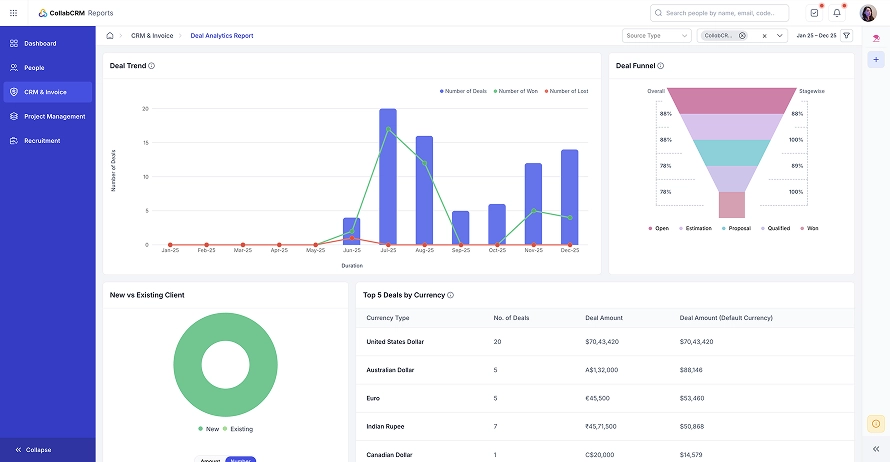
1. Alignment with Business and Revenue Goals
Collaboration tools should support core business outcomes. This includes faster execution, improved customer delivery, and better use of resources. If a tool does not connect to revenue, service quality, or operational efficiency, it will struggle to justify its cost.
2. Ease of Use and Adoption Across Teams
A tool only delivers value when teams actually use it. Complex interfaces and steep learning curves reduce adoption. Decision makers should prioritize tools that fit naturally into daily workflows and require minimal training. High adoption is a stronger indicator of success than advanced features.
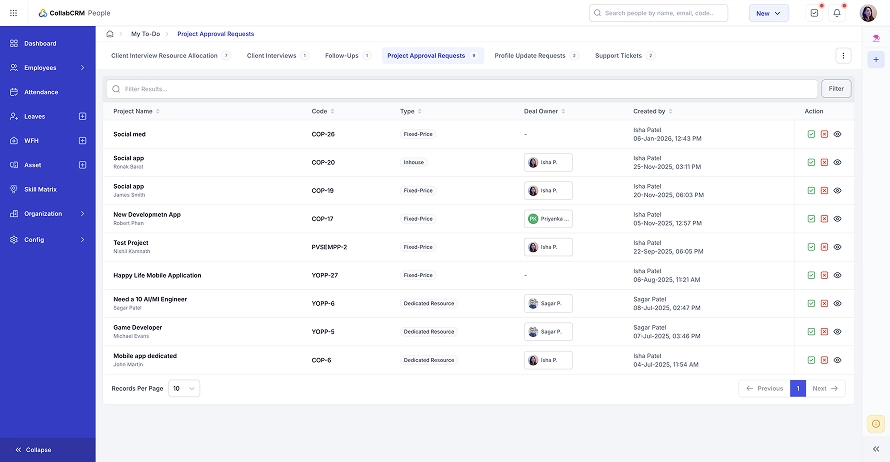
3. Workflow Visibility and Accountability
Effective collaboration requires clarity. Leaders need visibility into work progress, ownership, and dependencies. The right tool should make it easy to see who is responsible for what, what is delayed, and where support is needed. This transparency improves accountability and decision-making.
4. Integration with Existing Systems
Most businesses already use multiple tools for email, calendars, file storage, and operations. Collaboration tools should connect seamlessly with these systems. Poor integration creates data silos and manual work. Strong integration reduces duplication and keeps information consistent across teams.
5. Data Security, Access Control, and Compliance
Collaboration tools handle sensitive business and customer data. Decision makers must ensure strong security standards, role-based access controls, and compliance with industry regulations. Security should be built into the platform, not added later as an afterthought.
6. Scalability for Growing Teams
Business needs change over time. Collaboration tools should scale with team size, process complexity, and geographic expansion. Tools that work for small teams but break under growth create future disruption and reimplementation costs.
When collaboration tools are chosen with these factors in mind, productivity improvements are sustainable and measurable, not temporary or superficial.

What Types of Collaboration Tools Are Available for Businesses?
Businesses typically use four main types of collaboration tools: communication and messaging tools, project and task management tools, document and knowledge collaboration tools, and CRM-based collaboration platforms.
Each type addresses a specific aspect of teamwork, such as communication, execution, information sharing, or customer coordination. While individual tools can solve isolated problems, businesses often achieve better productivity when collaboration tools support connected workflows and end-to-end visibility across teams.
1. Communication and Messaging tools
These tools focus on real-time conversations. They support team chats, channels, audio calls, and video meetings. They are useful for quick coordination and fast updates. However, communication tools alone do not provide structure. Conversations move quickly, but decisions and tasks are often lost once the discussion ends.
2. Project and Task Management Tools
These tools help teams plan, assign, and track work. They bring structure to execution by defining tasks, timelines, and ownership. Project management tools improve visibility and accountability. Their limitation is context. They often track work well but lack deep collaboration around customers, processes, or cross-team dependencies.
3. Document and Knowledge Collaboration Tools
These platforms enable teams to create, share, and manage documents and knowledge assets. They support version control and collaborative editing. While essential for information sharing, they typically operate in isolation from daily workflows. Teams still need separate systems to manage execution and communication.
4. CRM-Based Collaboration Platforms
CRM-based collaboration tools bring teams together around customers and workflows. They connect communication, tasks, data, and processes in a single system. Sales, marketing, delivery, and support teams work from the same source of truth. This reduces handoff issues and improves visibility across the customer lifecycle.
For many growing and service-driven businesses, CRM-based collaboration platforms offer a more complete approach. Instead of managing multiple disconnected tools, teams collaborate within structured processes that directly impact revenue, delivery, and customer experience.
Choosing the right type of collaboration tool depends on how work flows through the organization. The goal is not to adopt more tools, but to reduce friction and improve productivity across teams.
How to Evaluate Collaboration Tools: A Practical Framework for Decision Makers
Evaluate collaboration tools for your business by defining clear productivity and collaboration goals, identifying gaps in current workflows, and comparing tools based on real business impact. Effective evaluation also includes measuring ease of adoption, return on investment, and long-term value.
A structured framework helps businesses choose collaboration tools that improve efficiency, support growth, and deliver sustainable productivity gains. Evaluating collaboration tools requires more than demos and feature comparisons. Decision makers need a structured approach that focuses on outcomes, not assumptions.
1. Defining Productivity and Collaboration Goals
Start by clarifying what productivity means for your business. This could include faster project delivery, improved cross-team coordination, reduced rework, or better customer response times. Clear goals create a benchmark for evaluating tools and prevent decisions based on generic use cases.
2. Mapping Current Workflows and Gaps
Before selecting a tool, understand how work flows today. Identify where communication breaks down, where handoffs fail, and where teams rely on manual workarounds. These gaps reveal what the collaboration tool must solve. A tool that does not address real workflow issues will not improve productivity.
3. Comparing Tools Based on Real Business Impact
When comparing options, focus on how each tool supports daily work. Evaluate whether it reduces context switching, improves visibility, and aligns teams around shared goals. The best tool is not the one with the most features, but the one that simplifies execution and supports decision-making at scale.
4. Measuring Adoption, ROI, and Long-Term Value
Adoption is the first indicator of success. Track how consistently teams use the tool and whether it replaces older systems. Measure ROI through time saved, faster delivery, and improved outcomes. Also consider long-term value, including scalability, support, and the ability to evolve with business needs.
A practical evaluation framework helps decision makers choose collaboration tools with confidence. It ensures the investment drives sustained productivity improvements rather than short-term gains.
Conclusion
Improving business productivity depends on how effectively teams collaborate. As organizations grow, disconnected tools, unclear ownership, and fragmented workflows make collaboration harder to manage. The result is slower execution, limited visibility, and reduced control for decision makers.
The right collaboration tools solve these challenges when chosen with intent. Leaders must look beyond features and focus on workflow fit, adoption, and scalability. Tools that align teams around shared processes and a single source of truth reduce friction, improve accountability, and create a strong foundation for long-term productivity.
Why CollabCRM is the Collaboration Tool that your Business needs?
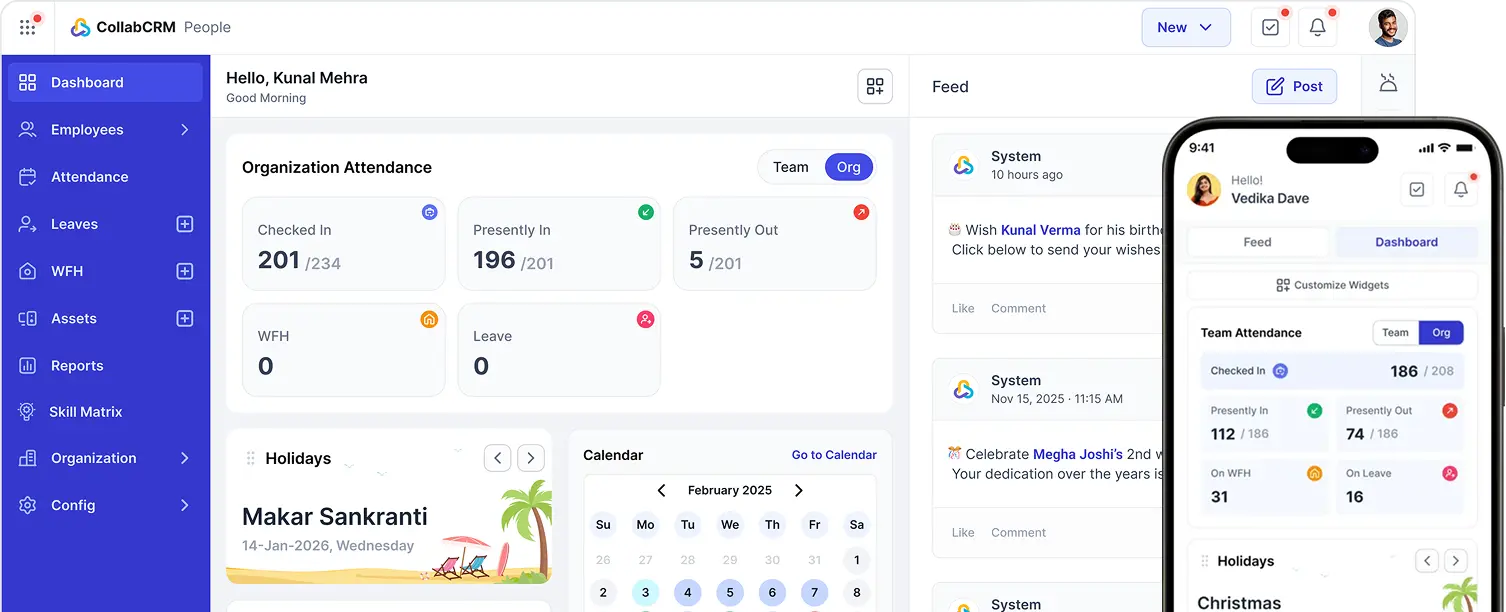
CollabCRM is an intelligent management and collaboration platform designed to help IT and service-driven businesses streamline operations and improve productivity. It brings teams, workflows, and customer data into a single system, making collaboration structured, visible, and action-driven.
Here’s how CollabCRM boosts your business productivity:
- Eliminates collaboration chaos by bringing all teams into one shared workspace.
- Breaks down departmental silos across Sales, Delivery, HR, and Finance.
- Reduces miscommunication through centralized tasks, alerts, and notifications.
- Improves project coordination with agile task boards and seamless handovers.
- Supports remote and hybrid teams with real-time visibility and shared calendars.
- Extends collaboration to clients with transparent, live timesheet access.
- Acts as a single source of truth, replacing scattered emails and spreadsheets.
FAQs
Collaboration tools are software platforms that help teams communicate, manage tasks, share information, and work together efficiently across departments and locations.
They improve productivity by reducing silos, speeding up decision-making, improving visibility into work, and ensuring accountability across teams.
Decision makers, IT leaders, operations teams, and business heads should all be involved to ensure the tool fits workflows, security needs, and business goals.
Common problems include miscommunication, duplicate work, missed deadlines, low visibility into progress, and tool overload across teams.
They should evaluate alignment with business goals, ease of adoption, workflow visibility, integrations, security, and scalability.
Businesses typically use communication tools, task and project management tools, document collaboration tools, and CRM-based collaboration platforms.
They connect teams around customers, projects, and revenue workflows, enabling end-to-end visibility and better coordination across departments.
CollabCRM is both. It is a CRM-based collaboration platform that combines customer management with cross-team workflows and internal collaboration.






 Priority Onboarding