

“Great vision without great people is irrelevant.” – Jim Collins.
Great people are just the right people with the right skills at the right time. And when you bring together such right talent, you achieve a strategic Workforce Planning process. You will attain your operational objectives through effective workforce planning.
In this blog, you will learn about the steps in workforce planning, along with the challenges, benefits, techniques, and best practices for strategic workforce planning.
TL;DR Key Takeaways for Busy Bosses
- Workforce planning is a core business strategy that drives growth, enhances cost efficiency, and ensures effective execution.
- Plan proactively to reduce talent risk, improve hiring accuracy, and stay aligned with long-term business goals.
- Start workforce planning with a clear understanding of current skills, capacity, and workforce performance.
- Review and adjust workforce plans continuously as business priorities and market conditions evolve.
- Collaborate across departments. Engage Finance, Operations, and business leaders, as HR alone cannot accurately plan workforce needs.
- Use data-driven tools like CollabCRM, Zoho, and Jira to forecast demand, track capacity, and turn workforce plans into execution.
What Is Workforce Planning?
Workforce planning is a strategic process that ensures your workforce is aligned with your strategic goals. Organizations leverage workforce planning by understanding their current talent, predicting future requirements, analyzing the market, and developing strategies to map and fill the talent gap within a specified timeframe.
Workforce planning is not just an “HR-thing”. It is the collaboration of the core departments within your organization – Operations, Marketing/Sales, Finance, & HR. Your HR department wouldn’t yield a successful workforce plan without integrating the essential insights and inputs from other departments.
Workforce Planning initiatives should include two types of planning.
Operational:
Short-term strategies that cover day-to-day struggles and changes needed.
Strategic:
Long-term business perspective covering the company’s vision, mission, and goals.
To build an effective and strategic workforce plan, business leaders and HR managers need to integrate the following outputs from different departments, as explained below:
1. Human Resources:
Information about current employees’ skills, performance levels, who’s leaving and why, hiring plans, and training programs to fill skill gaps.
2. Operations:
How many people are needed to handle the workload (calls per employee), and what limits or constraints affect how quickly we can add or reduce staff?
3. Marketing & Sales:
Expected sales numbers, growth plans, new product launches, and customer targets that tell us how many customer-facing employees we’ll need.
4. Finance:
Budget limits how much we can spend on salaries, profit goals, and cost analysis that shows what headcount we can afford.
In this manner, business leaders & managers ensure that workforce planning aligns with the overall strategic direction and objectives of the organization, considering all the possible scenarios.
Why Workforce Planning Matters: Key Benefits
Strategic workforce planning maximizes employee engagement, which, in turn, delivers higher quality of work, increased accountability, reduced attrition, and better customer satisfaction.
McKinsey reports that organizations without effective workforce planning can lose 20–30% of productivity during talent shortages or unexpected employee exits. So, now, let us see why you should implement workforce planning in your organization.
Top Benefits of Strategic Workforce Planning
- Alignment with Business Goals– Workforce planning ensures every hire, promotion, and training dollar pushes your company closer to its big-picture goals.
- Better Decision Making– You’ll have clear answers to questions like “Can we handle this new project?” or “Should we hire or train?” because you’re working with facts, not hunches.
- Enhanced Productivity– Everyone’s doing what they do best, no critical roles are empty, and nobody’s overwhelmed or underutilized. That’s the productivity boost workforce planning delivers.
- Smart Talent Management– Keep your best people happy and engaged by showing them where they can grow. Plus, you’ll never be caught off guard when someone leaves because you’ve already got their successor ready.
- Cost Optimization– Cut recruitment costs, reduce expensive turnover, and eliminate waste. You can potentially save up to 10% in the first year.
- Agility & Adaptability– Markets change. Priorities shift. When you have a solid workforce plan, you can pivot quickly. Move people where they’re needed most instead of starting from scratch every time something changes.
Workforce Planning Process: The 5 Essential Steps
Effective workforce planning is the optimization of human resources. It is a long process that includes consideration of your business’s strategic and operational objectives. Here is a step-by-step process breakdown for you to implement workforce planning, resource optimization, and leverage the advantages.
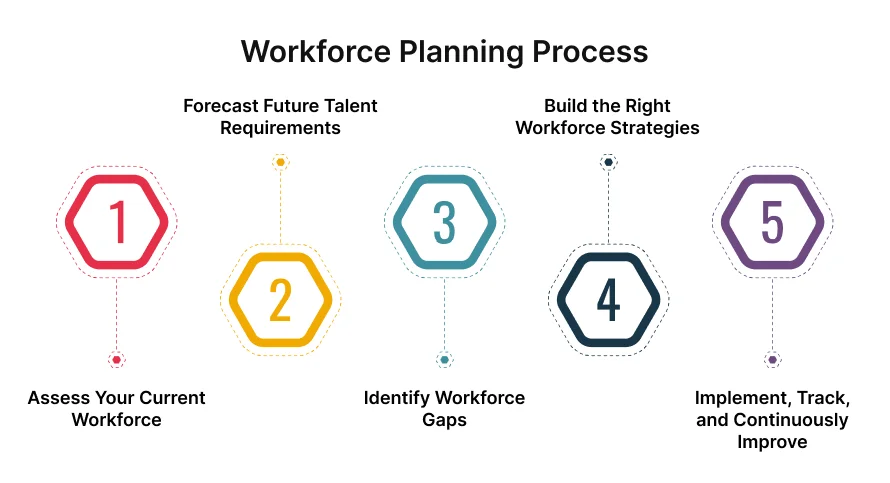
Step 1: Assess Your Current Workforce
Start by tracking what you already have. This means looking at your entire team with fresh eyes to understand their skills, experience, and potential. It’s like doing an inventory check before restocking your shelves.
Begin with a skill matrix. Mark what each person knows how to do, what certifications they hold, and what hidden talents might be going untapped. You’d be surprised how many companies discover they already have the expertise they need sitting right under their nose.
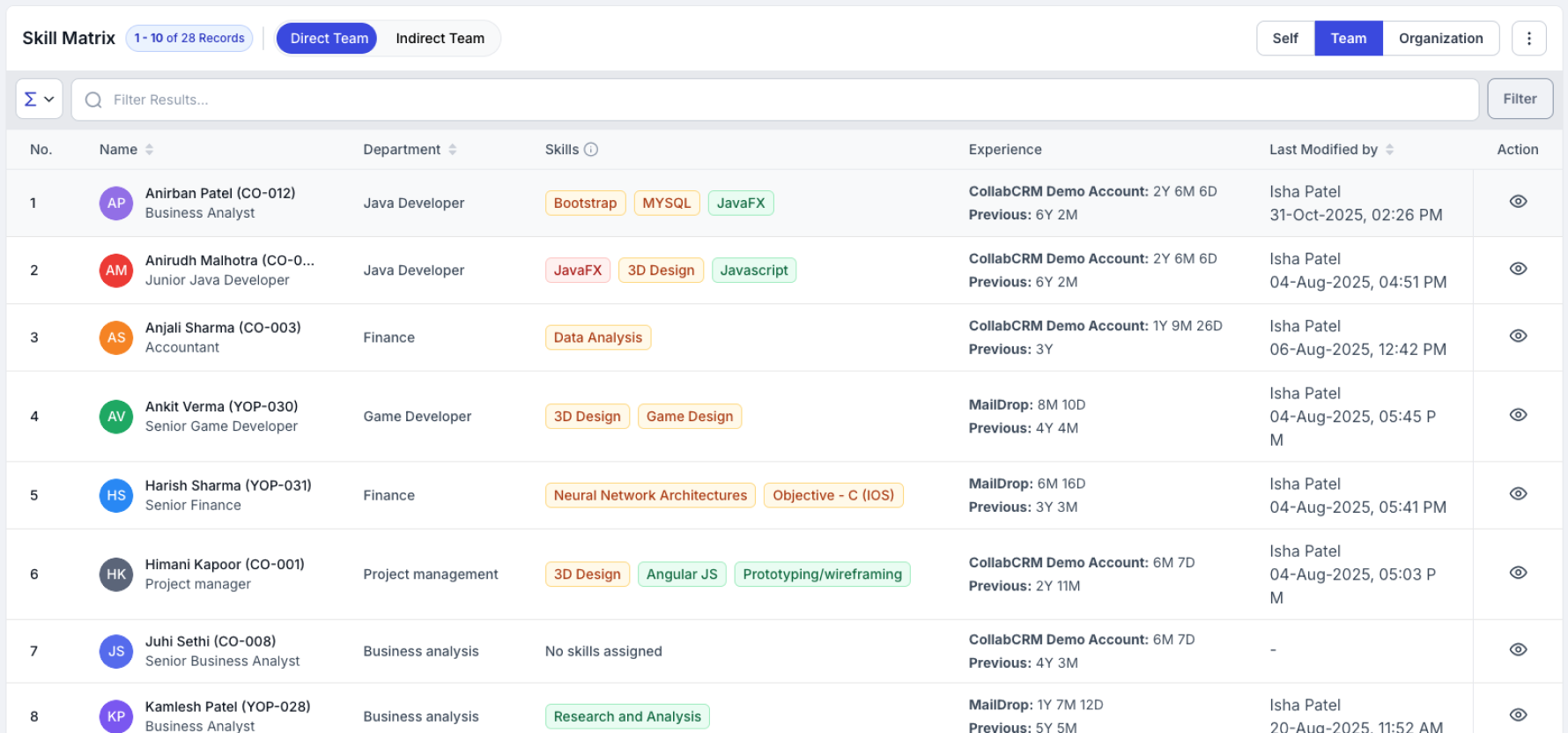
Next, examine your workforce demographics. Look at age ranges, tenure, department sizes, and diversity metrics. This helps you spot potential issues before they become problems, like noticing that half your IT team is nearing retirement or that certain departments are severely understaffed.
Don’t forget to review performance trends. Who’s thriving? Who’s struggling? Which teams are crushing their goals and which ones need support? These patterns tell you a lot about where your workforce is strong and where it needs attention.
Step 2: Forecast Future Talent Requirements
Now it’s time to look ahead and figure out what your organization will need down the road. This step is all about connecting the dots between your business plans and the people you’ll need to execute those plans.
Start with your business goals. If your company plans to launch three new products next year, enter two new markets, or double your customer base, each of those objectives needs specific skills and headcount to succeed. Break down every major initiative and ask, “What kind of people and capabilities will this require?”
Consider your expansion plans carefully. Growing from one office to five locations? Planning to scale your customer service team? Each growth scenario has workforce implications. Map out the timeline and estimate how many people with what skills you’ll need at each stage.
Do not miss considering another thing: Technology. Automation, AI, and new software tools are changing what skills matter. Some roles might become obsolete while entirely new positions emerge. Stay ahead of the curve by anticipating which technical skills will be critical and which routine tasks might be automated away.
Step 3: Identify Workforce Gaps
Here, compare the above Step 1 and Step 2. The difference between them is your workforce gap. This needs your attention now.
Skill shortages are usually your biggest concern. Maybe you need data analysts, but only have traditional accountants. Perhaps your marketing team knows traditional advertising but lacks digital expertise. These gaps can make or break your ability to execute your strategy, so identify them clearly and prioritize which ones matter most.
Look at surplus roles too. Sometimes, workforce planning reveals you have too many people in certain areas or skills that are becoming less relevant. It’s an uncomfortable reality, but addressing it proactively gives you time to retrain people for new roles rather than making sudden cuts later.
Don’t overlook upcoming vacancies. Review retirement eligibility, employees in high-turnover roles, and those likely to be promoted soon. Losing key people without a plan to replace them can derail entire projects or departments.
Step 4: Build the Right Workforce Strategies
Now comes the action plan. For each gap you identified, decide on the best solution. You’ve got several tools in your toolkit, and the smartest approach often combines multiple strategies.
Hiring is the obvious answer when you need new skills fast or need to expand headcount significantly. But it’s not always the fastest or cheapest option. Be strategic about what roles you absolutely need to recruit externally versus what you can develop internally.
Upskilling and reskilling your current employees is often your best bet. It’s usually faster and cheaper than hiring, plus it boosts morale and retention. Identify who has the potential to learn new skills and create targeted training programs. That accountant could become your data analyst with the right coursework and mentoring.

Succession planning ensures you’re never caught off guard when someone leaves or gets promoted. For every critical role, identify at least two potential successors and give them the development opportunities they need to be ready when the time comes.
Sometimes, a contract or gig workforce makes more sense than permanent hires. For project-based work, seasonal spikes, or skills you only need occasionally, bringing in freelancers or contractors gives you flexibility without long-term commitments.
Step 5: Implement, Track, and Continuously Improve
The best workforce plan in the world is worthless if it lies in a drawer. Now it’s time to execute your strategies and, just as importantly, monitor how well they’re working so you can adjust as you go.
Set up clear KPIs to measure success. Track metrics like time to fill open positions, cost per hire, employee retention rates, training completion rates, and internal mobility percentages. These numbers tell you whether your strategies are actually working or just sounding good on paper.
Create dashboards that make your workforce data visible and easy to understand. When leaders can see real-time information about headcount, skills distribution, and hiring pipeline status, they can make better decisions faster. Visual dashboards also help you spot problems early, like a sudden spike in turnover or a hiring bottleneck.
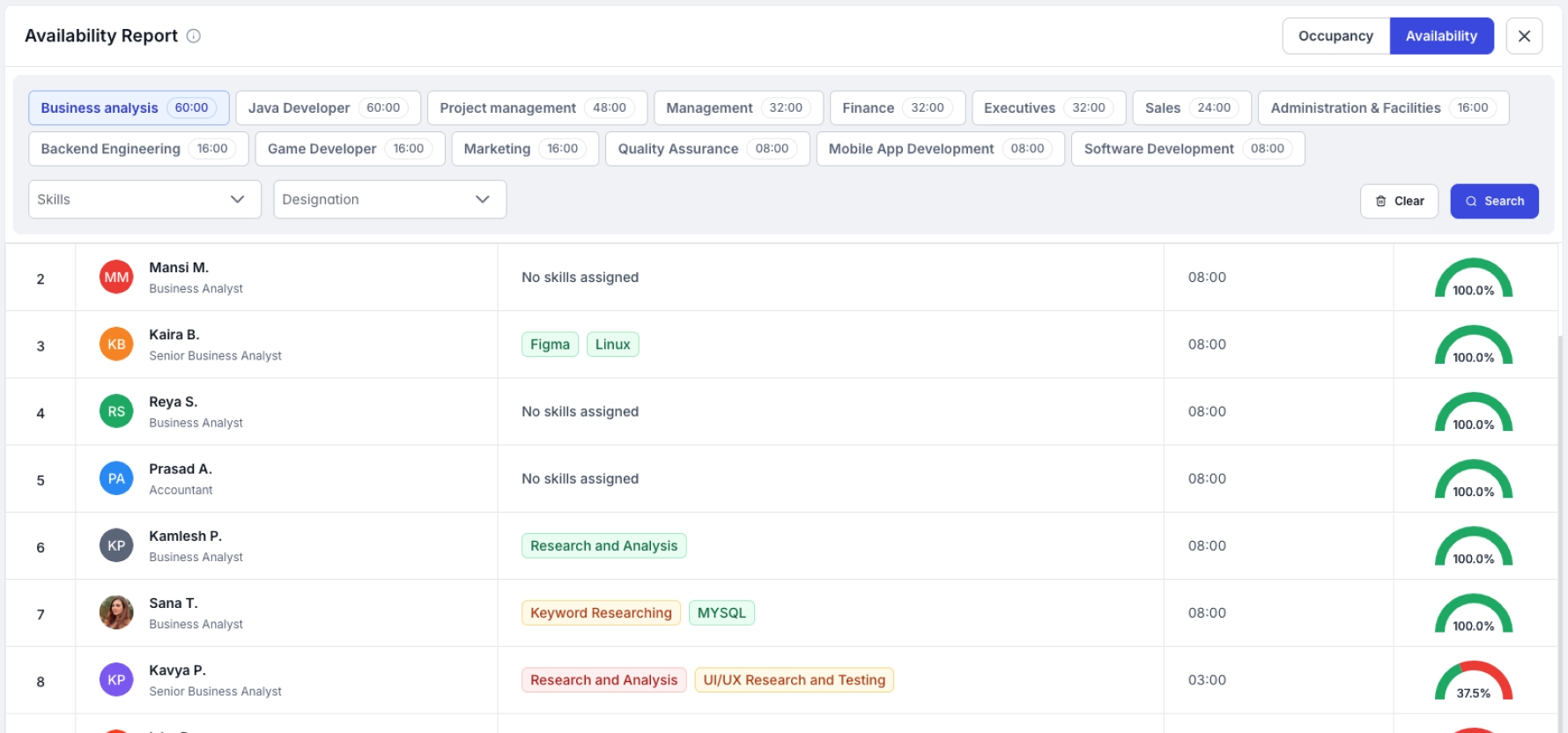
Make ongoing evaluation a habit, not an afterthought. Review your workforce plan at least every quarter. Business conditions change, strategies shift, and unexpected opportunities or challenges pop up. The companies that succeed are the ones that treat workforce planning as a living process, not a once-a-year exercise that gets filed away and forgotten.
Workforce Planning Strategies & Techniques
There are several techniques and strategies for workforce planning, such as:
skill gap analysis, scenario planning, succession planning, talent pooling, workforce segmentation, knowledge transfer programs, agile workforce planning, internal mobility, flexible workforce models, forecasting skills and demand, skill-based planning, and many more.
There is no single solution that suits all organizations. Most organizations use a mix of varied strategies based on their goals, challenges, and requirements. Let us dive into a few of the most important workforce planning strategies.
1. Skill Gap Analysis
Compare what skills your team has today against what you’ll need tomorrow, then create a targeted plan to close those gaps through training, hiring, or partnerships.
2. Scenario Planning
Map out different possible futures for your business (growth, downturn, disruption) and prepare flexible workforce strategies so you’re ready no matter which scenario unfolds.
3. Succession Planning
Identify critical roles and develop a pipeline of internal talent ready to step up when positions open, ensuring smooth transitions and reducing leadership gaps.
4. Internal Mobility
Move and grow existing employees into new roles within your organization rather than always hiring externally, boosting retention while filling positions faster with people who already know your culture.
5. Build-Buy-Borrow-Bot Framework
A decision-making model that helps you choose the best way to fill workforce gaps: Build (train current employees), Buy (hire new talent), Borrow (use contractors or freelancers), or Bot (automate with technology). Each option fits different situations and timelines.

What are the Top Workforce Planning Tools in Today’s Times?
Three of the best and most viable software for effective workforce planning are CollabCRM, Zoho, and Jira. These tools help you align your business goals with your people strategy by analyzing current talent, forecasting future demand, and filling in the gaps with smart data analytics reporting, contingency planning, scheduling, and time management.
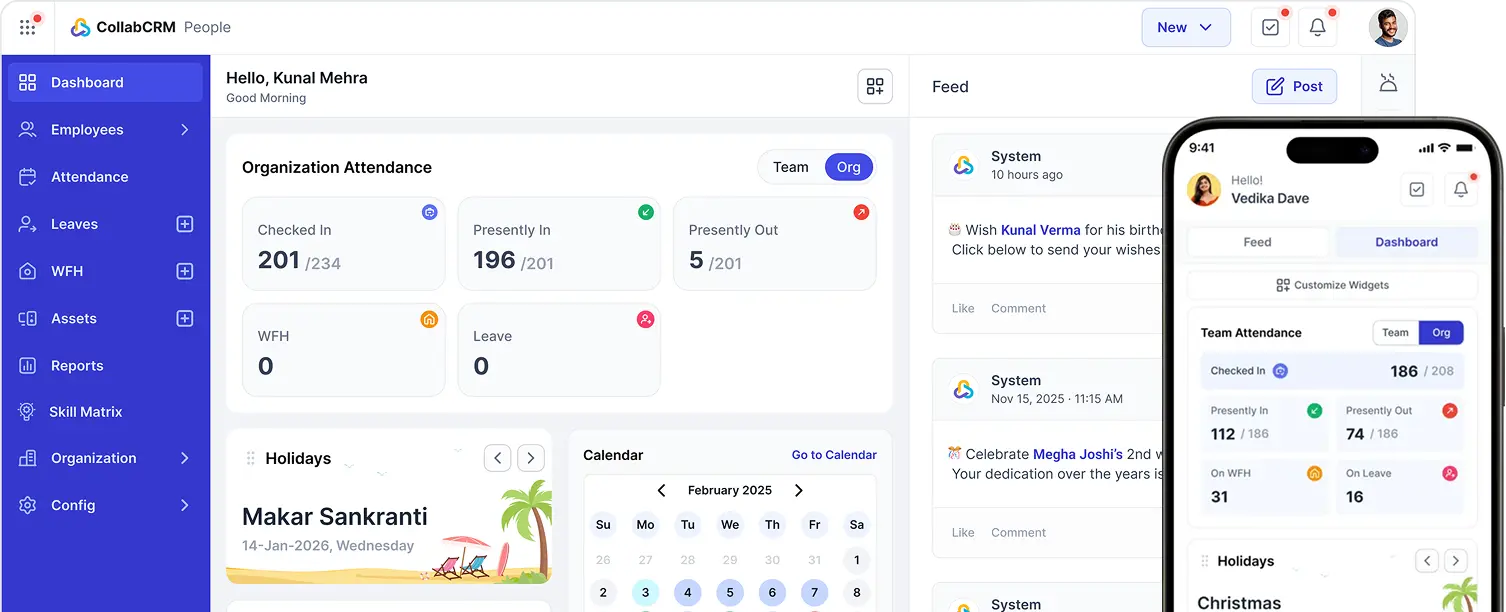
1. CollabCRM: A single platform that manages your “people’s everything,” right from hiring, onboarding, workforce planning with analytics, attendance & leave management, performance development, and offboarding.
CollabCRM brings together data from all the core departments within your organization – People, Project Management, Sales & Invoices, and Recruitment.
It simplifies your workforce management as per your business needs, gives you the real-time Skill Matrix, Resource Planning, and Exit Trends, ensuring your decisions are always based on facts and actual needs.
2. Zoho People: It offers HR management with workforce planning features that help track employee data, manage attendance, and monitor performance. It provides basic analytics and reporting to understand your team’s composition and identify staffing trends.
The platform works well for small to mid-sized businesses looking for an affordable, cloud-based solution that covers the essential functions of a scalable HR system alongside basic workforce insights.
3. Jira: While primarily known as a project management tool, Jira helps with workforce planning by showing you who’s working on what and where capacity exists. You can track team workload management, see resource allocation across projects, and identify bottlenecks before they slow you down.
It’s particularly useful for tech teams and project-based organizations that need to match people to tasks efficiently and ensure no one is overwhelmed or underutilized.
Workforce Planning Best Practices for CEOs & HR Leaders
1. Align with Business Goals First
Base your workforce plan on what the business needs to achieve, not just HR metrics. Your people strategy should follow your business strategy.
2. Collaborate Across Departments
Include Finance, Operations, and department leaders in planning. HR can’t do this alone and get it right.
3. Let Data Drive Decisions
Use real numbers like turnover rates, performance data, and skill gaps instead of relying on gut feelings or assumptions.
4. Prepare for Different Futures
Create backup plans for growth, slowdowns, and surprises. Don’t bet everything on one predicted outcome.
5. Think Skills, Not Just Headcount
Focus on what capabilities you need rather than just counting bodies. This opens up more creative solutions.
6. Review Plans Quarterly
Business changes fast. Check your workforce plan every few months and adjust as needed.
7. Be Transparent with Employees
Share where the company is headed and how people can grow. Openness builds trust and keeps good people around.
8. Develop Internal Talent First
Before hiring externally, see if you can train or move someone already on your team. It’s faster and cheaper.
9. Address Problems Early
If you spot issues like surplus roles or outdated skills, deal with them now. Waiting only makes it harder.
10. Track the Right Metrics
Measure things that matter like time-to-fill roles, retention rates, and whether you’re actually closing skill gaps.
Final Thoughts
By now, you know that workforce planning is beyond HR processes but a larger strategic business approach. Aligning data and metrics from your various departments and using them to build a decisive workforce plan is what helps your business scale with the right people standing with you.
An effective workforce planning tool gives you clear visibility into organizational data so you can make smart decisions that keep both your people and customers happy.
Why CollabCRM is the Best Workforce Planning Software?
CollabCRM helps you turn workforce planning into execution by bringing people, projects, and business data into one place. With clear visibility into skills, capacity, and workloads, teams can forecast talent needs accurately, plan resources better, and avoid reactive hiring. By enabling cross-functional collaboration and real-time insights, CollabCRM ensures workforce decisions stay aligned with business goals as the organization scales.
FAQs
Workforce planning is the process of making sure you have the right people with the right skills in the right roles at the right time. It matters because it helps you avoid talent shortages, reduce costs, improve productivity, and align your team with business goals. Companies that plan their workforce strategically are 50% more likely to hit their objectives.
HR planning typically focuses on your daily staffing needs, like filling open positions or managing attendance. Whereas, workforce planning is more strategic and forward-looking. It connects directly to business strategy, forecasts future talent needs, identifies skill gaps, and creates long-term solutions that support where your company is headed.
The biggest mistake is doing workforce planning in isolation without involving other departments. When HR creates plans without input from Finance, Operations, Sales, and department leaders, the results don’t reflect actual business needs. Workforce planning must be collaborative to be effective.
Review your workforce plan quarterly, at a minimum. Business moves too fast for annual planning. Check in every three months to see if your plan still matches current priorities, adjust for any changes, and keep it aligned with what’s actually happening in your business.
Track metrics like time-to-fill critical roles, cost per hire, employee retention rates (especially for high performers), internal mobility rates, training completion, and whether you’re closing identified skill gaps. Most importantly, measure if you have the right people in place when major business initiatives launch. If you’re consistently ready rather than scrambling, your workforce planning is working.
Both, depending on the situation. Use the Build-Buy-Borrow-Bot framework to decide. Build (train internally) when you have time and people with the potential to learn. Buy (hire externally) when you need skills fast or capabilities you don’t have. Borrow (contractors) for temporary or project needs. Bot (automate) when technology can handle the work. The smartest approach uses all four strategically.
Small businesses absolutely benefit from workforce planning, maybe even more than large ones. When you have a lean team, losing one key person or missing a critical skill can seriously hurt the business. You don’t need complex software or huge planning departments. Even basic workforce planning, like identifying succession for key roles and anticipating hiring needs, makes a big difference.



 Priority Onboarding