
Task prioritization is a core skill in project management. Every project has limited time, resources, and people. When everything feels important, teams lose focus and progress slows. Clear priorities help teams work on the right tasks at the right time.
Poor task prioritization has a direct cost. Projects miss deadlines. Budgets go over plan. Teams feel stretched and reactive. In today’s fast-paced work environment, especially in IT and growing organizations, priorities often shift. Without a clear approach, work becomes scattered, and decision-making suffers.
Effective task prioritization brings structure and clarity. It helps project managers and leaders determine what needs immediate attention, what can be delayed, and what should be removed. It connects daily tasks to business goals and improves accountability across teams.
This guide provides a simple, step-by-step approach to prioritizing tasks in a project. It covers the meaning of task prioritization, practical frameworks, and tools that support better prioritization, including CollabCRM and Asana.
TL;DR: Prioritize Tasks like a Pro
- Task prioritization drives project success by focusing teams on high-impact work and preventing delays.
- Prioritization goes beyond task lists. It aligns daily execution with business goals and outcomes.
- Here’s how: 1. Set direction first, 2. Create full visibility, 3. Prioritize with structure, 4. Enforce ownership, 5. Sequence for impact, and 6. Review continuously
- Popular prioritization frameworks: Eisenhower Matrix, MoSCoW, Value vs Effort, and RICE.
- CollabCRM connects task prioritization with people, projects, sales, and recruitment in one system, enabling leaders to prioritize work with full business context.
- Platforms like Asana help structure tasks and timelines for execution
What Does Task Prioritization Mean in Project Management?
Task prioritization is the process of deciding which tasks should be worked on first and which can wait. In project management, it is not about doing more work. It is about doing the right work at the right time.
Many teams confuse prioritization with task listing or scheduling. A task list only shows what needs to be done. A schedule shows when tasks are planned. Prioritization goes deeper. It helps teams decide which tasks deserve attention, effort, and resources based on their importance.
Effective prioritization aligns tasks with business outcomes. High-priority tasks are those that move the project closer to its goals. Low-impact tasks, even if urgent, should not take focus away from critical work. This alignment helps leaders make better decisions and keeps teams focused on value.
According to a report, 41% of employees feel overwhelmed with work due to poor planning & unclear prioritization. Whereas people who plan their day feel 30% more productive than those who don’t.
Task prioritization is not a one-time activity. Project conditions change. New requests come in. Risks and dependencies shift. Priorities must be regularly reviewed and adjusted. When teams treat prioritization as an ongoing process, projects stay on track and decisions become clearer.
How to Prioritize Tasks at Work [Step-by-Step Guide]
To prioritize tasks effectively, start by defining clear project goals and success criteria. List all tasks and identify dependencies to understand execution constraints.
Rank tasks using a structured prioritization framework based on impact and urgency. Assign clear ownership, sequence tasks to avoid bottlenecks, and review priorities regularly as project conditions change.
This approach enables consistent decision-making and controlled execution across teams.
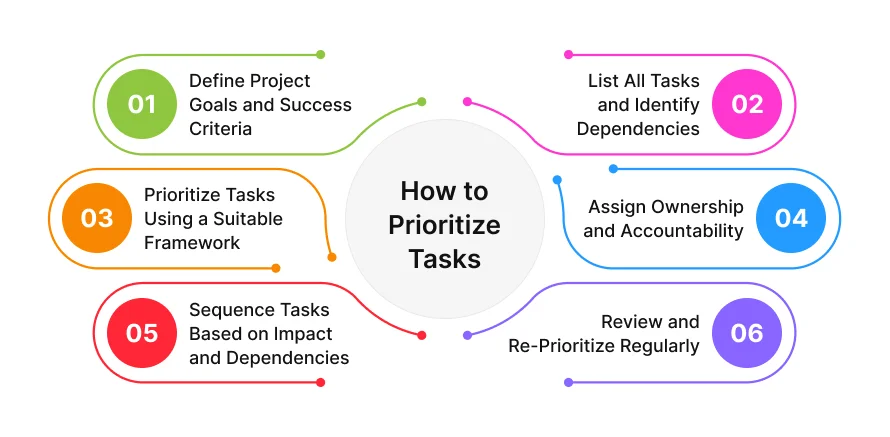
Step 1: Define Project Goals and Success Criteria
Start by clarifying what the project needs to achieve. Clear goals set direction and remove ambiguity. Define success criteria such as timelines, quality standards, budget limits, or business impact. When goals are clear, it becomes easier to decide which tasks truly matter and which do not.
Step 2: List All Tasks and Identify Dependencies
Create a complete list of all tasks involved in the project. This ensures nothing important is overlooked. Identify task dependencies early. Some tasks cannot start until others are finished. Understanding these relationships helps prevent delays and supports better sequencing and prioritization.
Step 3: Prioritize Tasks Using a Suitable Framework
Once goals are clear and tasks are listed, the next step is deciding what should be done first. This is where prioritization frameworks help. A framework adds structure and removes guesswork. It helps teams make objective decisions instead of reacting to urgency or pressure.
There is no single best framework for every project. The right choice depends on timelines, complexity, and stakeholder expectations. Below are four commonly used frameworks that support clear and practical prioritization.
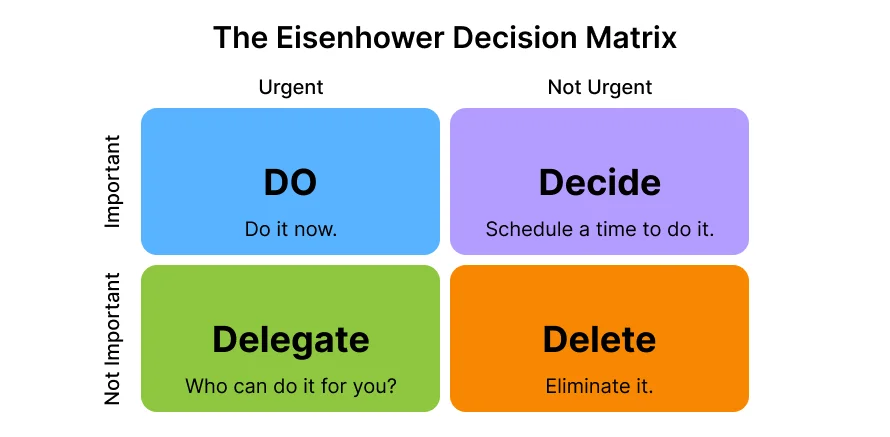
Eisenhower Matrix (Urgency vs Importance)
This framework sorts tasks based on urgency and importance. It helps teams focus on high-impact work and avoid spending time on tasks that feel urgent but add little value.
MoSCoW Method
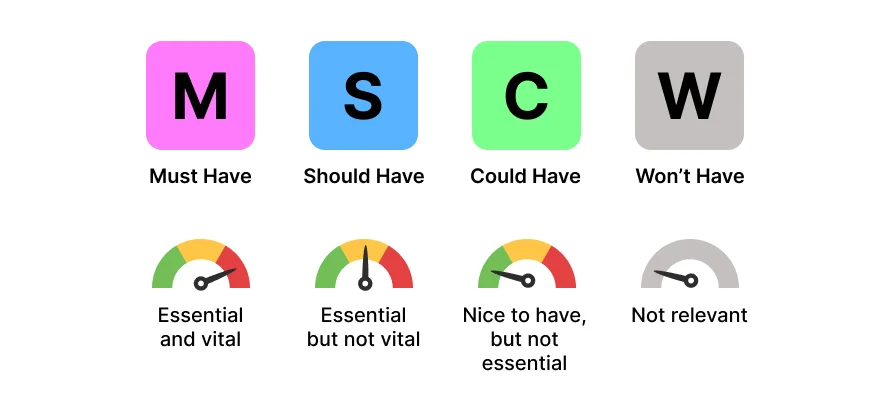
Tasks are grouped into Must, Should, Could, and Won’t. This approach is useful for managing scope and setting clear expectations, especially in projects with changing requirements.
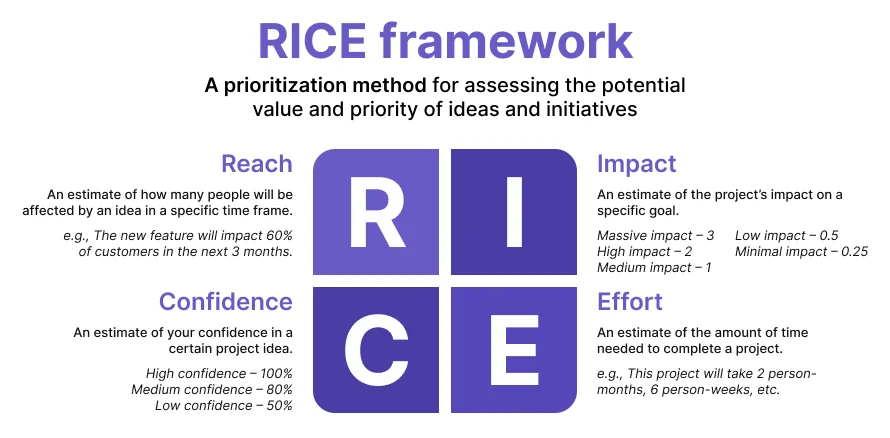
RICE Scoring Model
Tasks are scored based on reach, impact, confidence, and effort. This model brings data and consistency into prioritization decisions, especially for complex or feature-driven projects.
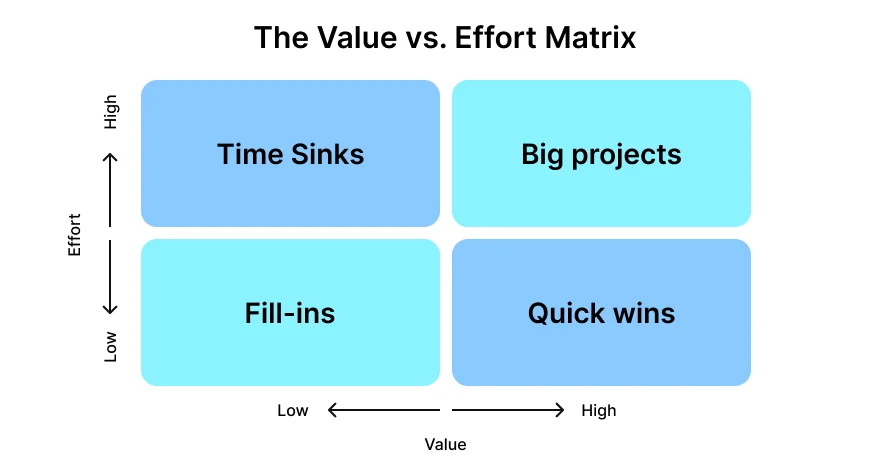
Value vs Effort
This method compares the business value of a task against the effort required. High-value, low-effort tasks are prioritized first, helping teams maximize impact with limited resources.
Step 4: Assign Ownership and Accountability
Every prioritized task needs a clear owner. Ownership ensures responsibility and follow-through. When tasks do not have a defined owner, they often get delayed or ignored.
Assigning accountability makes priorities actionable. It clarifies who is responsible for execution, updates, and outcomes. This reduces confusion and improves coordination across teams. Clear ownership also helps leaders track progress and address issues early.
Step 5: Sequence Tasks Based on Impact and Dependencies
Once tasks are prioritized and assigned, they need to be ordered correctly. Some tasks create progress, while others depend on earlier work. Sequencing helps teams focus on tasks that unlock future work.
High-impact tasks should be scheduled early, especially if other tasks depend on them. This reduces bottlenecks and prevents delays later in the project. Proper sequencing also avoids wasted effort on tasks that cannot move forward yet.
Step 6: Review and Re-Prioritize Regularly
Project priorities are not fixed. As work progresses, new information, risks, and requests emerge. Regular reviews help teams stay aligned with current goals.
Revisiting priorities ensures that high-impact work remains in focus. It also helps teams adjust to changes without creating confusion. A consistent review rhythm keeps projects on track and supports better decision-making throughout the project lifecycle.

Project Management Tools That Support Effective Prioritization
As projects grow, manual task tracking becomes harder to manage. Task & project management tools help teams make priorities visible, assign ownership, and adapt quickly when work changes. They provide the structure needed to turn prioritization into action.
1. CollabCRM
CollabCRM is built as a unified Business Operating System for IT teams. It replaces scattered tools like spreadsheets and basic task boards with a single system designed to manage, track, and prioritize work clearly. It guides you clearly on how to prioritize tasks in a project.
Key Features that Support Task Prioritization:
- Visual Task Boards
Kanban-style boards give a clear view of all tasks, their status, and ownership. Tasks can be updated using drag-and-drop, making priority changes visible instantly. - Flexible Task Views
Teams can switch between board view and list view to scan, sort, and filter tasks based on priority, status, or due dates. - Clear Task Structure
Tasks are organized using Agile issue types like Epics, Stories, Tasks, and Bugs. Related tasks can be grouped to maintain hierarchy and context. - Built-in Prioritization Controls
Tasks can be assigned priority levels. High-priority items can be filtered or marked for quick access, helping teams stay focused on critical work. - Ownership and Accountability
Each task has a clear owner. The “My To-Do” view highlights pending actions and follow-ups until they are completed. - Sprint and Backlog Planning
Teams can manage backlogs, plan sprints, and move tasks into active cycles based on priority and capacity. - Capacity-based Task Allocation
Work is planned using real-time availability and workload data, ensuring priorities align with actual team capacity.
2. Asana
Asana is a widely used task and project management tool. It helps teams organize tasks, timelines, and dependencies in a structured way.
The platform offers clear project views and supports priority setting within tasks. Asana works well for teams that follow defined project workflows and need visibility across multiple initiatives.
Conclusion
Task prioritization is a critical part of successful project management. When priorities are clear, teams focus on meaningful work, decisions become faster, and projects stay on track. A structured approach helps leaders manage change without losing momentum.
The right project management tool strengthens this process. It brings visibility, ownership, and consistency to how priorities are set and executed across teams.
Why CollabCRM Is an Ideal Tool for Task Prioritization?
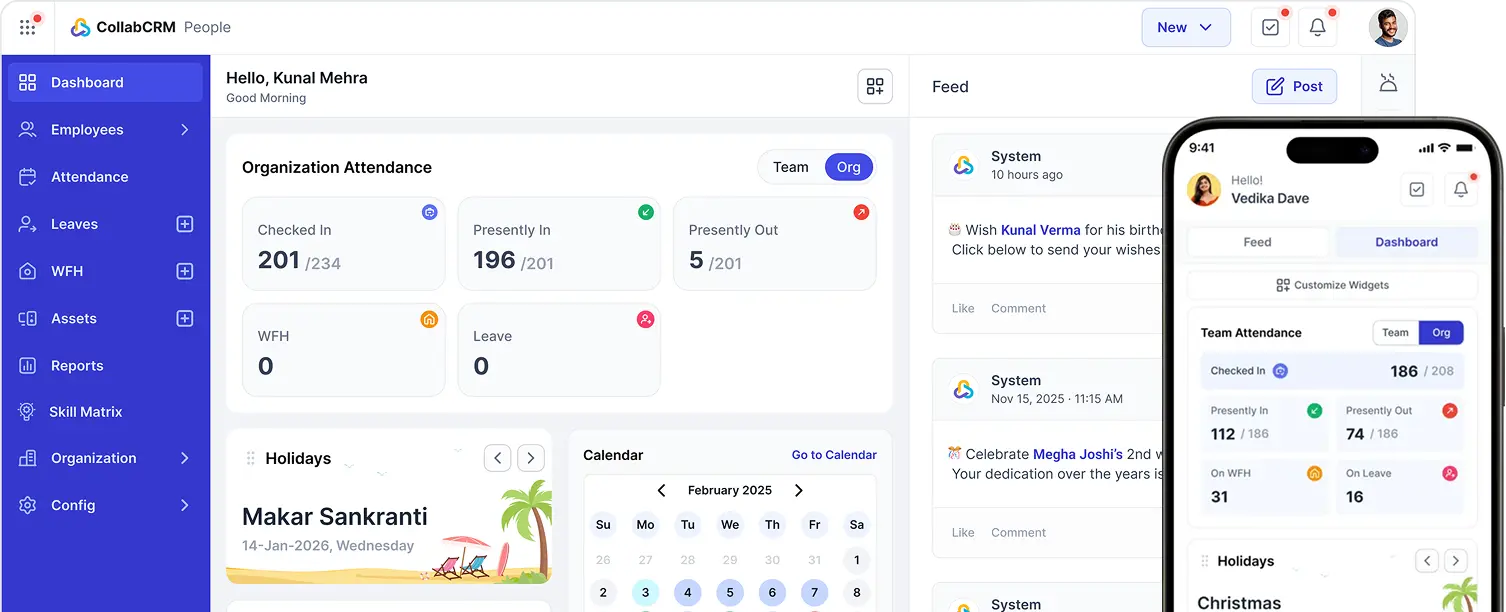
CollabCRM is an all-in-one Business Operating System that brings people management, project execution, sales and CRM, and recruitment into one portal. This unified view helps teams set priorities with full business context.
By combining task management with real-time visibility and accountability, CollabCRM enables IT teams and leaders to prioritize high-impact work, adapt quickly to change, and operate with clarity across the organization.
FAQs
Task prioritization helps teams focus on work that has the highest impact. It reduces delays, improves decision-making, and ensures project goals are met on time.
Prioritization decides what matters most. Scheduling decides when tasks are done. A task can be scheduled but still be low priority.
Priorities should be reviewed regularly. Weekly or sprint-based reviews work well, especially when requirements or resources change.
There is no single best framework. Certain projects may use urgency vs importance, while complex projects benefit from value-based or scoring models like RICE. It depends on your project needs.
Common mistakes include treating all tasks as urgent, ignoring dependencies, and failing to assign clear ownership.
Dependencies determine task order. Ignoring them can cause delays and rework, even if tasks are marked as high priority.
Yes. Task management tools provide visibility, accountability, and structure. They help teams apply prioritization consistently and adapt quickly to change.
Yes. CollabCRM is built for IT teams that need a unified system to manage projects, people, sales, and recruitment while keeping priorities clear.





 Priority Onboarding